- Where to see one
- 14 U.S. zoos in our directory hold military macaw, confirmed against each zoo's own animal list.
- Native range
- West-central Mexico south through northern Argentina and Bolivia
- Size
- 70–85 cm (28–33 in) long, with a 99–110 cm (39–43 in) wingspan
- Lifespan
- About 50–60 years in the wild
About the military macaw
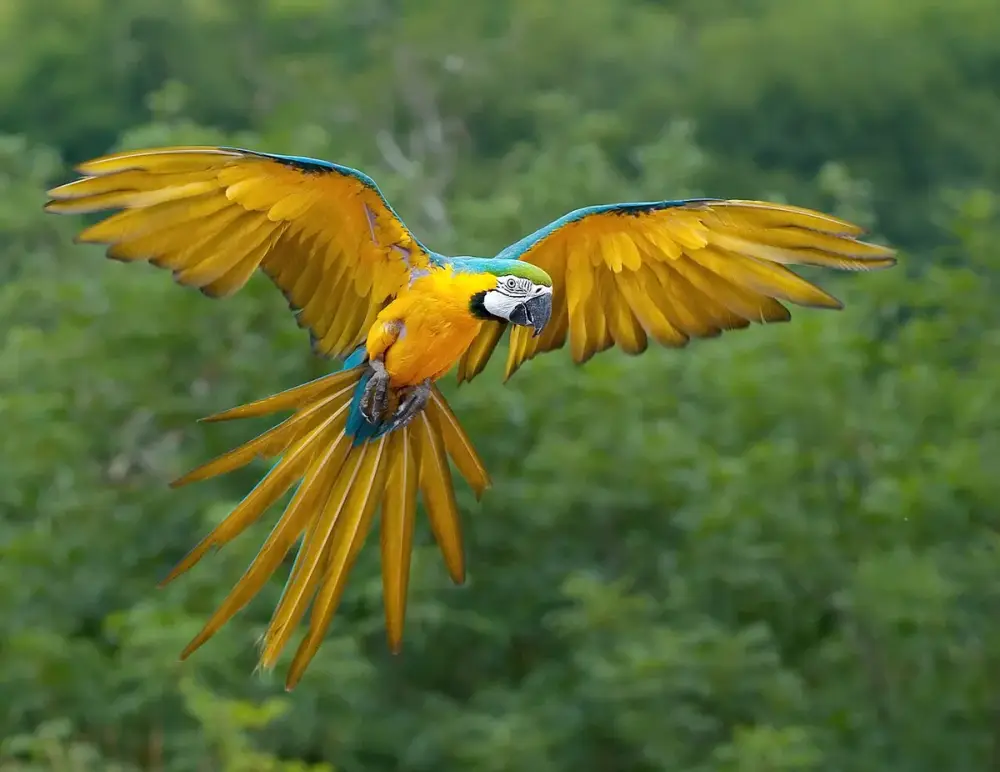
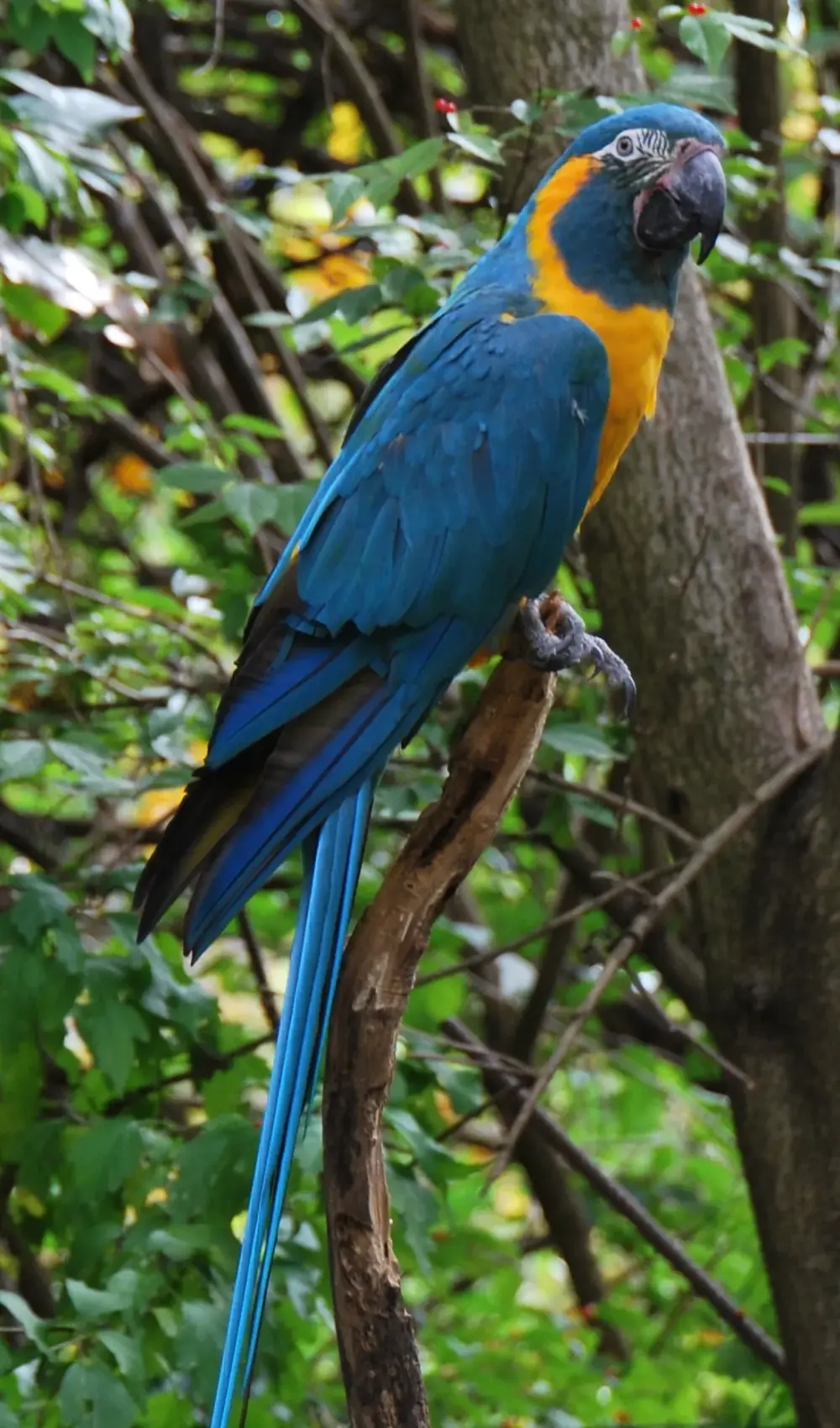
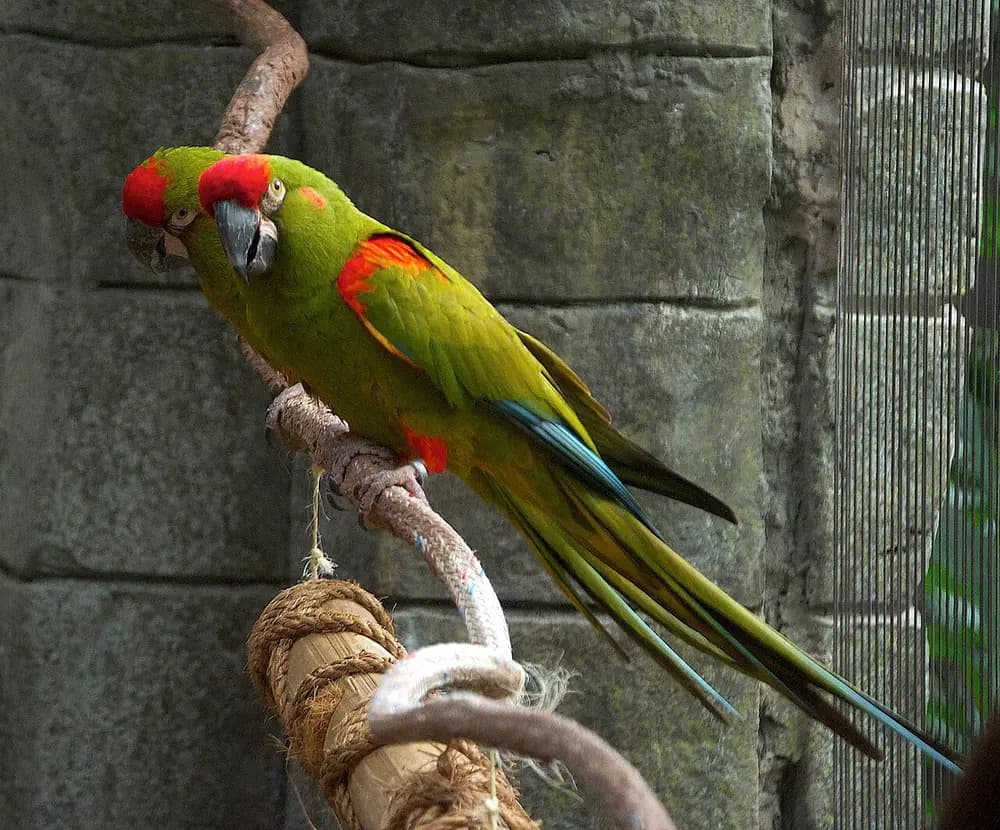
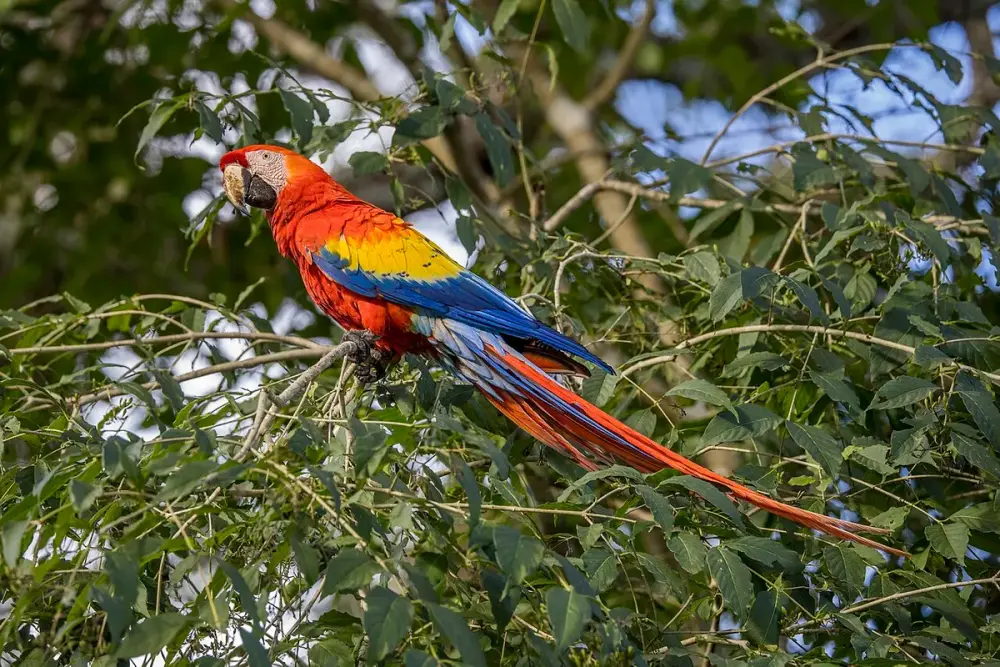
The military macaw is a medium to large parrot named for plumage that vaguely resembles a military uniform: mostly green, with light-blue and yellow flight and tail feathers and a bright-red patch on the forehead. Its face is bare and whitish with black striations, typical of macaws, and its large, strong bill is a slate-grey to blackish tone with a yellow iris above it. Adults measure 70 to 85 centimeters (28 to 33 inches) long on average, with a wingspan of 99 to 110 cm (39 to 43 inches).
The species was formally described by Carl Linnaeus in 1766, originally under the genus Psittacus, and now sits among ten species in the genus Ara. Its name comes from the Tupi word "ará," meaning macaw and doubling as an imitation of the birds' raucous calls. Three subspecies are recognized, distinguished mainly by geography and by modest differences in size and coloration: A. m. mexicanus in western Mexico (the largest of the three), A. m. militaris across Colombia, Venezuela, Ecuador, Peru, and northwestern Bolivia (the smallest), and A. m. bolivianus in central Bolivia and northwestern Argentina.
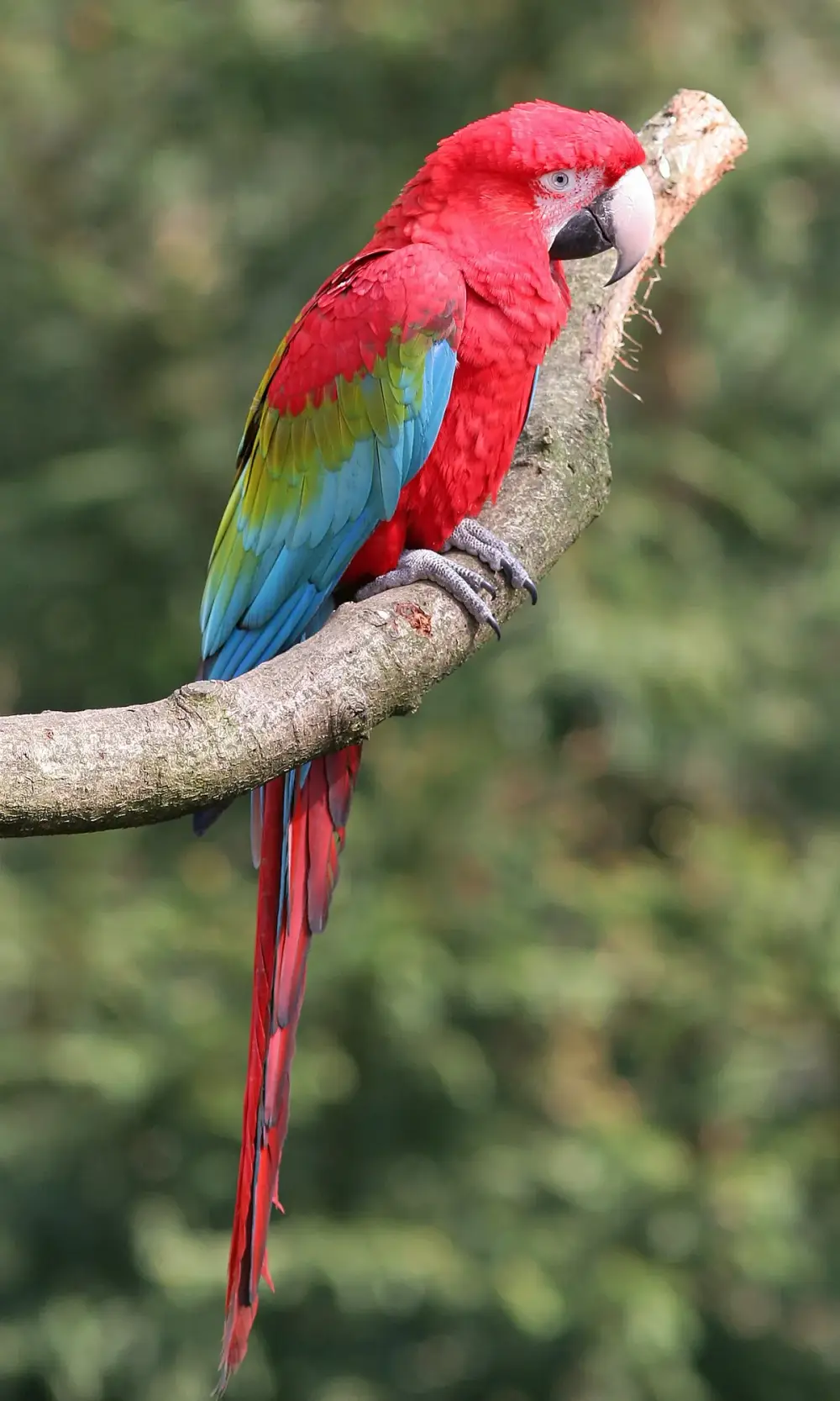
Military macaws can be confused with the great green macaw, which they closely resemble, but the two are separable by size, bill color, overall plumage tone, and differences in calls; the birds also favor different habitats, with great green macaws preferring humid forest and military macaws typically found in drier, deciduous forest. Phylogenetic study has shown the two species are sister lineages. Wild military macaws typically live at 600 to 1,500 meters elevation — higher in the mountains than most other macaws range — though they may fly down to lowlands seasonally, where they are likely found in humid forest and thorny woodland.
Behavior and diet
Diet
Mostly seeds, plus fruits, leaves, and clay from riverbank "macaw licks"
Military macaws live in large flocks and are often heard well before they come into view, producing loud cracking and shrieking calls, including a distinctive "kraa-aak." Activity is concentrated in the morning and evening, suggesting the species is largely crepuscular. Flocks leave their roosts around dawn to forage, feeding mainly on seeds along with fruits and leaves; the birds have also been observed drinking from Pseudalcantarea grandis and eating latex from Plumeria rubra. Their diet is relatively narrow — only a small share of the plant species available to them — though it does broaden somewhat during certain times of year.
A notable feeding behavior is visiting clay deposits along riverbanks known as "macaw licks," sometimes deep in Amazon rainforest interior, where the clay appears to bind toxins from the birds' seed-heavy diet and supply dietary salt otherwise missing from it.
Pair bonds involve mutual grooming and regurgitation, observed both during and outside the breeding season. Courtship starts as early as March, with copulation from May through July; the overall breeding season runs March to October, incubation and hatching happen in August and September, nest selection begins around October, and chicks fledge between January and March. Military macaws are cavity nesters, choosing natural holes in trees at least 15 meters tall and 90 centimeters wide, or in cliff faces; during breeding, the male feeds the female three to four times a day.
Range and habitat
Habitat
Tropical deciduous and semi-deciduous forest, at 600–1,500 m elevation
The military macaw's range stretches from west-central Mexico south through Colombia, Venezuela, Ecuador, Peru, and Bolivia to northern Argentina, split among its three subspecies by geography. The birds are a canopy species, dependent on large canopy trees in deciduous and semi-deciduous forest for feeding, breeding, nesting, and shelter from both predators and heat. They typically nest 8 to 28 meters up in trees, or more often on cliff faces more than 600 feet (180 meters) above the ground.
The species is notably absent from Central America, which may reflect local habitat change and competition with the closely related great green macaw. Escaped or deliberately released military macaws have also turned up in Florida, though there's no evidence of an established breeding population there — any birds present likely persist only through continuing releases or escapes.
Conservation status
The military macaw is listed as Vulnerable (VU), with an estimated breeding population of only 2,000 to 7,000 individuals and a continuing decline. The species faces habitat loss from agricultural conversion, deforestation, mining, and road building, leaving already fragmented populations more isolated; one 2013 study found that tropical dry forest habitat for some populations had shrunk by almost 32 percent.
Military macaws are listed under CITES Appendix I, which bans commercial international trade in wild-caught birds, but research shows illegal trafficking of parrots from South America into North America continues. Their narrow, specialized diet is a further vulnerability, since losing access to key food plants could hit the species hard — though its broader diet at certain times of year suggests some capacity to adapt. Genetically, the species retains moderate diversity despite its small numbers, pointing to a larger ancestral population, but it remains at risk of population bottlenecks from ongoing habitat fragmentation and inbreeding.
Where to see military macaw in the U.S.
14 zoos across 13 states
Find the closest one
Rank the 14 zoos holding military macaw by how far they are from you. Your location is used in your browser to sort this list and is never sent to us.
California· 1
Florida· 1
Georgia· 1
Idaho· 1
Kansas· 1
Louisiana· 1
Minnesota· 1
Missouri· 1
New Mexico· 1
Tennessee· 1
Texas· 2
Virginia· 1
Washington· 1
AZAThe Association of Zoos and Aquariums. Accredited members have passed an independent inspection of animal care and welfare, safety, conservation and education, repeated every five years. Many smaller facilities never apply, so “not accredited” isn't a verdict on its own. What accreditation means · How we check this
Built from each zoo's own published animal list.
Military Macaw: common questions
Is the military macaw endangered?
It's listed as Vulnerable (VU). Mexico itself lists the species as endangered, and its wild population is estimated at only 2,000 to 7,000 breeding individuals and still declining.
How big does a military macaw get?
Adults measure 70 to 85 cm (28 to 33 in) long, with a wingspan of 99 to 110 cm (39 to 43 in).
What does a military macaw eat?
Mostly seeds, along with fruits and leaves. Flocks also visit riverside clay deposits called "macaw licks," which appear to remove toxins and add dietary salt.
How long do military macaws live?
Wild military macaws can live about 50 to 60 years.
Where do military macaws live in the wild?
They range from west-central Mexico south through Colombia, Venezuela, Ecuador, Peru, and Bolivia to northern Argentina, in tropical deciduous and semi-deciduous forest.
Which U.S. zoos have military macaws?
Eight zoos in our directory list this species, including the Oakland Zoo, Brevard Zoo, and ABQ BioPark Zoo.