Yellow-banded Poison Dart Frog
Dendrobates leucomelas
Also known as Bumblebee Poison Dart Frog, Bumblebee Dart Frog Least Concern
- Where to see one
- 10 U.S. zoos in our directory hold yellow-banded poison dart frog, confirmed against each zoo's own animal list.
- Native range
- Northern South America, mainly Venezuela, with populations in Guyana, Brazil, and the easternmost part of Colombia
- Size
- Snout-to-vent length of 3.1 to 5 cm (1.2 to 2.0 in); adults rarely exceed 4 cm (1.6 in) and weigh around 3 grams (0.11 oz)
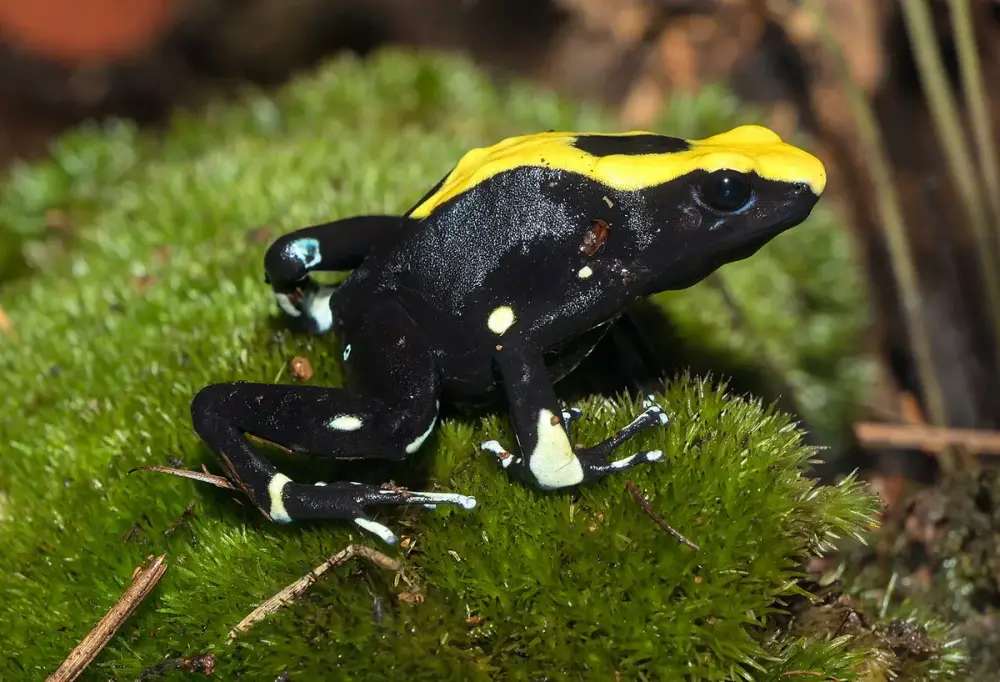
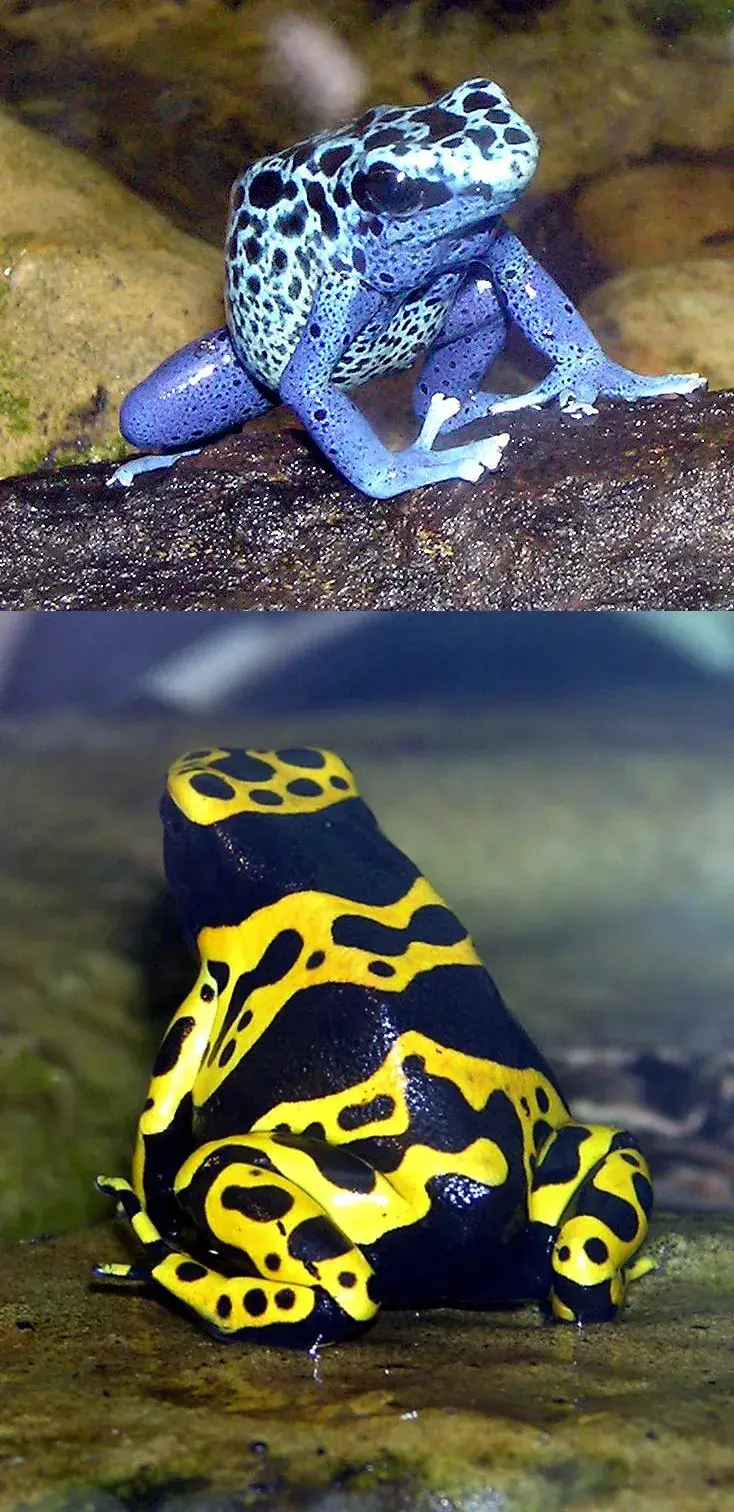
The yellow-banded poison dart frog, also called the bumblebee poison frog, is one of the largest in its genus, with a snout-to-vent length of 3.1 to 5 cm. Its bright yellow body is marked with broad black bands or spots, a warning to predators. It lives in humid tropical forest, mostly in Venezuela and also in Guyana, Brazil and eastern Colombia, close to fresh water, on rocks, bromeliads and leaf litter. Active by day and fiercely territorial, it gets its toxins from the arthropods it eats. It is the only poison dart frog known to estivate through dry spells.
About the yellow-banded poison dart frog
The yellow-banded poison dart frog, also known as the yellow-headed poison dart frog or bumblebee poison frog, belongs to the genus Dendrobates in the family Dendrobatidae. It is one of the larger species in that genus, with a snout-to-vent length between 3.1 and 5 cm (1.2 and 2.0 in), though average adults rarely exceed 4 cm (1.6 in) and weigh only around 3 grams (0.11 oz). Females tend to run slightly larger than males, but the sexes otherwise look alike.
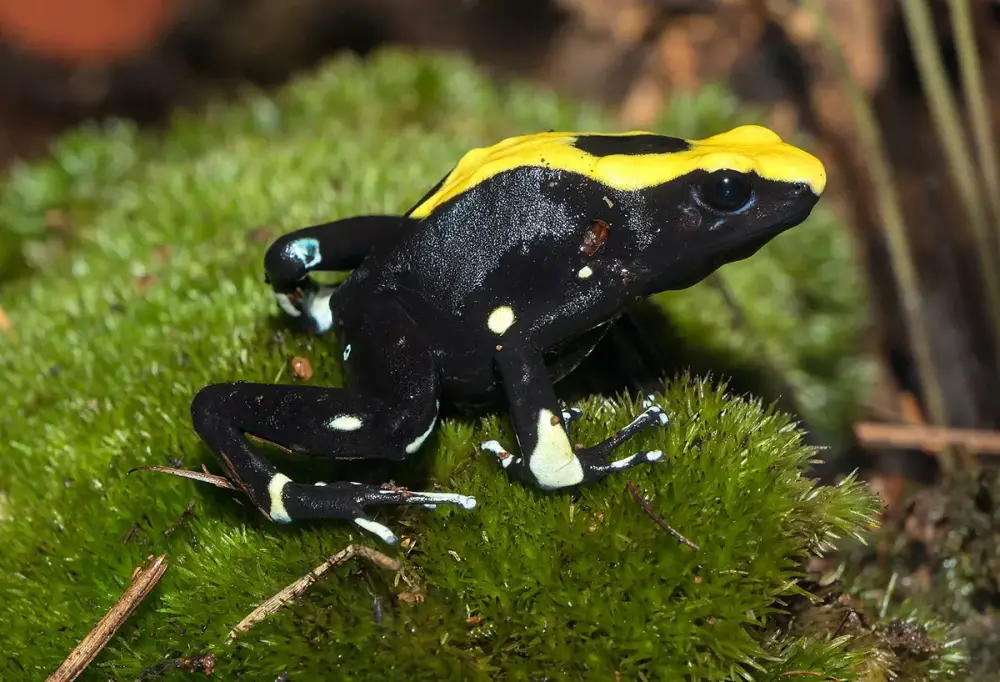
Its defining feature is color: a bright yellow body marked with broad black stripes and spots that extend over the whole body, though some individuals show an orange base color instead, and the extent of the banding — from fine spots to thick, unbroken bands — varies naturally within the species, not just among frogs bred in captivity. This bold pattern is a form of aposematic coloration, a warning to potential predators that the frog would make an unpalatable or toxic meal. Like other poison dart frogs, it has glandular, adhesive pads on its toes that aid climbing and positioning, and a short, sticky, unnotched tongue it extends to catch prey.
Behavior and diet
Diet
Arthropod prey, including species that supply the toxins the frog stores in its skin
The yellow-banded poison dart frog is diurnal and fiercely territorial, living in small groups rather than alone. Uniquely among poison dart frogs, it estivates during dry spells, tucking away rather than staying active through the driest stretch of the year.
Its skin secretes toxins gained from the arthropod prey it eats; the exact prey source isn't settled for this species, though a possible source has been proposed for a related genus of dendrobatid, Phyllobates terribilis: a local variant of the Melyrid beetle. The toxins themselves are alkaloids, and some are potent neurotoxins that interfere with nerve impulses and can lead to heart failure or fibrillation.
Range and habitat
Habitat
Humid tropical rainforest near fresh water, on rocks, trees, bromeliads, and leaf litter
Dendrobates leucomelas is a common poison dart frog found across the northern part of South America, most notably in Venezuela, with additional populations in Guyana, Brazil, and the extreme eastern edge of Colombia. It lives in very humid conditions in tropical rainforest close to fresh water, typically found on flat rocks, in trees, on plants such as bromeliads, and in the leaf litter of the forest floor. During the dry season, individuals move to damper refuges, congregating under rocks or fallen tree trunks.
The species' natural habitat is tropical and does not see much seasonal temperature swing; variation instead tracks elevation and time of day, typically running from 26 to 30 °C (79 to 86 °F) or higher. It occurs from sea level up to about 800 meters (2,600 ft), including in seasonally drier forest patches within its range, and it tolerates lower humidity better than most of its relatives in the genus Dendrobates — though in captivity, keepers still have to guard against overheating.
Conservation status
The yellow-banded poison dart frog is rated Least Concern. Its robustness, relatively common numbers in the wild, and wide natural distribution have kept it off more urgent watch lists, even though wild specimens have historically been overharvested for the exotic pet trade. That pressure has eased somewhat because the species breeds easily in captivity, which has pushed market prices down and reduced the incentive to collect frogs from the wild.
Where to see yellow-banded poison dart frog in the U.S.
10 zoos across 9 states
Find the closest one
Rank the 10 zoos holding yellow-banded poison dart frog by how far they are from you. Your location is used in your browser to sort this list and is never sent to us.
California· 1
Hawaii· 1
Maryland· 1
New York· 2
Ohio· 1
Pennsylvania· 1
Rhode Island· 1
Virginia· 1
Wisconsin· 1
AZAThe Association of Zoos and Aquariums. Accredited members have passed an independent inspection of animal care and welfare, safety, conservation and education, repeated every five years. Many smaller facilities never apply, so “not accredited” isn't a verdict on its own. What accreditation means · How we check this
Built from each zoo's own published animal list.
Yellow-banded Poison Dart Frog: common questions
Is the yellow-banded poison dart frog endangered?
No. It is rated Least Concern, thanks to its wide range, common numbers in the wild, and success breeding in captivity.
How big does a yellow-banded poison dart frog get?
It runs 3.1 to 5 cm (1.2 to 2.0 in) snout to vent, though most adults stay under 4 cm (1.6 in) and weigh around 3 grams (0.11 oz).
Is the yellow-banded poison dart frog actually toxic?
Yes. It secretes alkaloid toxins through its skin, gained from the arthropods it eats, and some of these toxins are potent neurotoxins.
Where do yellow-banded poison dart frogs live in the wild?
In humid tropical rainforest in northern South America, mainly Venezuela, plus Guyana, Brazil, and the eastern edge of Colombia.
Which U.S. zoos have yellow-banded poison dart frogs?
Six zoos in our directory, including the Cincinnati Zoo and Botanical Garden, the Buffalo Zoo, and the Roger Williams Park Zoo.