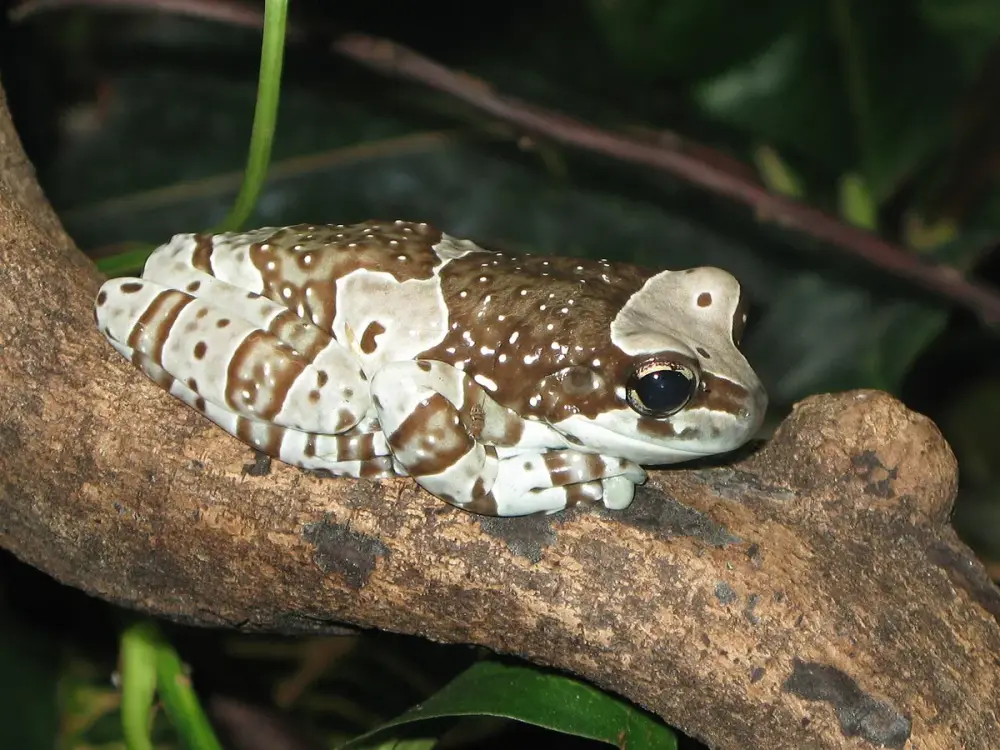
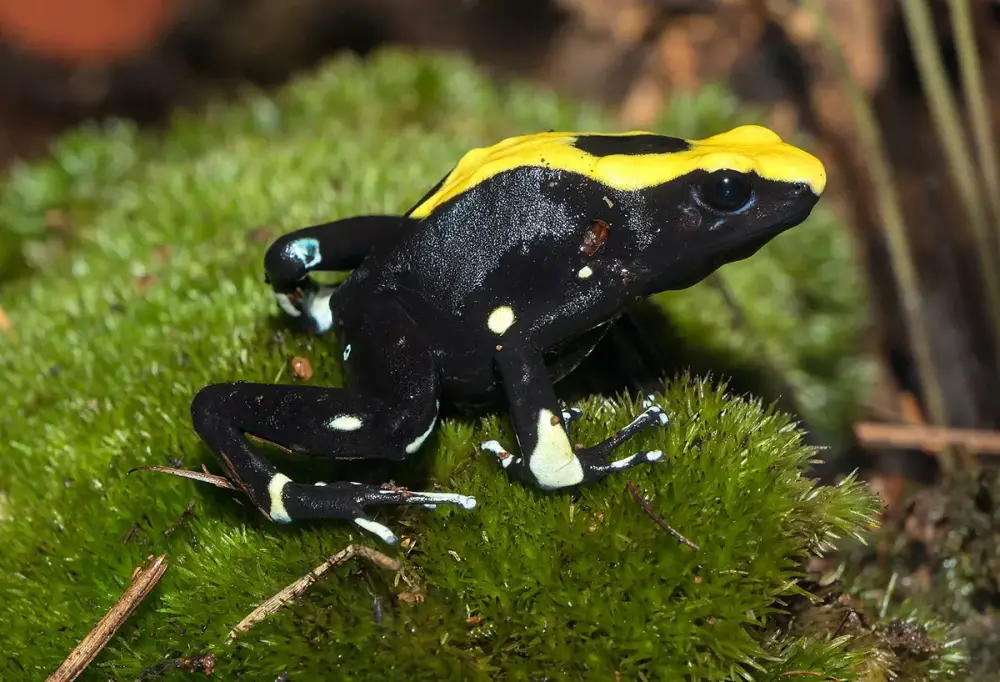
- Where to see one
- 25 U.S. zoos in our directory hold poison dart frog, confirmed against each zoo's own animal list.
- Native range
- Tropical Central and South America
- Size
- Most species are less than 1.5 cm (0.59 in) to 6 cm (2.4 in) long, and weigh 28 g (0.99 oz) on average
Conservation status
Not Evaluated
This species has not been assessed for the IUCN Red List, so it sits outside the threat scale entirely.
Varies by species; there is no single status for the family, and many species are threatened by habitat loss
About the poison dart frog
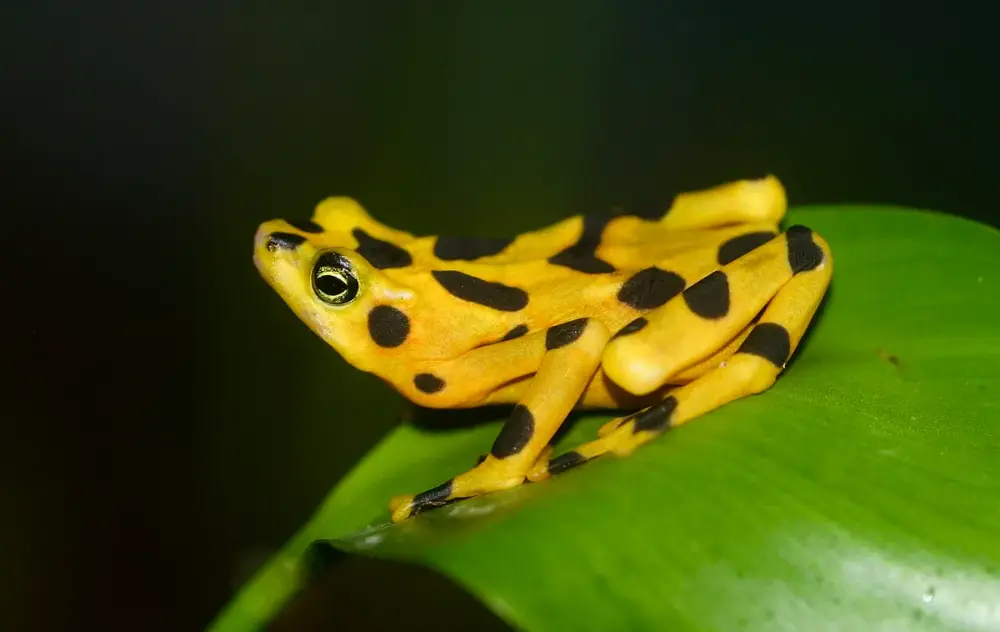
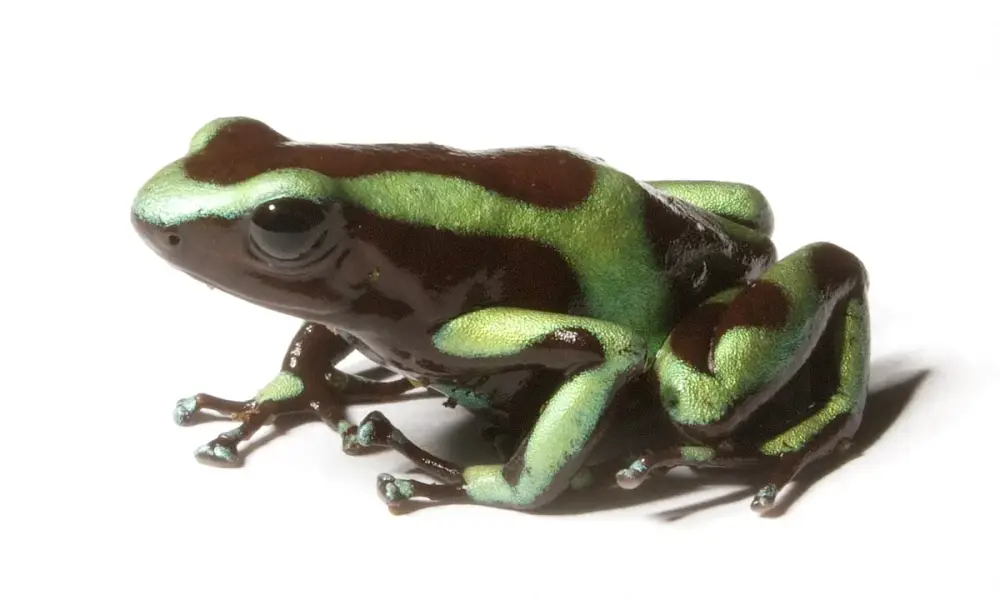
Poison dart frog is the common name for a group of frogs in the family Dendrobatidae, native to the tropical parts of Central and South America. The family currently holds 16 genera and about 200 species, and it is a frequent subject of taxonomic revision, so its boundaries keep shifting. Most species are diurnal and brightly colored, and that bright coloration is closely tied to how toxic a given species is: frogs that eat a steady diet of ants, mites, and termites tend to carry the strongest colors and the most potent toxins, while species with a broader, more varied diet tend toward dull, cryptic coloration and little or no toxicity.
The name "dart frog" comes from the use, by some Indigenous South American groups, of the frogs' skin secretions to poison the tips of blowdarts. In practice, of more than 170 species in the family, only four have been documented as used this way, and all four belong to the genus Phyllobates, whose members are unusually large and unusually toxic for the family. Curare plants, not frog toxins, are the more common source for poisoned darts.
Most poison dart frogs are small: many adults measure less than 1.5 cm (0.59 in), though some species reach 6 cm (2.4 in), and the average weight across the family is about 28 g (0.99 oz). Frogs in the genus Dendrobates carry high levels of alkaloids and bright warning colors, while Colostethus species are cryptically colored and are not toxic. Coloration and pattern in the family are thought to have evolved into their warning form at least four separate times, and some species, including Dendrobates tinctorius, Oophaga pumilio, and Oophaga granulifera, include multiple color morphs within a single species that can interbreed with one another — a pattern that has caused taxonomists to mistake single species for several over the years.
Behavior and diet
Diet
Mostly ants, along with mites, small beetles, and other small arthropods; a few species also take larger prey such as spiders
Poison dart frogs get the toxins in their skin from what they eat, chiefly ants, along with mites, small beetles, and other small litter-dwelling arthropods, which make up the bulk of the diet. A smaller share of the diet consists of larger, more mobile prey such as orthopteroids, moth and butterfly larvae, and spiders. Because captive-bred frogs are raised on diets that lack these alkaloid-rich prey, they do not build up significant toxin levels, though they retain the ability to do so if an alkaloidal diet is reintroduced.
The toxins themselves are lipophilic alkaloids, secreted through granular glands in the skin, and researchers have identified roughly 28 structural classes of them across the family, with names including batrachotoxin, epibatidine, and pumiliotoxin 251D. The most toxic species is the golden poison frog (Phyllobates terribilis), which carries enough toxin on average to kill ten to twenty men or about twenty thousand mice; most other species in the family, while colorful and toxic enough to deter predators, pose far less risk to people or other large animals. At least one predator, the snake Erythrolamprus epinephalus, has developed immunity to the poison. The same chemistry has drawn medical interest: a compound from the skin of Epipedobates tricolor called epibatidine is a painkiller roughly 200 times as potent as morphine, though its therapeutic dose sits dangerously close to a fatal one, and secretions from the family have also shown promise as muscle relaxants, heart stimulants, and appetite suppressants.
Both males and females are territorial and can be aggressive, particularly around the sites males use to call for mates. Disputes often escalate from calling and posturing into physical fights, with rivals striking each other and grasping at limbs; females fight as well, especially over territory or over access to a calling male. These wrestling bouts can look, to an observer, like the clutching behavior frogs use during mating, but they are contests rather than courtship.
Reproduction in the family is attentive by amphibian standards. Adults lay eggs in moist spots such as on leaves, among exposed roots, or tucked into plants, and eggs are fertilized externally, the way most fish reproduce. Once the eggs hatch, an adult carries the tadpoles, one at a time on its back, to water — sometimes a pool, sometimes the water that collects in the cup of a bromeliad or other plant. In some species the tadpoles stay there and are fed, at intervals, by unfertilized eggs the mother continues to lay for them; the operational sex ratio in the family skews female overall.
Range and habitat
Habitat
Rainforests, moist lowland and montane forests, high-altitude shrubland, freshwater marshes, swamps, and some degraded or agricultural land
Poison dart frogs are found across the humid tropics of Central and South America, including Bolivia, Costa Rica, Brazil, Colombia, Ecuador, Venezuela, Suriname, French Guiana, Peru, Panama, Guyana, and Nicaragua, and they have also been introduced to Hawaii. Within that range, they occupy moist lowland and montane tropical and subtropical forests, high-altitude shrubland, rivers, freshwater marshes and swamps, and lakes.
Some species range more broadly into seasonally wet or flooded lowland grassland, arable land, pastureland, rural gardens, plantations, moist savanna, and heavily degraded former forest, and premontane forests and rocky areas hold frogs as well. Most stay on or near the ground, though some climb as high as 10 m (33 ft) into trees.
Conservation status
There is no single IUCN Red List status for poison dart frogs, because the IUCN assesses each species in the family Dendrobatidae separately. Many of those species are described as threatened as roads, farms, and settlements encroach on their tropical forest habitats.
Where to see poison dart frog in the U.S.
25 zoos across 16 states
Find the closest one
Rank the 25 zoos holding poison dart frog by how far they are from you. Your location is used in your browser to sort this list and is never sent to us.
Arizona· 1
California· 5
Connecticut· 1
District of Columbia· 1
Florida· 2
Iowa· 1
Kentucky· 1
Massachusetts· 3
Michigan· 3
Missouri· 1
New York· 1
Ohio· 1
Tennessee· 1
Texas· 1
Virginia· 1
Washington· 1
AZAThe Association of Zoos and Aquariums. Accredited members have passed an independent inspection of animal care and welfare, safety, conservation and education, repeated every five years. Many smaller facilities never apply, so “not accredited” isn't a verdict on its own. What accreditation means · How we check this
Built from each zoo's own published animal list.
Poison Dart Frog: common questions
Is the poison dart frog endangered?
It depends on the species. The IUCN assesses each species separately, and many are threatened by habitat loss as human infrastructure moves into tropical forests.
How big does a poison dart frog get?
Most are small, from under 1.5 cm (0.59 in) up to about 6 cm (2.4 in) long, and they weigh about 28 g (0.99 oz) on average.
What does a poison dart frog eat?
Mostly ants, plus mites, small beetles, and other small arthropods; a few species also eat larger prey like spiders and insect larvae. That diet is also what produces the toxins in their skin.
Where do poison dart frogs live in the wild?
In the tropical rainforests and other moist habitats of Central and South America, in countries including Bolivia, Costa Rica, Brazil, Colombia, Ecuador, Peru, and Panama.
Are captive-bred poison dart frogs toxic?
Not to any meaningful degree. Their toxicity comes from eating alkaloid-rich arthropods in the wild, and frogs raised on diets without those prey items don't build up significant toxin levels.
Which U.S. zoos have poison dart frogs?
Fourteen U.S. zoos list them, including the San Diego Zoo, the Saint Louis Zoo, and Franklin Park Zoo.