
Frogs and toads in U.S. zoos
Frogs and toads are tailless amphibians of the order Anura, with over 7,700 species making up about 87 percent of all amphibians. Toad is an informal name for rough, warty-skinned frogs; only the family Bufonidae are true toads. Most frogs start life as aquatic tadpoles, and more than a third of species are threatened.
Most widely held
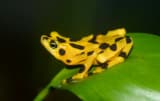 Panamanian Golden FrogAtelopus zetekiAt 27 zoos · Critically Endangered
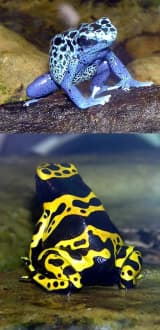 Poison Dart FrogDendrobatidaeAt 25 zoos
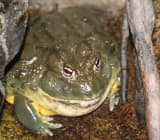 African BullfrogPyxicephalus adspersusAt 16 zoos · Least Concern
 Green-and-Black Poison Dart FrogDendrobates auratusAt 15 zoos · Least Concern
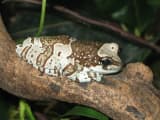 Amazon Milk FrogTrachycephalus resinifictrixAt 12 zoos · Least Concern
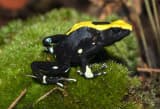 Dyeing Poison Dart FrogDendrobates tinctoriusAt 12 zoos · Least Concern
 Puerto Rican Crested ToadPeltophryne lemurAt 11 zoos · Endangered
 Yellow-banded Poison Dart FrogDendrobates leucomelasAt 10 zoos · Least Concern
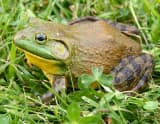 American BullfrogLithobates catesbeianusAt 9 zoos · Least Concern
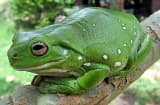 White's Tree FrogLitoria caeruleaAt 9 zoos · Least Concern
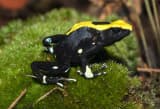 Blue Poison Dart FrogDendrobates tinctoriusAt 7 zoos · Least Concern
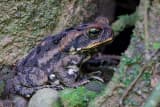 Cane ToadRhinella marinaAt 7 zoos · Least Concern
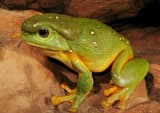 Magnificent Tree FrogLitoria splendidaAt 7 zoos · Least Concern
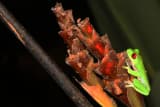 Red-eyed Tree FrogAgalychnis callidryasAt 7 zoos · Least Concern
- Tomato FrogDyscophus antongiliiAt 7 zoos · Least Concern
Frogs, toads and how they live
All frogs and toads belong to one order, Anura, meaning "without tail". Adults have stout bodies, long hind legs, protruding eyes and a sticky tongue attached at the front of the mouth. The split between frogs and toads is informal: "toad" generally describes dry, warty-skinned land dwellers, and only the Bufonidae count as true toads. The Panamanian golden frog, despite its name, is one of them.
Most species lay eggs in water that hatch into tadpoles, which later metamorphose into adults. Frog skin is a working organ that can absorb water and oxygen, and that permeable skin is one reason frogs are treated as indicators of ecosystem health.
Color, toxins and calls
Skin glands make many frogs distasteful or toxic, and most toads have large parotoid glands behind the eyes. The cane toad, the largest true toad, is poisonous enough to be dangerous to dogs that bite it. Poison dart frogs advertise their toxins with bright colors; the blue poison dart frog and green-and-black poison dart frog are examples, and they get their toxins from the insects they eat.
Bright color does not always mean poison. The red-eyed tree frog is not poisonous; it rests with its eyes closed and legs tucked in, then flashes red eyes and orange feet to startle a predator. The Amazon milk frog defends itself by releasing a sticky white fluid.
Each species has its own call, made by pushing air through the larynx and often amplified by a vocal sac. The American bullfrog is named for the male's deep, bull-like call.
Conservation picture
Frogs are seen as environmental bellwethers, and their numbers have fallen sharply since the 1950s. More than a third of species are threatened with extinction. Chytridiomycosis, a fungal disease, has been linked to dramatic declines and extinctions, and it can kill every animal in some populations.
The Panamanian golden frog is Critically Endangered and may have been extinct in the wild since 2007, after chytrid reached its range; captive breeding is now its main safeguard. The Puerto Rican crested toad, Endangered on the IUCN Red List, is the focus of a captive breeding and reintroduction program that released a cumulative 260,000 tadpoles over two decades.
Introduced frogs can cause harm too. The cane toad is invasive in Australia, Florida and many Pacific islands, and the American bullfrog has been spread to more than 40 countries, where it outcompetes native frogs.
Common questions
What is the difference between a frog and a toad?
There is no strict biological difference: all members of the order Anura are frogs. Toad usually means a land-dwelling frog with dry, warty skin, and only the family Bufonidae are considered true toads.
How many species of frogs are there?
There are over 7,700 species of frogs and toads in 59 families. They make up about 87 percent of all amphibian species, with the greatest diversity in tropical rainforests.
Why are poison dart frogs brightly colored?
Their bright colors warn predators that they are toxic, a strategy called aposematism. Poison dart frogs get their skin toxins from the insects and other arthropods they eat.
What is chytrid fungus?
Chytridiomycosis is an infectious amphibian disease caused by chytrid fungi. It has been linked to dramatic declines or extinctions of amphibians in the Americas, eastern Australia, east Africa and parts of the Caribbean, and no effective control is known in the wild.
Why are frogs disappearing?
Frog populations have declined dramatically since the 1950s, and more than 120 species are believed to have gone extinct since the 1980s. Habitat loss, pollutants, climate change, introduced predators and competitors, and diseases such as chytridiomycosis all contribute, and species with aquatic eggs and larvae seem most affected.
What is the smallest frog?
Paedophryne amauensis of Papua New Guinea is the smallest, at a snout–vent length of 7.7 mm (0.30 in). At the other end, the goliath frog reaches about 35 cm (14 in).
Sources
Last reviewed