- Where to see one
- 7 U.S. zoos in our directory hold red-eyed tree frog, confirmed against each zoo's own animal list.
- Native range
- Southern Mexico through Central America to northwestern South America
- Size
- Males about 5 cm (2 in); females about 7.6 cm (3 in)
- Lifespan
- About 5 years in the wild; reports of more than 8 years in captivity
- Clutch size
- Roughly 40 eggs, laid on leaves above water
- Other name
- Red-eyed leaf frog
Conservation status
Least Concernassessed 2020
IUCN Red List category LC — step 1 of 7.
The red-eyed tree frog is a tree frog native to forests of Central America and northwestern South America, ranging from northeastern Honduras to northern Colombia. It has a bright green body with blue and yellow side stripes, orange feet with suction cups and bright red eyes. It is arboreal and nocturnal, spending most of its time on the undersides of leaves and hunting mainly moths, crickets, flies and other insects. It breeds near ponds during the rainy season, and males croak to attract females and wrestle each other for access. Despite its colours, it is not poisonous; the colours likely help it blend into foliage and may startle predators.
About the red-eyed tree frog
The red-eyed tree frog is a small, bright green tree frog with vivid red eyes, native to the rainforests of southern Mexico, Central America and northwestern South America. It belongs to the leaf frogs, subfamily Phyllomedusinae, within the tree frog family Hylidae. It lives in the canopy near ponds and is active at night.
It is one of the most recognizable frogs anywhere. The body is bright green with a pale blue or cream belly and blue and yellow stripes along the sides. The feet are bright orange, and the toes are webbed and tipped with sticky pads that let the frog cling to the undersides of leaves, where it spends most of its time. Females are noticeably larger, about 7.6 cm (3 in) compared with about 5 cm (2 in) for males.
The red eyes have vertical pupils. Instead of a true eyelid, each eye has a thin membrane that still lets light through when closed, so a resting frog can notice an approaching predator. The skin is smooth and has a gland that coats the outer layer in mucus, which slows water loss and helps protect against infection.
Colors are fairly consistent across the range, but there are regional forms. In Costa Rica and Panama, the side stripes can be blue, blue and red, orange or purple. Like other tree frogs, it has claw-shaped bones at the tips of its toes, and two traits mark it as a member of its genus, Agalychnis: a red tint to the iris and a gold, net-patterned membrane over the eye. Its skin also strongly reflects near-infrared light.
Behavior and diet
Diet
Insects such as moths, crickets, katydids, grasshoppers, flies and mosquitoes; occasionally smaller amphibians
Red-eyed tree frogs are nocturnal. Like all members of their genus, they have trouble preventing dehydration in heat, so they spend the day resting on the underside of leaves and come out to hunt at night. In very hot or dry weather they shelter under broad leaves closer to the forest floor.
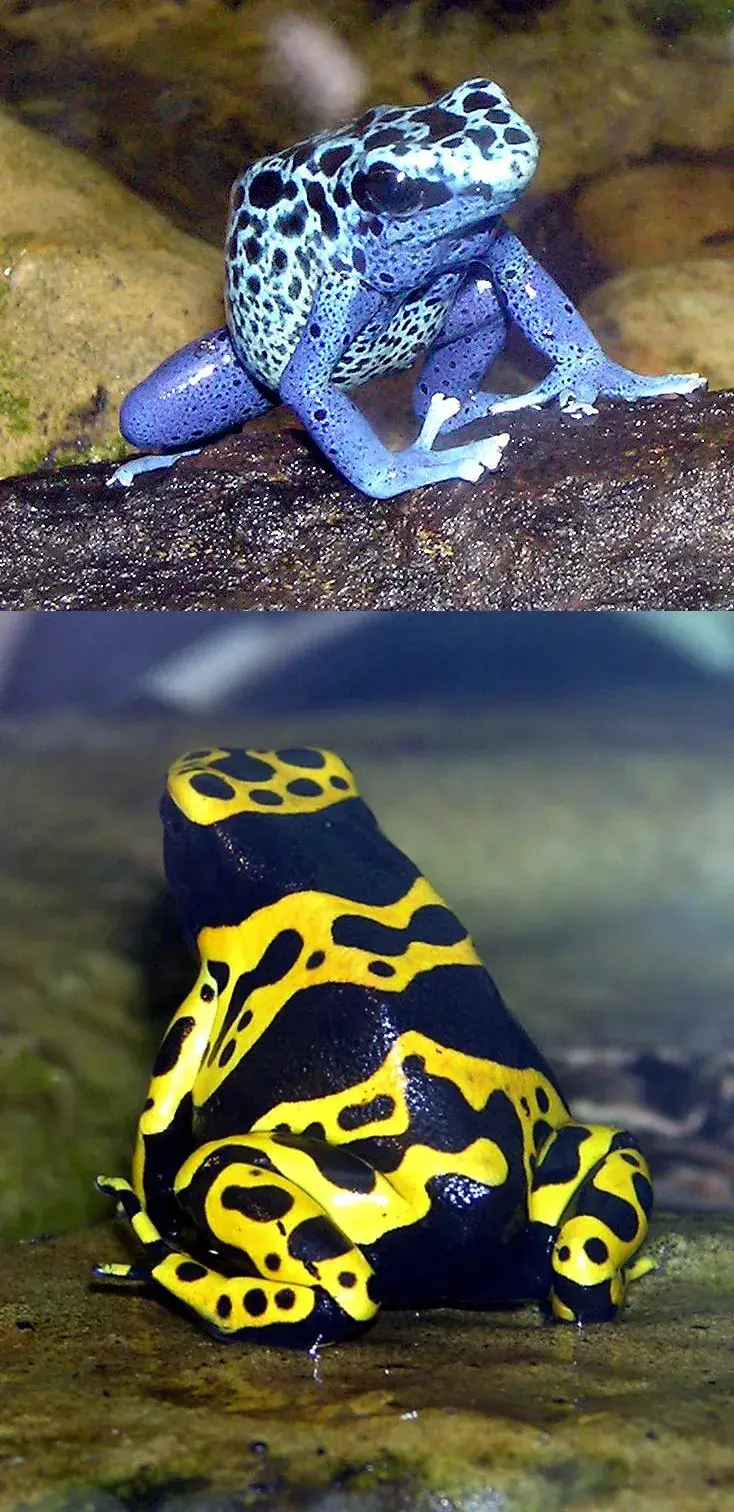
Their famous colors work as a trick called flash coloration. At rest, the frog tucks in its legs and closes its eyes, and its green back blends into the leaf. If disturbed, it suddenly reveals its red eyes, orange feet and blue and yellow flanks, which may startle a predator long enough for the frog to escape. Unlike the bright colors of poison dart frogs, these colors don't signal toxicity; the red-eyed tree frog isn't poisonous.
Adults are mainly insect eaters. Moths, crickets, katydids, grasshoppers, flies and mosquitoes make up much of the diet, and they occasionally eat smaller amphibians. Tadpoles eat plants, algae, plankton, bacteria, carrion and even other tadpoles. Carotenoids in the diet matter: they boost female growth and egg production and make the skin redder.
Breeding happens in the rainy season, from October to March. Males call with a short "chack" and wrestle rivals for access to females. They also shake the branches they sit on to keep competitors away, the first evidence that tree-dwelling vertebrates use vibration to communicate. Females are choosy and tend to prefer males with local call patterns and flank stripes.
During mating, the female carries the male on her back for several hours. She lays a clutch of roughly 40 eggs on a leaf hanging over a pond or puddle and can lay several clutches in one night. The eggs are glued together in sticky jelly, and the leaf is sometimes folded to hide them.
Undisturbed eggs hatch in about 6–8 days, and the tadpoles drop into the water below. But the embryos can also hatch early. When a snake or wasp attacks a clutch, the embryos read the specific pattern of vibrations and burst out within seconds, falling into the water to escape. They also hatch early during floods or when the eggs dry out.
Range and habitat
Habitat
Humid lowland rainforest near ponds and other water, from sea level to 1,250 m (4,100 ft)
The red-eyed tree frog ranges from southern Mexico across Central America into the northern part of South America, including northern Colombia. It lives in humid places with plenty of water, chiefly tropical rainforest, from sea level to about 1,250 m (4,100 ft).
A permanent pond or other still water nearby is essential, because that is where its tadpoles develop. The frogs are mostly arboreal, hiding among leaves in the canopy, and they need high humidity, usually at least 80 percent.
Predators are a constant pressure at every life stage. Wasps and snakes raid the eggs; dragonflies, fish, water beetles and shrimp eat the tadpoles; and spiders, snakes, birds and bats prey on young and adult frogs.
Conservation status
The red-eyed tree frog is listed as Least Concern on the IUCN Red List. That rating reflects its wide range, its tolerance of some habitat change and a large captive population. Even so, many wild populations are decreasing, and it is listed on Appendix II of CITES, which regulates international trade.
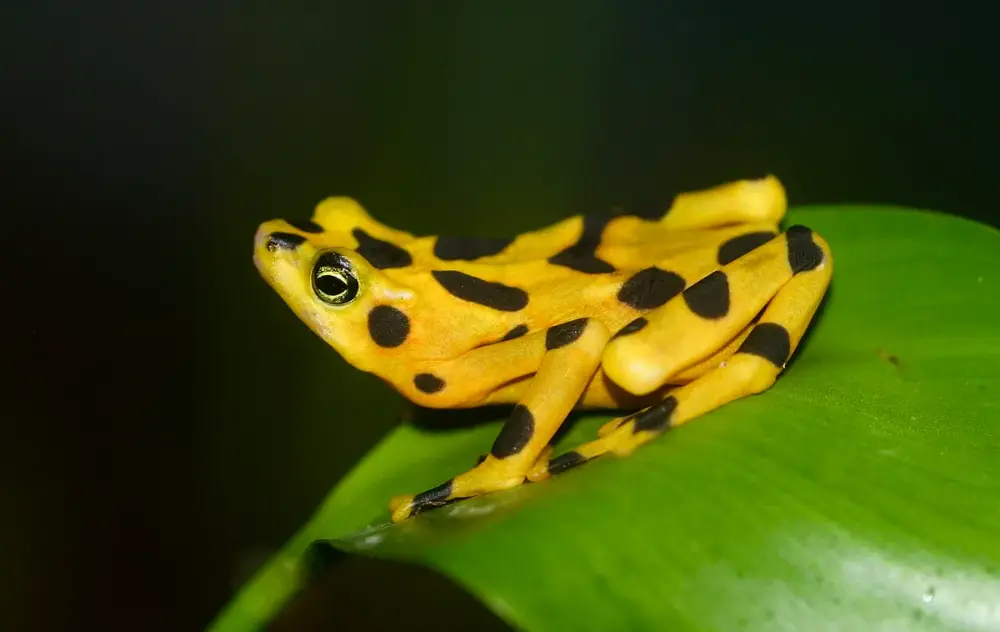
The main threat is deforestation, along with logging and residential development. Like many amphibians, it is also vulnerable to chytrid fungus, and wild tadpoles have suffered die-offs from ranavirus. Some populations in Costa Rica, Nicaragua and Panama are threatened by collection for the international pet trade. For comparison, see the White's tree frog and the Panamanian golden frog.
Where to see red-eyed tree frog in the U.S.
7 zoos across 5 states
Find the closest one
Rank the 7 zoos holding red-eyed tree frog by how far they are from you. Your location is used in your browser to sort this list and is never sent to us.
California· 2
Colorado· 1
Illinois· 1
Maine· 1
Wisconsin· 2
AZAThe Association of Zoos and Aquariums. Accredited members have passed an independent inspection of animal care and welfare, safety, conservation and education, repeated every five years. Many smaller facilities never apply, so “not accredited” isn't a verdict on its own. What accreditation means · How we check this
Built from each zoo's own published animal list.
Red-eyed Tree Frog: common questions
Are red-eyed tree frogs poisonous?
No. Despite their bright colors, they are not poisonous. The colors help them blend into leaves at rest and startle predators when flashed.
Why do red-eyed tree frogs have red eyes?
The red eyes are part of a startle display. When a resting frog is disturbed it suddenly opens its eyes, and the flash of red can make a predator hesitate long enough for the frog to jump away.
How big do red-eyed tree frogs get?
Small. Males reach about 5 cm (2 in) and females about 7.6 cm (3 in).
What do red-eyed tree frogs eat?
Mostly insects, including moths, crickets, katydids, grasshoppers, flies and mosquitoes. They occasionally eat smaller amphibians.
How long do red-eyed tree frogs live?
About 5 years in the wild. In captivity the average is around 4 years, with reports of frogs living more than 8 years.
Where do red-eyed tree frogs live?
In humid rainforests near ponds from southern Mexico through Central America to northwestern South America.
Can you keep a red-eyed tree frog as a pet?
Yes. They are widely kept and bred in captivity, and knowledge of their care improved greatly in the 21st century. Captive frogs need carotenoids in their diet, or their skin color can fade.
Are red-eyed tree frogs endangered?
No. They are rated Least Concern, but many populations are declining, mainly because of deforestation.