Chilean Rose Hair Tarantula
Grammostola rosea
Also known as Chilean Rose Haired Tarantula, Chilean Rose Tarantula, Chilean Rosy-Haired Tarantula
- Where to see one
- 21 U.S. zoos in our directory hold chilean rose hair tarantula, confirmed against each zoo's own animal list.
- Native range
- Northern Chile, Bolivia, and Argentina
- Lifespan
- Females have lived as long as 20 years
Conservation status
Not Evaluated
This species has not been assessed for the IUCN Red List, so it sits outside the threat scale entirely.
No IUCN Red List category cited; CITES Appendix II since 2026
About the Chilean rose hair tarantula
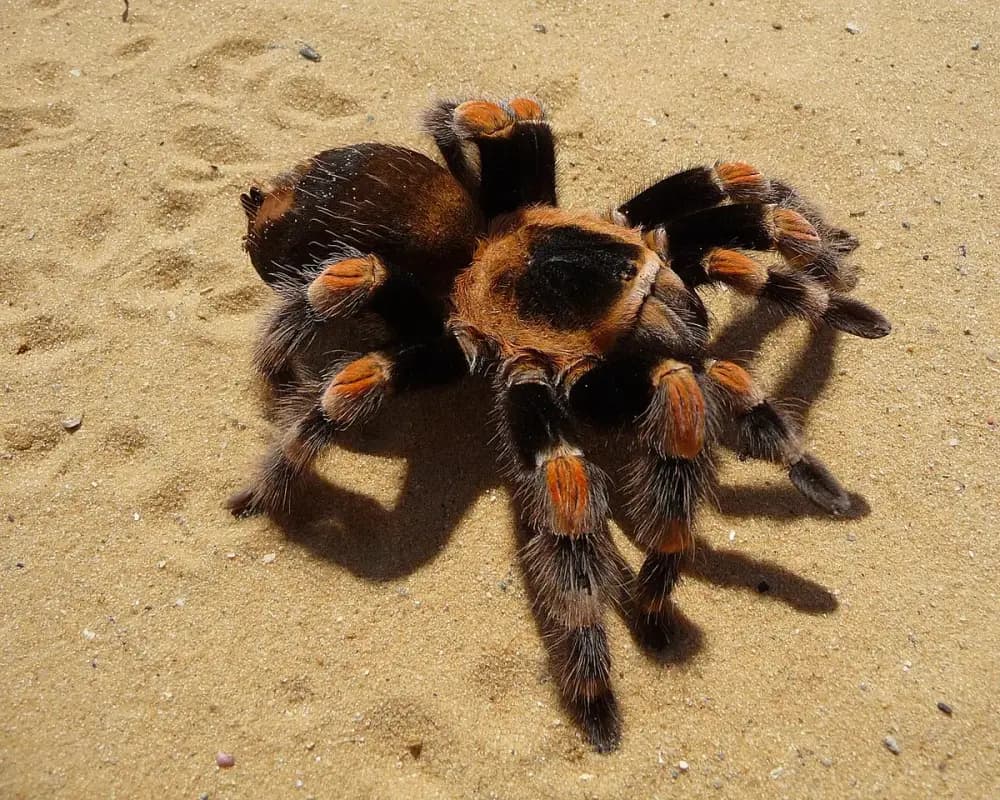
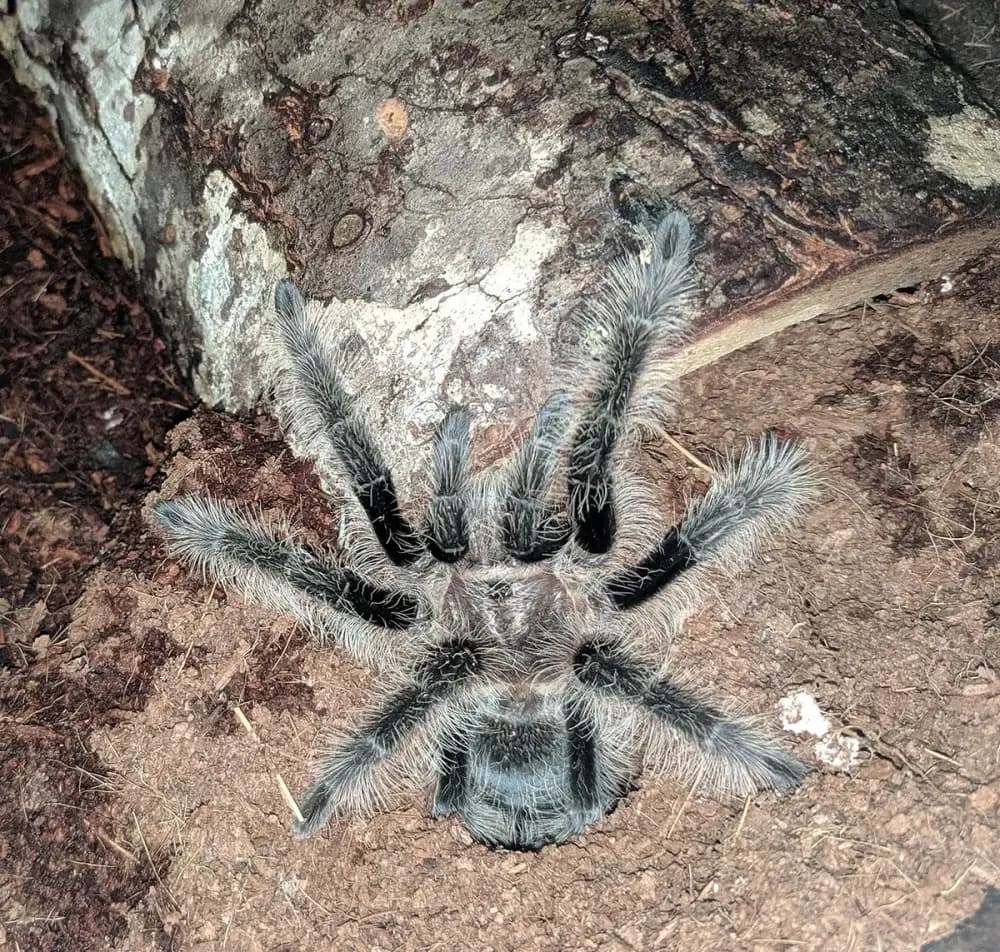
The Chilean rose hair tarantula, also known simply as the rose hair tarantula, the Chilean fire tarantula, or the Chilean red-haired tarantula depending on its color morph, is probably the most common tarantula species in American and European pet stores. That popularity comes down to sheer supply: large numbers of wild-caught specimens have historically been exported cheaply from their native Chile into the pet trade. The species is also found in Bolivia and Argentina. For years, considerable confusion existed between this species and Grammostola porteri, but in 2022 the World Spider Catalog folded the latter into Grammostola rosea as a junior synonym, settling the naming question.
In the wild, Grammostola rosea lives in the high desert and scrub country of northern Chile, Bolivia, and Argentina, at elevations ranging from sea level up to 1,500 m (4,921 ft). It digs its own small burrows or moves into abandoned reptile or rodent burrows, lining them with silk. These burrows run mostly straight down and typically have just one or two chambers. Males favor burrows tucked under vegetation, plant cover, or stones, while females dig less-secured but deeper burrows, reaching down as far as 40 cm. Each burrow houses a single spider — this is a solitary species for most of its life — and in areas where the population is dense, burrows are still spaced no closer than about a meter (3 ft 3 in) apart.
As a pet, this tarantula is popular precisely because it's relatively docile, low-maintenance, and inexpensive to keep. Given its native range in the high desert of northern Chile, it tolerates relatively low humidity and does well at temperatures around 25–30 °C (77–86 °F). It can also fast for weeks or even months at a stretch, a trait sometimes seen as a sign that a molt is coming.
Behavior and diet
Diet
Beetles, caterpillars, crickets, cockroaches, grasshoppers, and occasionally small lizards or rodents
In the wild, this tarantula eats a genuinely broad diet: beetles, caterpillars, crickets, cockroaches, grasshoppers, and even small lizards and rodents on occasion. Kept as a pet, it does best on crickets that have been gut-loaded on fresh vegetables beforehand, which gives the spider a better source of hydrated nutrition than crickets alone.
Females leave their burrows only briefly, mainly to trap food or find a mate, while males abandon their burrows altogether when they go looking for mates, typically between September and March. Mating seasons run September through March and May through July. To reach sexual maturity, the spiders molt repeatedly over three to four years; once mature, males grow tibial hooks on their front legs, which they use to restrain a female during mating. A male signals his intentions by tapping and vibrating his legs outside the female's burrow, then locks onto her chelicerae with his hooks to hold her in position while he transfers sperm. If she does not molt in the following weeks, a fertilized female will spin a web and lay 50 to 200 eggs. Males typically die within a few months of mating.
For defense, the Chilean rose hair tarantula relies first on urticating hairs on its abdomen, which it brushes off with a leg when it feels threatened; these hairs cause irritation and itching on contact with skin or eyes and also work as sensory structures that help the spider detect vibrations. Generally skittish, it prefers to flee rather than fight, though it will rear up and display its fangs if pressed, and it can be especially defensive for a few days after molting. Venom is a backup line of defense, used mainly for subduing prey; it contains neurotoxins and hemotoxins along with enzymes that help break prey down into an ingestible form.
Range and habitat
Habitat
High desert and scrub, at altitudes from sea level to 1,500 m (4,921 ft)
Grammostola rosea is native to the high desert and scrub regions of northern Chile, with additional populations in Bolivia and Argentina, occupying elevations from sea level up to 1,500 m (4,921 ft). Human activity, industrialization, and urbanization have disturbed much of its natural habitat over time, which has made it harder for researchers to pin down the species' exact current distribution. Habitat loss is a real pressure on the species, though it is not considered endangered.
Conservation status
The Chilean rose hair tarantula has no formal wildlife conservation status, no IUCN Red List category is cited for it, and it is not considered endangered. Habitat loss is a pressure on it: human activity, industrialization, and urbanization have disturbed much of its natural habitat in the high desert and scrub of northern Chile, Bolivia, and Argentina, which has also made its exact current distribution harder to pin down.
Its situation in trade has shifted recently. On March 5, 2026, Grammostola rosea was added to Appendix II of CITES, which covers species not necessarily threatened with extinction but whose trade must be controlled to avoid use incompatible with their survival. It is one of the most common tarantulas in the pet trade.
Where to see chilean rose hair tarantula in the U.S.
21 zoos across 14 states
Find the closest one
Rank the 21 zoos holding chilean rose hair tarantula by how far they are from you. Your location is used in your browser to sort this list and is never sent to us.
California· 2
Colorado· 2
Illinois· 1
Kansas· 1
Louisiana· 2
Massachusetts· 2
Minnesota· 1
Mississippi· 1
Montana· 1
New York· 3
North Dakota· 1
Oklahoma· 1
Pennsylvania· 1
Wisconsin· 2
AZAThe Association of Zoos and Aquariums. Accredited members have passed an independent inspection of animal care and welfare, safety, conservation and education, repeated every five years. Many smaller facilities never apply, so “not accredited” isn't a verdict on its own. What accreditation means · How we check this
Built from each zoo's own published animal list.
Chilean Rose Hair Tarantula: common questions
Is the Chilean rose hair tarantula endangered?
No. It has no formal wildlife conservation status and is not considered endangered, though it was added to CITES Appendix II in March 2026 to help regulate trade.
What does a Chilean rose hair tarantula eat?
Its diet includes beetles, caterpillars, crickets, cockroaches, grasshoppers, mealworms, silkworms, waxworms, and occasionally small lizards or rodents.
How long do Chilean rose hair tarantulas live?
Females have been known to live as long as 20 years, and because the species hasn't been studied in captivity for that long, their true lifespan may be even longer.
Where do Chilean rose hair tarantulas live in the wild?
They're native to the high desert and scrub of northern Chile, with additional range in Bolivia and Argentina.
Which U.S. zoos have Chilean rose hair tarantulas?
Ten U.S. zoos list them, including the Cheyenne Mountain Zoo, the Buffalo Zoo, and the Tulsa Zoo and Living Museum.