Curly Hair Tarantula
Tliltocatl albopilosus
Also known as Costa Rican Curly Haired Tarantula, Curlyhair Tarantula
- Where to see one
- 11 U.S. zoos in our directory hold curly hair tarantula, confirmed against each zoo's own animal list.
- Native range
- Costa Rica
- Size
- Leg span of just over 6 inches (15 cm) in captivity
- Lifespan
- Females up to 20 to 25 years in captivity; males 4 to 5 years
Conservation status
Not Evaluated
This species has not been assessed for the IUCN Red List, so it sits outside the threat scale entirely.
No IUCN Red List category cited; CITES Appendix II
About the curly hair tarantula
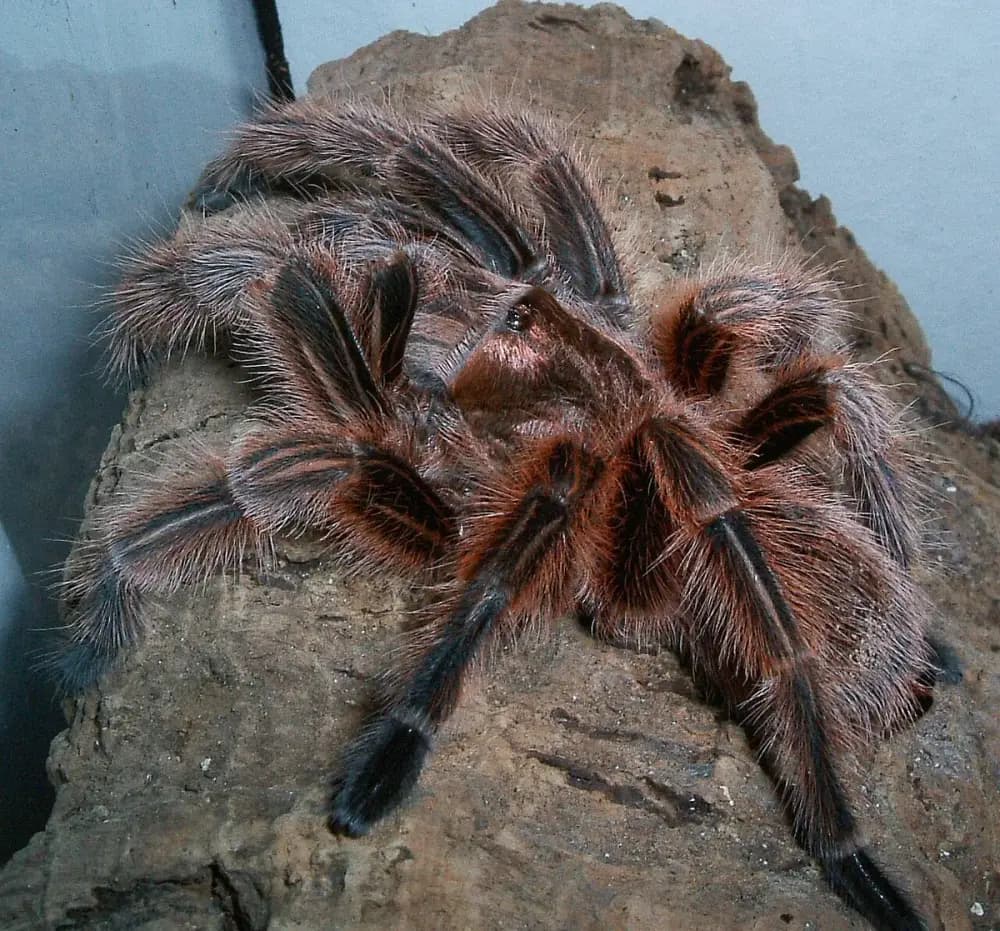
The curly hair tarantula, known scientifically as Tliltocatl albopilosus, gets its common name from an unmistakable feature: long bristles covering its body that have a distinctive curl to them. Those bristles are dark brown to black, giving the spider a plump, sturdy look, and they start out lighter in color when the tarantula is a juvenile, darkening as it ages. Longer gold bristles layered over the body — especially dense on the hind legs — give adults a golden-bronze sheen, with males typically running a shade lighter and more bronze than females.
In captivity, both sexes can reach a leg span of just over 6 inches (15 cm). Lifespan differs sharply between the sexes: males live only about five years, while females have been reported living up to 20 years, and in some cases longer. Taxonomically, the species has moved around a bit. It was first described by Carlos Valerio in 1980 as Brachypelma "albopilosa," but that genus name is grammatically neuter, so the species name was corrected to "albopilosum." Then, in November 2019, the genus Brachypelma was split, and the curlyhair tarantula was reassigned to the new genus Tliltocatl, which is masculine in Latin grammar.
In the wild, this tarantula is native only to Costa Rica, where it's a largely terrestrial, opportunistic burrower. It's found in tropical scrubland, often around the base of large trees, near rivers, or in patches of forest that have been cleared. Rather than building elaborate structures, it relies on existing shelter and burrows to get by.
Behavior and diet
Diet
Insects and small vertebrates
The curly hair tarantula is primarily nocturnal and hunts as an opportunistic ambusher, going after insects and small vertebrates. It doesn't rely on eyesight alone to find prey — sensory areas on the end of each leg detect smell, taste, and vibration, helping it locate a meal in the dark. Once prey is within reach, the tarantula grips it with its pedipalps, the leg-like front limbs, and injects venom through two hollow fangs. That venom does double duty: it paralyzes the prey and starts digesting it externally, after which the tarantula sucks up the liquefied proteins and fats, leaving behind only a small ball of indigestible remains.
Despite that predatory routine, this species has a reputation as usually docile. Its main defense when threatened is kicking urticating hairs off its abdomen with its hind legs — hairs that can cause blindness if they reach a predator's eyes, or a skin rash on contact.
Reproduction happens mainly during the rainy season. A receptive female will allow a male to mate; weeks later, she produces an egg sac holding 300 to 500 eggs. That sac incubates for roughly seven to eight weeks at 24 to 27°C (75 to 81°F), after which pale-colored spiderlings emerge and cluster together before molting again over the following weeks and dispersing to live independently. Not every female is receptive, though — unreceptive females can be aggressive toward approaching males and have been known to kill and eat them.
Range and habitat
Habitat
Tropical scrubland, near the base of large trees, riverbanks, and patches of cleared rain forest
Tliltocatl albopilosus is native to Costa Rica and found nowhere else in the wild. As a burrowing species, it favors tropical scrubland habitats, typically settling around the base of large trees, along riverbanks, or in patches of rain forest that have been cleared.
Conservation status
No IUCN Red List category is cited for the curly hair tarantula. Its largest current threat is habitat loss.
It was once collected from the wild in large numbers for the international pet trade, but the species is now bred in captivity worldwide and relatively few are taken from the wild. It is listed on Appendix II of CITES, so international trade is allowed only within quotas and with permits. In captivity, it adapts well to changes in humidity and temperature and feeds readily on commercially available crickets, superworms, and cockroaches, traits that have made it a common pet tarantula.
Where to see curly hair tarantula in the U.S.
11 zoos across 8 states
Find the closest one
Rank the 11 zoos holding curly hair tarantula by how far they are from you. Your location is used in your browser to sort this list and is never sent to us.
California· 1
Colorado· 1
Georgia· 1
Idaho· 1
Illinois· 2
Indiana· 1
New York· 3
Oregon· 1
AZAThe Association of Zoos and Aquariums. Accredited members have passed an independent inspection of animal care and welfare, safety, conservation and education, repeated every five years. Many smaller facilities never apply, so “not accredited” isn't a verdict on its own. What accreditation means · How we check this
Built from each zoo's own published animal list.
Curly Hair Tarantula: common questions
Is the curly hair tarantula endangered?
No IUCN Red List category is cited for it. Its main current threat is habitat loss, and its international trade is regulated under CITES Appendix II.
How big does a curly hair tarantula get?
In captivity, both sexes reach a leg span of just over 6 inches (15 cm).
What does a curly hair tarantula eat?
Insects and small vertebrates in the wild; crickets, superworms, and cockroaches in captivity.
How long do curly hair tarantulas live?
Females can live 20 to 25 years in captivity, while males typically live only 4 to 5 years.
Where do curly hair tarantulas live in the wild?
Only in Costa Rica, in tropical scrubland, near large trees or rivers, and in cleared rain forest patches.
Which U.S. zoos have curly hair tarantulas?
Six U.S. zoos list them, including the Cheyenne Mountain Zoo, Buffalo Zoo, and Oregon Zoo.