
Invertebrates in U.S. zoos
Invertebrates are animals without a backbone, a catch-all group that one estimate puts at 97% of all animal species. Most invertebrate species are arthropods, such as insects, spiders, scorpions and millipedes, which wear a jointed exoskeleton they must shed to grow. Jellyfish, sea stars and snails are invertebrates too.
Most widely held
 Madagascar Hissing CockroachGromphadorhina portentosaAt 50 zoos
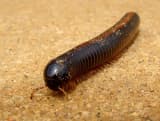 Giant African MillipedeArchispirostreptus gigasAt 25 zoos · Least Concern
 Chilean Rose Hair TarantulaGrammostola roseaAt 21 zoos
 Mexican Red-knee TarantulaBrachypelma hamoriiAt 14 zoos · Vulnerable
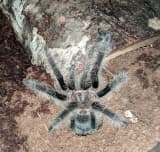 Curly Hair TarantulaTliltocatl albopilosusAt 11 zoos
 Blue Death-Feigning BeetleAsbolus verrucosusAt 10 zoos
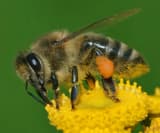 Honey BeeApis melliferaAt 10 zoos
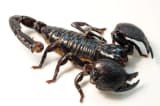 Emperor ScorpionPandinus imperatorAt 8 zoos
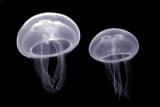 Moon JellyAurelia auritaAt 8 zoos
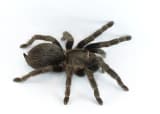 TarantulaTheraphosidaeAt 7 zoos
 Giant Prickly Stick InsectExtatosoma tiaratumAt 6 zoos · Least Concern
What counts as an invertebrate
"Invertebrate" simply means an animal without a backbone. It is a term of convenience rather than a true branch of the family tree, because it lumps together everything that isn't a vertebrate. That covers a huge range: by one estimate, 97% of all animal species, from microscopic myxozoans about 10 micrometers long to the colossal squid at 9 to 10 m (30 to 33 ft).
Arthropods are the largest animal phylum. Arthropods have segmented bodies, paired jointed limbs and an exoskeleton made of chitin. They account for over 80% of known living animal species, and insects alone include more described species than any other class of animal.
Not every invertebrate is an arthropod. The moon jelly is a cnidarian, a true jellyfish with no respiratory, excretory or circulatory system. It takes in oxygen by diffusion through the thin membrane covering its body.
Spiders, scorpions and their relatives
Tarantulas are large, often hairy spiders in a family of about 1,200 species. All are venomous, but none is deadly to people. The Mexican red-knee tarantula shows how lopsided spider lifespans can be: females can live up to 30 years, while males live around five. The Chilean rose hair tarantula digs or borrows burrows in the high desert and scrub of Chile, Bolivia and Argentina and lines them with silk.
Scorpions are arachnids too. The emperor scorpion of West Africa averages about 20 cm (7.9 in) long and, like other scorpions, glows pastel green or blue under ultraviolet light.
Insects and millipedes
Insects have some unusual defenses. The blue death-feigning beetle plays dead when threatened, and its powdery blue color comes from a wax coating that helps it hold moisture in the desert. The wingless Madagascar hissing cockroach cannot fly away, so it hisses to startle predators. Female giant prickly stick insects are covered in thornlike spikes for defense and camouflage.
Arthropods have to molt to grow, shedding the old exoskeleton to reveal a new one. In the giant African millipede, which can reach 33.5 cm (13.2 in), the leg count of about 256 shifts slightly with each molt. Some insects are domestic animals as well. The western honey bee, one of the first insects people domesticated, now lives on every continent except Antarctica.
Conservation picture
Some invertebrates have no global IUCN assessment at all. The blue death-feigning beetle and the honey bee, for example, are listed as Not Evaluated.
Where assessments exist, some popular species are at risk. The Mexican red-knee tarantula is listed as Vulnerable on the IUCN Red List. The pet trade is a pressure too: large numbers of wild-caught Chilean rose hair tarantulas have historically been exported cheaply from Chile, which is why it became probably the most common tarantula in American and European pet stores.
Common questions
What is an invertebrate?
An invertebrate is any animal that neither develops nor keeps a backbone. The term is a grouping of convenience rather than a true scientific group, covering everything from sponges and jellyfish to insects and squid.
What percentage of animals are invertebrates?
The great majority. One estimate puts invertebrates at 97% of all animal species, and arthropods alone account for over 80% of known living animal species.
What is the largest invertebrate?
The colossal squid, which reaches 9 to 10 m (30 to 33 ft). At the other end of the range, myxozoans are about 10 micrometers long.
Are tarantulas dangerous to people?
All tarantulas are venomous, but none is deadly to humans. Most live in burrows and hunt by ambush.
Why do insects and spiders molt?
Arthropods have a hard exoskeleton made of chitin that cannot grow, so they shed it in stages to reveal a new, larger one underneath.
Why do scorpions glow under UV light?
Scorpions fluoresce under ultraviolet light. The emperor scorpion, which is black in normal light, glows pastel green or blue.
Sources
Last reviewed