
- Admission
- $25
- Size
- 25 acres
- Opened
- 1969
- Accreditation
- None listed
not accredited by the Association of Zoos and Aquariums
Everything below is directory information drawn from public sources and the zoo's own site.
Animals at Alaska Zoo
10 of the ~50 species this zoo listsThis is a partial list — we only show species we've confirmed against the zoo's own pages, and their full collection is considerably larger.
Feathers & Fangs from visitors
What people who've been to Alaska Zoo say
A Feather is something this zoo does well; a Fang is something it gets wrong. Left by people who've been, and read by us before they appear.
Loading…
About Alaska Zoo
Alaska Zoo sits on the Anchorage Hillside in Anchorage, Alaska, on land the zoo itself lists as about 30 acres of natural boreal forest at the foothills of the Chugach Mountains, though outside figures put the site closer to 25 acres. It is a 501(c)3 nonprofit, not currently accredited by the Association of Zoos and Aquariums, and it draws nearly 200,000 visitors a year, making it a well-established stop for Anchorage families and travelers passing through Southcentral Alaska.
The zoo is home to more than 100 birds and mammals representing about 50 species, giving it, according to its own materials, the widest variety of animals native to Alaska found anywhere in the state, alongside a handful of exotic species such as Amur tigers, Bactrian camels, and yaks. Beyond public viewing, the zoo describes its work as spanning education, research, wildlife conservation, and animal rehabilitation, and many of its residents originally arrived orphaned or injured rather than through planned acquisition.
Trails wind through the wooded property, giving visitors a chance to walk through natural boreal forest rather than a flat, paved layout, and the zoo positions this setting as central to the experience it offers.
History
The zoo's origin story begins in 1966, when Anchorage grocer Jack Snyder won a company sales contest offering a prize of "$3,000 or a baby elephant" and chose the elephant, a female Asian elephant later named Annabelle. Unable to house her through an Alaska winter, Snyder found a home for Annabelle at the Diamond H Horse Ranch on Anchorage's Hillside, owned by Sammye Seawell, which had the only heated stalls available locally.
As Annabelle's popularity grew, Seawell formed a nonprofit to build a place "where the public could visit animals and learn about them." It was incorporated on March 28, 1968, as the Alaska Children's Zoo, and it opened to the public on August 2, 1969, with Annabelle and other donated animals, including an orphaned black bear, a seal, an Arctic fox, and petting-zoo goats. The zoo's name changed to Alaska Zoo in June 1980.
In 1983, a female African elephant named Maggie arrived as a companion for Annabelle. The zoo drew national attention in 1994 when Binky, one of its polar bears, injured several visitors who entered his enclosure — an incident that received international news coverage and led to design changes making the current polar bear exhibit human-proof. Annabelle died in 1997, leaving Maggie without a companion; after years of debate over whether to move her to a warmer-climate sanctuary, Maggie was relocated to the PAWS sanctuary in California on June 6, 2007, where she died in August 2021.
Exhibits and habitats
Alaska Zoo's grounds are built around wooded trails on the Hillside rather than a series of named themed lands, with animal habitats set into the boreal forest setting. The zoo highlights its collection of species native to Alaska alongside exotic animals such as Amur tigers, Bactrian camels, and yaks, giving it a mix not commonly found together at other zoos in the state.
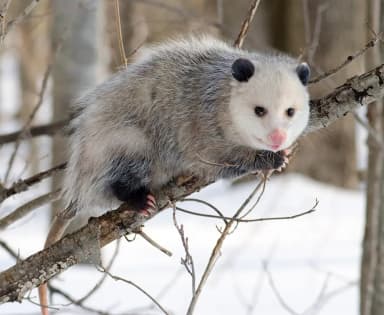
Notable individual animals have shaped the zoo's identity over the decades, most famously Binky the polar bear, whose 1994 enclosure incidents made him one of the zoo's most recognized residents before his death from a parasitic disease in 1995, and Annabelle and Maggie, the zoo's two elephants. More recently, the zoo took in Grubby, an opossum that traveled in a shipping container from Washington State to Homer, Alaska, eluding capture for over a month and delivering a litter of joeys before being trapped by a Homer police officer in May 2023. Because opossums are considered an invasive species in Alaska, Grubby was placed in the zoo's invasive species collection rather than being euthanized.
An all-terrain wheelchair is available for guest use, and the zoo's Gateway Complex, its current entry and administration building, has replaced the original 1970s-era admissions building and red barn.
Animal highlights
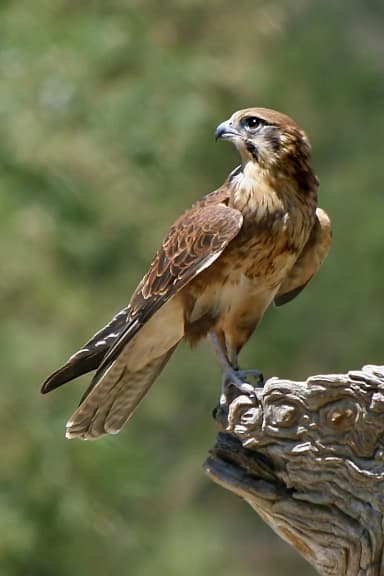
Alaska Zoo lists at least 10 species on its website, though it describes its total collection as more than 100 birds and mammals across roughly 50 species. Species named in the zoo's materials include canids, corvids, eagles, falcons, hawks (including the sharp-shinned hawk), owls, seals, swans, and the Virginia opossum, alongside larger residents such as Amur tigers, Bactrian camels, and yaks mentioned in its history.
The zoo's animal population has historically included black bears, seals, and Arctic foxes among its earliest residents, and polar bears and elephants have been part of its collection at various points in its history, though Annabelle and Maggie, its two elephants, are no longer at the zoo. The zoo is a participant in the Species Survival Program for tigers and snow leopards and works with Polar Bear International on polar bear conservation.
Conservation and programs
Alaska Zoo describes itself as proactive in conservation, research, and education. It participates in the Species Survival Program for tigers and snow leopards, two species represented in its exotic-animal collection, and it works with Polar Bear International in support of polar bear conservation efforts. The zoo also conducts animal husbandry and research work in partnership with the University of Alaska Anchorage.
As the only zoo in Alaska, the organization also positions itself as a rehabilitation resource for the state, taking in orphaned and injured wildlife and working with state and federal wildlife agencies as well as other zoos and wildlife centers around the country to place or care for displaced animals.
Planning your visit
Hours vary by season, as listed on the zoo's website: 9am to 7pm daily in July and August, and 10am to 4pm from October through April, with last entry always 30 minutes before closing. On December 24 the zoo is open 10am–4pm and 5–8pm, and it is closed on Christmas Day.
Admission for group visits of 30 or more (businesses, tour providers, or community organizations, not school groups) is $14.40 per adult age 16 and up, with children age 2 and under free, as listed on the zoo's website; standard published rates were not available in the materials reviewed here. Visitors 16 and older may tour on their own, while those 15 and under must be accompanied by an adult. An all-terrain wheelchair is available and in service for guests who need it.
Zoo memberships are available and include year-round entry during open hours, options for guests and grandparents, behind-the-scenes access, and discounts on summer tour offerings. The zoo does not describe general food service in the materials here, but it does accept food donations for its animals at a marked freezer near its lower parking lot, checked by zookeepers several times daily. As with any Alaska attraction, confirm current hours, admission pricing, and accessibility details on the official Alaska Zoo website before visiting.
What we haven't confirmed
Everything above came from public sources. These specifics we haven't stood behind yet:
- Standard adult and child ticket prices
- Total acreage (zoo materials and outside sources differ)
- Parking availability and cost
- Food and dining options on site
- Average time needed for a full visit
Alaska Zoo compared with nearby zoos
How Alaska Zoo lines up against the closest zoos we have details for — useful if you're deciding between them for the same day out.
| Zoo | Distance | Admission | Hours | Size | AZA |
|---|---|---|---|---|---|
| Alaska ZooThis zooAnchorage, AK | — | $25 | 9am – 7pm | 25 acres | No |
| Alaska Wildlife Conservation CenterPortage, AK | 34 mi | $30 | 10am – 4pm | 200 acres | No |
| Alaska SeaLife CenterSeward, AK | 72 mi | $29.95–$34.70 | 9:00am – 5:00pm | — | Yes |
Distances are straight-line. A dash means we haven't confirmed that detail yet, not that the zoo lacks it.
AZAThe Association of Zoos and Aquariums. Accredited members have passed an independent inspection of animal care and welfare, safety, conservation and education, repeated every five years. Many smaller facilities never apply, so “not accredited” isn't a verdict on its own. What accreditation means · How we check this
Alaska Zoo: common questions
Is Alaska Zoo AZA accredited?
No. Alaska Zoo is not accredited by the Association of Zoos and Aquariums.
When did Alaska Zoo open?
It opened to the public on August 2, 1969, as the Alaska Children's Zoo, and was renamed Alaska Zoo in June 1980.
How big is Alaska Zoo?
The zoo describes its grounds as about 30 acres of boreal forest on the Anchorage Hillside.
What animals can you see at Alaska Zoo?
The collection spans roughly 50 species and more than 100 birds and mammals, including species native to Alaska plus exotics such as Amur tigers, Bactrian camels, and yaks.
Is Alaska Zoo wheelchair accessible?
An all-terrain wheelchair is available and in service for guest use.
How many visitors does Alaska Zoo get each year?
Nearly 200,000 people visit annually, according to the zoo.
Are group rates available?
Yes, for businesses, tour providers, and community organizations with groups of 30 or more; school groups use a separate self-guided field trip rate.
Something wrong here? Tell us — we correct in place, with a dated note.