
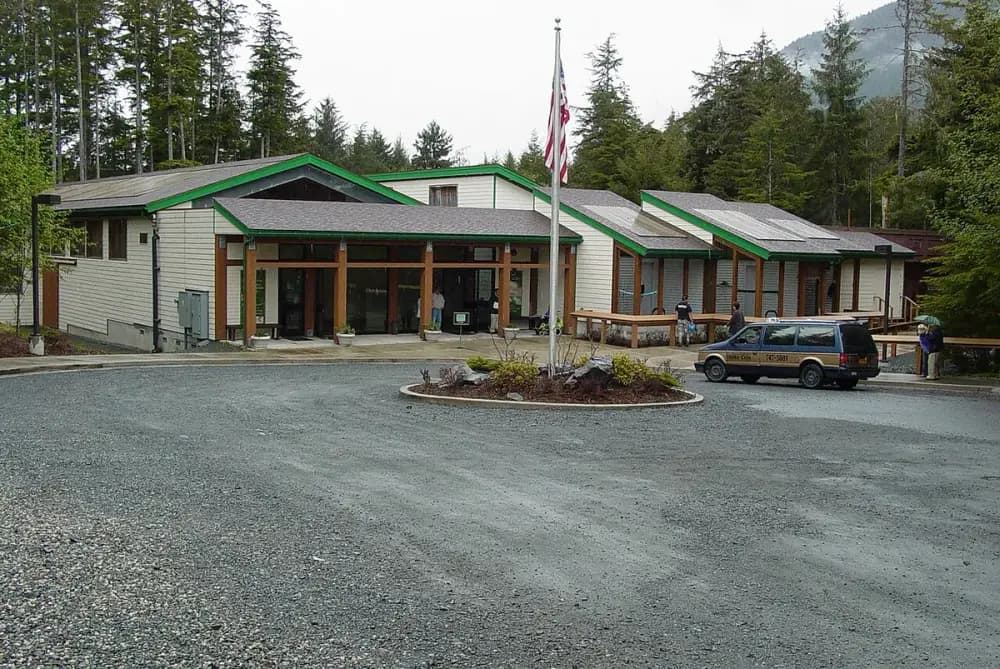
- Admission
- $17
- Opened
- 1980
- Accreditation
- None listed
not accredited by the Association of Zoos and Aquariums
Everything below is directory information drawn from public sources and the zoo's own site.
Animals at Alaska Raptor Center
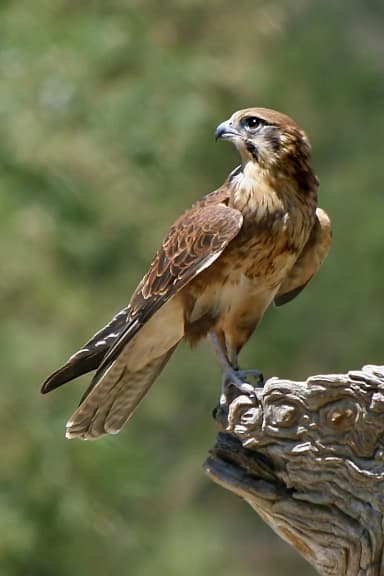
5 confirmed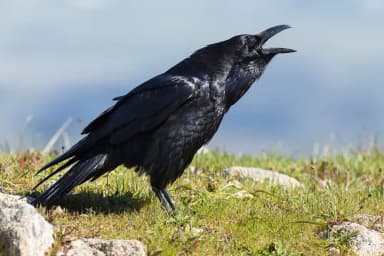
Feathers & Fangs from visitors
What people who've been to Alaska Raptor Center say
A Feather is something this zoo does well; a Fang is something it gets wrong. Left by people who've been, and read by us before they appear.
Loading…
About Alaska Raptor Center
The Alaska Raptor Center is a private nonprofit bird rehabilitation facility in Sitka, Alaska, bordering both the Tongass National Forest and the Indian River. It was founded in 1980, after two Sitka residents took in an injured bald eagle for care at home, and it has operated at its current riverside site since 1991. The center's mission is to promote and enhance wild populations of raptors and other birds through rehabilitation, education, and research, and while bald eagles make up most of its patients, it will treat any wild bird in need.
Unlike a traditional zoo, the Alaska Raptor Center exists primarily as a working wildlife hospital that happens to be open to the public. It treats roughly 100 to 200 injured birds a year, with causes ranging from electrocution and collisions to gunshot wounds, leg-hold traps, starvation, disease, and lead poisoning. The center describes itself as the largest bird treatment facility in Alaska, and it's supported by a mix of professional staff, volunteers, and roughly 2,500 members worldwide, funded through visitor admissions, memberships, donations, gift shop sales, and grants.
History
The center began in 1980 in a Sitka home, when two residents rehabilitated an injured bald eagle themselves. By 1983, the growing operation had moved into a repurposed tool shed on the campus of Sheldon Jackson College, where it solidified its mission of rehabilitating and releasing birds while educating the public about Alaska's raptors. In 1991, the center relocated to its current site bordering the Tongass National Forest and the Indian River, which added a dedicated veterinary clinic, an eagle flight training center, and natural outdoor habitats for birds that can't be released.
Exhibits and habitats
The center's grounds are built around its function as a working hospital rather than a set of display exhibits. The Suzanne and Walter Scott Foundation Bald Eagle Flight Training Center is a large indoor space where recovering eagles can fly, bathe, and interact with other eagles before release. Outdoor natural habitats, added when the center moved to its current site in 1991, house the non-releasable birds that live at the center permanently, including the Bald Eagle Habitat off the back deck of the main building. A specialized veterinary clinic handles incoming patients.
Animal highlights
The center's resident, non-releasable birds — used in its education programs — include eagles, hawks, owls, falcons, and ravens, with about two dozen such residents on-site at any given time according to the center. Its best-known resident was Volta, a bald eagle that sustained permanent shoulder damage in a 1992 collision with power lines; Volta retired from education programs in 2020 and lived out his life in the center's Bald Eagle Habitat until he was humanely euthanized in January 2024 at an estimated age of at least 37. Most incoming patients are bald eagles, though the center treats any injured bird, and it received between 100 and 200 birds a year as of its most recent published figures.
Conservation and programs
Rehabilitation is the center's central activity: injured birds are treated at its on-site veterinary clinic, and eagles healthy enough to fly are moved into the Suzanne and Walter Scott Foundation Bald Eagle Flight Training Center to rebuild strength before release. Birds too badly injured to survive in the wild may become permanent residents or be placed at other accredited zoos and wildlife centers to serve as education ambassadors. Many of the birds treated arrive from outside Sitka, flown in via commercial or regional airlines in covered dog kennels to keep them calm during transport; birds found on Alaska's mainland can also reach the center through a network of agency and volunteer partners, including the U.S. Forest Service, U.S. Fish and Wildlife Service, and Alaska State Troopers. The center also runs public education programs built around its non-releasable Avian Ambassador birds, including informal summer talks and demonstrations about raptor training, biology, and natural behavior.
Planning your visit
As listed on the center's website, the Alaska Raptor Center is open seven days a week, with hours of 8:00 a.m. to 4:00 p.m. and last admission at 3:30 p.m. Tickets are not sold online and must be purchased in person on arrival. A visit combines an outdoor portion — a quarter-mile nature trail along the Indian River that loops through forest and muskeg, where the center's permanent bird residents live — with a smaller indoor section, and the center recommends dressing for rain given Sitka's temperate rainforest climate. Most visits are self-guided, though staff are stationed around the grounds to answer questions, and informal educational talks are offered during the summer without a fixed schedule. Because hours and ticketing can change, confirm current details on the center's official website before visiting.
What we haven't confirmed
Everything above came from public sources. These specifics we haven't stood behind yet:
- Total acreage of the current site
- Ticket prices
- Parking availability
- Wheelchair and stroller accessibility of the outdoor trail
- Phone number beyond the general rescue line
Alaska Raptor Center: common questions
Is the Alaska Raptor Center AZA accredited?
No, the Alaska Raptor Center is not accredited by the Association of Zoos and Aquariums.
When did it open?
It was founded in 1980 and moved to its current riverside location in 1991.
How long does a visit take?
The center doesn't publish a fixed visit length; it describes a mix of a quarter-mile outdoor trail and a smaller indoor area, mostly self-guided.
What animals can you see?
Resident birds include bald eagles and other eagles, hawks, owls, falcons, and ravens that can no longer survive in the wild.
Do I need to buy tickets in advance?
No — tickets are sold only in person at the center when you arrive.
Can I feed or touch the birds?
No, for the safety of both visitors and birds, direct contact isn't allowed; you can observe, photograph, and learn about them from a distance.
Is there guided programming?
Most visits are self-guided, though informal talks and demonstrations with the education birds are offered during the summer.
Something wrong here? Tell us — we correct in place, with a dated note.