
B Bryan Preserve
Point Arena, CA
- Admission
- $25
- Accreditation
- None listed
not accredited by the Association of Zoos and Aquariums
Everything below is directory information drawn from public sources and the zoo's own site.
Animals at B Bryan Preserve
9 confirmed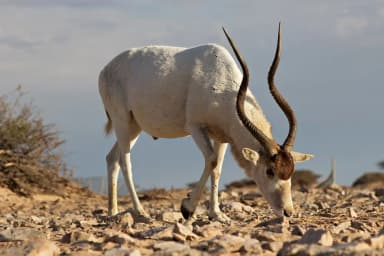
Feathers & Fangs from visitors
What people who've been to B Bryan Preserve say
A Feather is something this zoo does well; a Fang is something it gets wrong. Left by people who've been, and read by us before they appear.
Loading…
About B. Bryan Preserve
B. Bryan Preserve is a private conservation center on the Mendocino Coast at 130 Riverside Drive in Point Arena, California. The preserve's website describes it as a 110-acre property committed to the study, protection and breeding of endangered and critically endangered African hoofstock, and its about page describes the organization as a not-for-profit dedicated to the conservation and responsible breeding of African hoofstock.
Visits are by reservation only. The preserve states that no drop-ins are allowed and that no pets are allowed. It offers guided Land Rover tours, a self-guided car safari, private tours and a monthly giraffe painting session, and it also rents four cottages on the property for overnight stays.
History
According to the preserve, it was founded in 1998 by Dr. Frank Mello and his wife, Judy. The FAQ page says Frank encountered sable antelope in West Texas in 1998 and brought them to Judy's Mississippi ranch, which launched the preserve. The about page says the preserve relocated in 2004 to a ranch in Point Arena, Mendocino County, California, moving 11 animals at that time. The FAQ states that the collection included more than 60 named animals by 2008.
The about page says the original focus was on sable antelope, roan antelope and greater kudu, and that the collection later expanded to Grevy's zebra, Hartmann's mountain zebra and giraffe. The about page also notes that Judy had spent time in several parts of Africa, and the FAQ says her love for Africa pushed the couple toward African species.
Exhibits and habitats
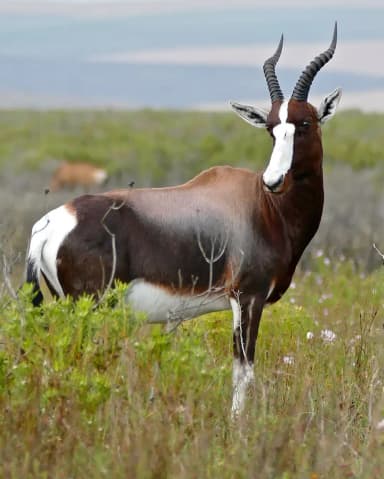
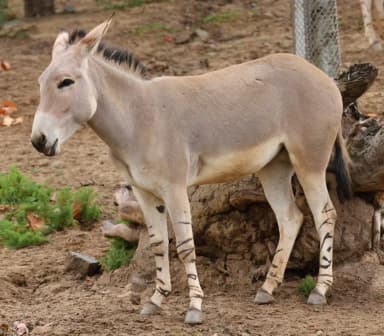
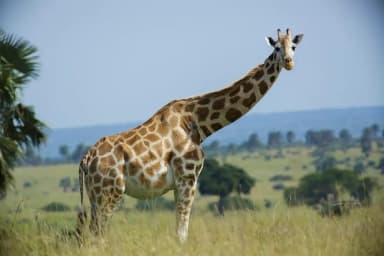
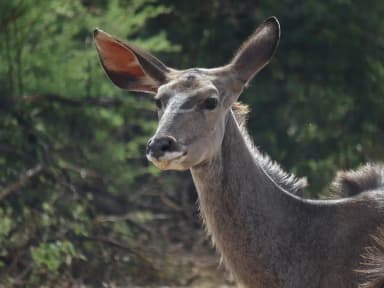
The animals page lists twelve species: Hartmann's mountain zebra, Nubian giraffe, lesser kudu, Cape buffalo, addax, Nile lechwe, Somali wild ass, bontebok, sable antelope, Grevy's zebra, roan antelope and greater kudu.
The preserve does not describe a conventional zoo layout of fixed exhibits. Animals live in the open habitat on the property, and visitors see them from a vehicle or a Land Rover on the tours. The FAQ explains that most animals are relatively wild and keep their distance, and that tours are timed around feeding so that guests can get as close as is safe. It says giraffes are the exception among the species, as they enjoy attention.
The FAQ states that most of the preserve's animals came from zoos or other private organizations rather than from rescue operations. Tour rules prohibit direct contact with animals unless staff expressly authorize it.
Conservation and programs
The preserve's conservation page lists the following initiatives: conservation efforts in Africa, a Native Butterfly Project, native wildlife work, participation in giraffe research, a giraffe PEMF study and a giraffe plasma bank. The page does not give details such as dates, partners or quantities for these programs.
The accreditations page lists several affiliations. It states: "B Bryan Preserve is an AZA Accredited Related Facility." The preserve is not an AZA-accredited zoo. The page also lists membership in the Partnership for Species, annual USDA inspections under the Animal Welfare Act, and a collaboration with the Zoo Hoofstock Trim Program, which hosts educational courses at the preserve each year.
The FAQ explains why the preserve says its species are endangered, citing hunting, habitat loss, human-wildlife conflict, climate change and restricted access to water and grazing. It suggests that readers support their local zoo, noting that the AZA funds research and reintroduction programs, and directs donations to the B Bryan Wildlife Foundation.
The preserve's press page lists coverage from outlets including Mission Unstoppable (July 2025), the Iron Pony Show (August 2024), Our California, and several travel blogs.
Planning your visit
Tours. As listed on the preserve's website, tours run at set times and require advance reservations through its booking system.
- Land Rover Tour: a guided tour in vintage Land Rovers, listed at 3:30 p.m. and 75 minutes long, ending with giraffe feeding.
- Self-Guided Car Safari: guests drive their own vehicle with a map, listed at 10:00 a.m. and 60 minutes long. Guests must remain inside their vehicles, RVs and motorcycles are not allowed, and the tour ends with a giraffe feeding opportunity.
- Private Tour: listed at 10:00 a.m. and 90 minutes long, for up to 8 people in a dedicated vintage Land Rover, with behind-the-scenes experiences when available.
- Giraffe Painting: listed at 1:30 p.m. and 45 minutes long, offered on the first Saturday of each month only. Guests watch giraffes create abstract paintings, and no safari tour is included.
Ticket prices and the booking calendar are on the preserve's website.
Rules. The tour rules page asks guests to arrive at least 10 minutes early and states that tours run in rain, sun or wind unless a major storm occurs. It recommends jackets for coastal fog and wind and comfortable walking shoes, and warns of muddy conditions in winter. It notes that restrooms are limited and that no pets are permitted regardless of service status. Visitors assume all risks on entry.
Lodging. The preserve lists four cottages: Zebra Cottage, Giraffe Cottage, Bridge Cottage and Chapel Cottage. The rates and policies page lists a minimum two-night stay, check-in after 3:00 p.m. and check-out by 11:00 a.m. It states that guests are never allowed to walk around the preserve, for the safety of the animals.
Contact. The listed phone number is 707-882-2297 and the reservations email is reservations@bbryanpreserve.com.
What we haven't confirmed
Everything above came from public sources. These specifics we haven't stood behind yet:
- Current ticket prices and tour availability
- Parking arrangements
- Whether the animals page reflects the current collection
- Accessibility for visitors with limited mobility
B Bryan Preserve compared with nearby zoos
How B Bryan Preserve lines up against the closest zoos we have details for — useful if you're deciding between them for the same day out.
| Zoo | Distance | Admission | Hours | Size | AZA |
|---|---|---|---|---|---|
| B Bryan PreserveThis zooPoint Arena, CA | — | $25 | Open by reservation only, two tour times per day: 10:00 AM (Self-Guided Car Safari, 60 min, or Private Tour, 90 min) and 3:30 PM (Guided Land Rover Safari, 75 min). Giraffe Painting 1:30 PM on the first Saturday of each month. No drop-in visits. | — | No |
| Six Flags Discovery KingdomVallejo, CA | 95 mi | from $39 | Operating days and hours vary by date — see park calendar. | 135 acres | No |
| San Francisco ZooSan Francisco, CA | 104 mi | $32–$34 | 10:00 am – 5:00 pm | 100 acres | Yes |
| Oakland ZooOakland, CA | 116 mi | $17–$28 | 9:30am – 2:00pm | — | Yes |
Distances are straight-line. A dash means we haven't confirmed that detail yet, not that the zoo lacks it.
AZAThe Association of Zoos and Aquariums. Accredited members have passed an independent inspection of animal care and welfare, safety, conservation and education, repeated every five years. Many smaller facilities never apply, so “not accredited” isn't a verdict on its own. What accreditation means · How we check this
B Bryan Preserve: common questions
Is B. Bryan Preserve an AZA-accredited zoo?
No. The preserve is not an AZA-accredited zoo. Its accreditations page states that it is an "AZA Accredited Related Facility."
Can visitors drop in without a reservation?
No. The preserve states that visits are by reservation only and that no drop-ins are allowed.
Can visitors bring a dog?
No. The tour rules state that no pets are allowed on the property, with no exceptions based on service status.
Can visitors touch the animals?
Direct contact is prohibited unless staff expressly authorize it. Tours end with giraffe feeding.
Where did the animals come from?
According to the FAQ, most came from zoos or other private organizations rather than rescue operations.
When did the preserve move to California?
The about page states that it relocated to Point Arena in 2004 from family land in Mississippi, where it was founded in 1998.
Something wrong here? Tell us — we correct in place, with a dated note.