- Where to see one
- 5 U.S. zoos in our directory hold crocodile monitor, confirmed against each zoo's own animal list.
Conservation status
Not Evaluated
This species has not been assessed for the IUCN Red List, so it sits outside the threat scale entirely.
About the crocodile monitor
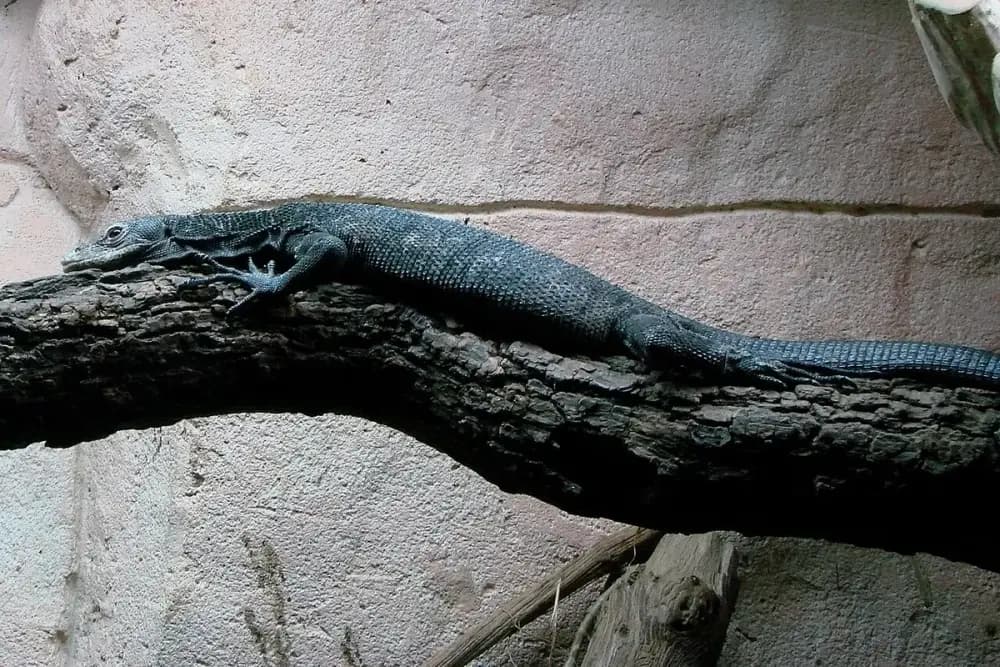
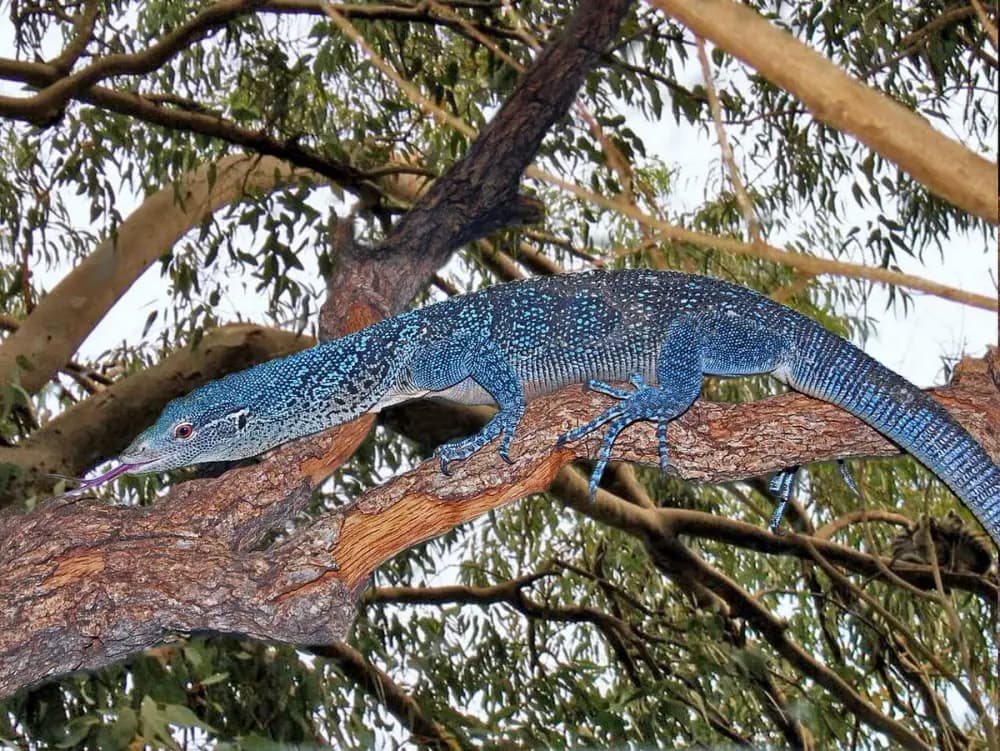
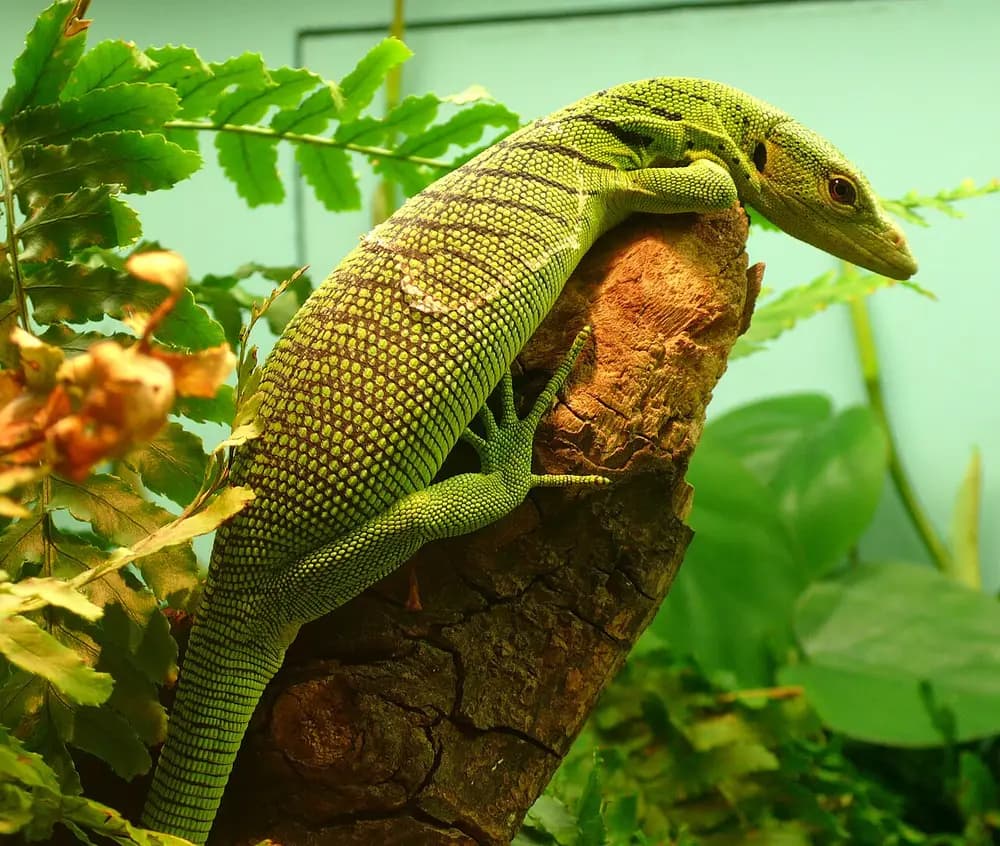
The crocodile monitor, also called the Papuan or Salvadori's monitor, is a lizard found only on New Guinea. It is the largest monitor there and one of the longest lizards, verified at up to 255 cm (100 in). It lives in the canopy of lowland rainforests and coastal mangrove swamps, with a very long tail that helps it balance when leaping between branches. Its dark green body is banded with yellowish spots. Feeding opportunistically, it takes birds, small mammals, eggs, other reptiles, amphibians and carrion, using long, backward-curving teeth suited to gripping fast-moving prey. Very little is known about its reproduction, and captive breeding has mostly failed.
Crocodile Monitor facts
- Its blunt, bulbous snout inspired the nickname "tree crocodile".
- Verified lengths reach 255 cm (100 in), and the tail is extremely long and prehensile.
- Local people in New Guinea sometimes hunt and skin it to make drums.
- Villagers describe it as a spirit that climbs trees and kills men, yet say it warns of nearby crocodiles.
Where to see crocodile monitor in the U.S.
5 zoos across 5 states
Find the closest one
Rank the 5 zoos holding crocodile monitor by how far they are from you. Your location is used in your browser to sort this list and is never sent to us.
Hawaii· 1
Illinois· 1
Oregon· 1
Texas· 1
Virginia· 1
AZAThe Association of Zoos and Aquariums. Accredited members have passed an independent inspection of animal care and welfare, safety, conservation and education, repeated every five years. Many smaller facilities never apply, so “not accredited” isn't a verdict on its own. What accreditation means · How we check this
Built from each zoo's own published animal list.