
- Admission
- $17–$21
- Size
- 31 acres
- Opened
- 1971
- Accreditation
- AZA
varies by day of the week
Association of Zoos and Aquariums
Everything below is directory information drawn from public sources and the zoo's own site.
Animals at Gladys Porter Zoo
29 of the ~400 species this zoo listsThis is a partial list — we only show species we've confirmed against the zoo's own pages, and their full collection is considerably larger.
Mammals15
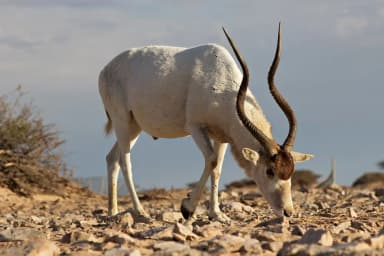 HaytemBouchri93 · CC BY-SA 4.0
Addax
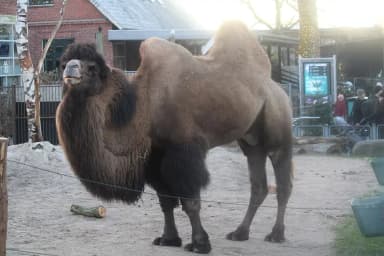 Christian Ursilva from Copenhagen, Denmark · CC BY-SA 4.0
Bactrian Camel
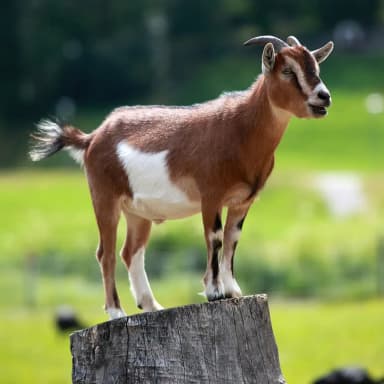 Kuebi = Armin Kübelbeck · CC BY-SA 3.0
Nigerian Dwarf Goat
 Giles Laurent · CC BY-SA 4.0
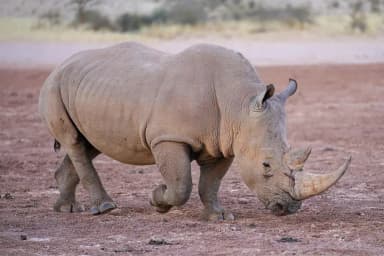
White Rhinoceros
 Bernard DUPONT from FRANCE · CC BY-SA 2.0
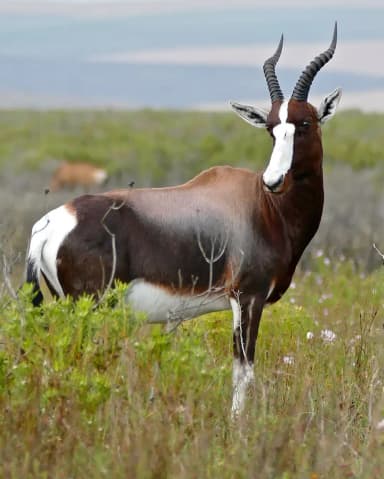
Bontebok
 Nokota_Horses.jpg : François Marchal derivative work: Dana boomer ( talk ) · CC BY-SA 3.0
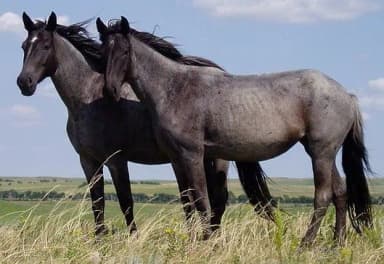
Miniature Horse
 Relative of Brandt Luke Zorn, most likely his father. · CC BY-SA 2.0
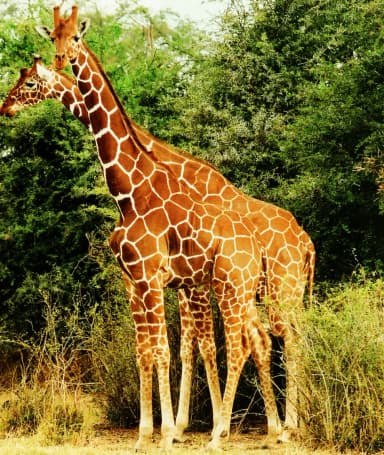
Reticulated giraffe
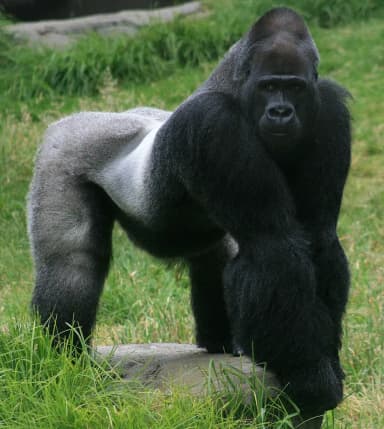 Brocken Inaglory · CC BY-SA 3.0
Gorilla
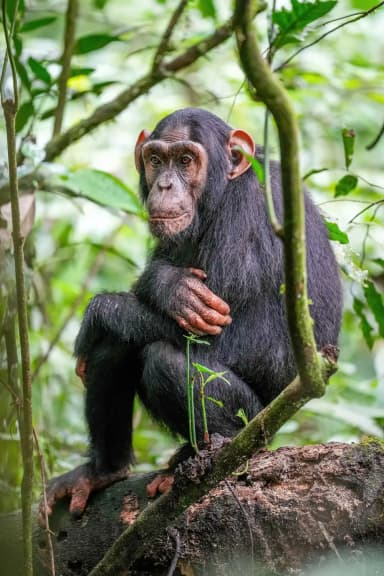 Giles Laurent · CC BY-SA 4.0
Chimpanzee
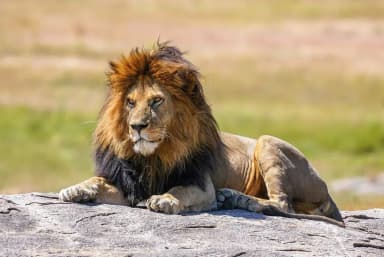 Giles Laurent · CC BY-SA 4.0
Lion
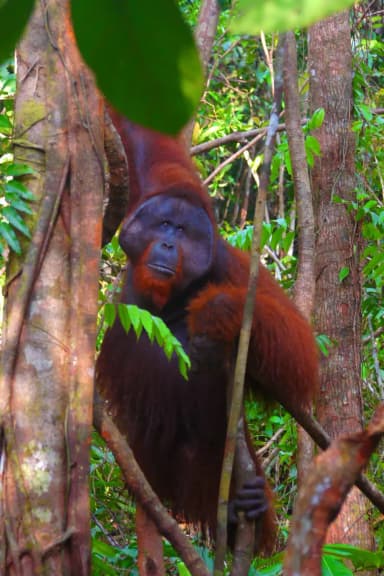 Nanosanchez · CC BY-SA 4.0
Orangutan
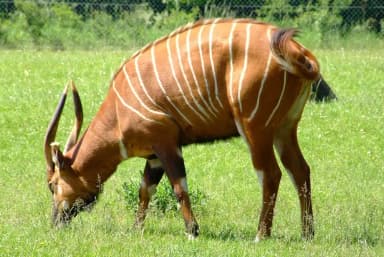 Charles Miller from Basingstoke, United Kingdom · CC BY 2.0
Bongo
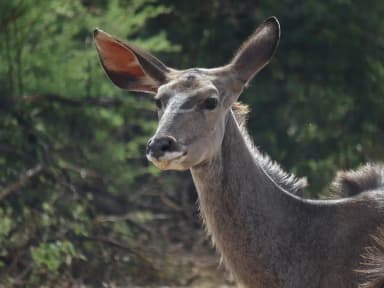 Prosthetic Head · CC BY-SA 4.0
Greater Kudu
Birds1
Reptiles7
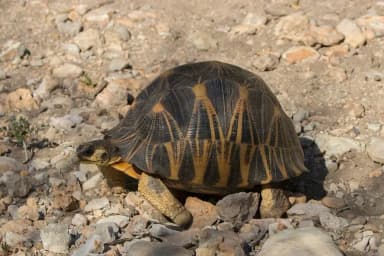 Charles J. Sharp · CC BY-SA 4.0
Radiated Tortoise
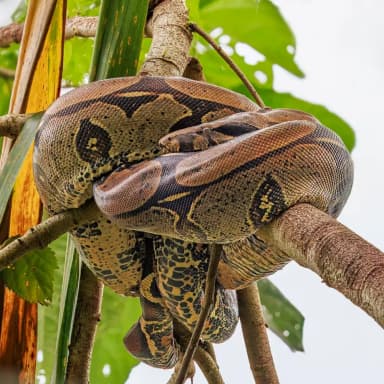 Charles J. Sharp · CC BY-SA 4.0
Boa Constrictor
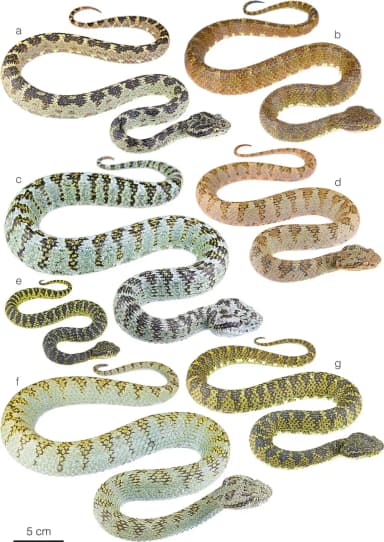 Alejandro Arteaga, R. Alexander Pyron, Abel Batista, Jose Vieira, Elson Meneses Pelayo, Eric N. Smith, César L. Barrio A · CC BY 4.0
Eyelash Viper
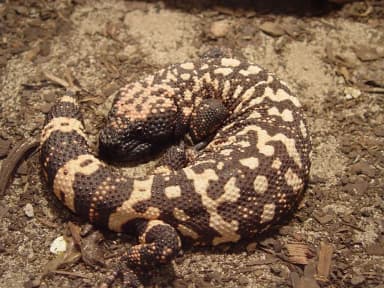 Blueag9 · CC BY-SA 3.0
Gila Monster
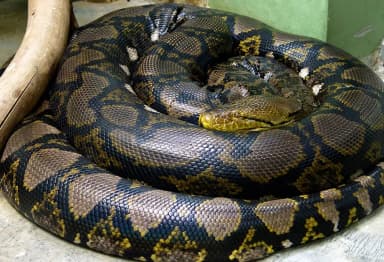 This photography was created by Mariluna . Other photos see here . · CC BY-SA 3.0
Reticulated Python
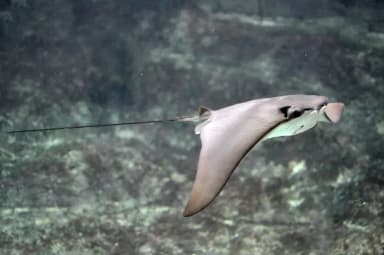
Fish5
Invertebrates1
Feathers & Fangs from visitors
What people who've been to Gladys Porter Zoo say
A Feather is something this zoo does well; a Fang is something it gets wrong. Left by people who've been, and read by us before they appear.
Loading…
About Gladys Porter Zoo
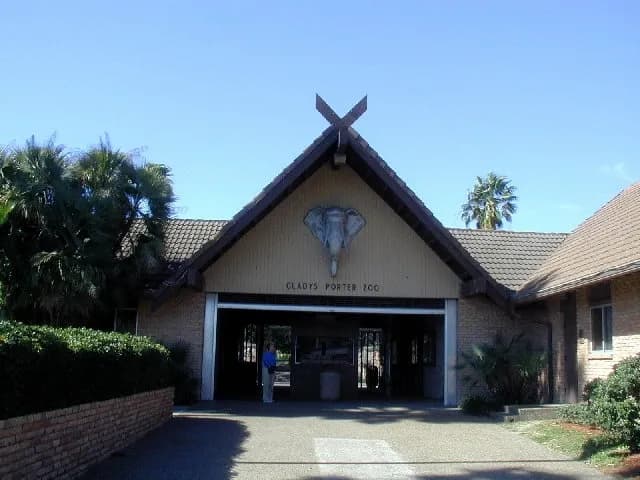
Gladys Porter Zoo sits on 31 acres in Brownsville, Texas, near the southern tip of the state along the Rio Grande Valley. It opened to the public on September 3, 1971, after the Earl C. Sams Foundation planned, built, stocked, and equipped the entire park before handing it over to the City of Brownsville. The zoo is named for Gladys Porter, daughter of J.C. Penney's former president Earl C. Sams, who helped plan and stock the collection.
The zoo has been an accredited member of the Association of Zoos and Aquariums since 1978. It reports about 400 animal species, including 47 endangered species, and more than 250 tropical and neotropical species and subspecies; a walk of roughly three-quarters of a mile takes visitors past 377 species of animals and 225 species of plants, alongside a reported population of some 1,600 animals. The zoo averages more than 424,000 visitors a year. It describes itself as a visitor-oriented zoological and botanical park dedicated to the preservation of nature through education, conservation, outdoor recreation, and research.
The grounds are organized into four zoogeographic areas — Africa, Asia, Tropical America, and Indo-Australia — supplemented by a Herpetarium, an aquatic center, a free-flight aviary, and several standalone exhibits. Gladys Porter Zoo is also known for a specific milestone: it was the first zoo to successfully breed the endangered Jentink's duiker, and it is the birthplace of Harambe, the gorilla.
History
The Earl C. Sams Foundation built and stocked the zoo before donating it to Brownsville in 1971, and the zoo went on to become the single largest recipient of the foundation's funds. The Herpetarium, the zoo's first added exhibit, opened in April 1973. In January 1972 the zoo published the first issue of Zoo News, its newsletter, which continues today as a quarterly publication.
The zoo's naturalistic exhibit design won the 1979 Outstanding Construction Award from the Texas Building Branch of the Associated General Contractors. In 1978 the zoo launched summer study programs for children in grades 1 through 12, later expanded into spring and fall sessions, and that same year it earned AZA accreditation.
Later projects, largely funded through the annual Zoofari fundraiser, enlarged Orangutan Island, added an aquatic wing to the Herpetarium, and remodeled the gift shop, offices, and concession stands. In 1986 the zoo created a permanent endowment fund with matching grants from the Earl C. Sams Foundation and the Lightner Sams Foundation, income from which still supports maintenance and improvements. The Australian exhibit, the largest addition since the zoo's opening, arrived in February 1988, and the education department expanded the following year with a walk-through aviary called Zack's Aerie.
Exhibits and habitats
Gladys Porter Zoo groups its collection into four zoogeographic areas connected by roughly three-quarters of a mile of pathway. In Tropical America — covering most of Mexico, Central America, and the northern two-thirds of South America — visitors pass Macaw Canyon, Galapagos tortoises, Caribbean flamingos, spider monkeys, and both Orinoco and Cuban crocodiles. The Indo-Australia area represents Indonesia, the Philippines, New Guinea, Australia, and New Zealand, with orangutans, tree kangaroos, kookaburras, Philippine and saltwater crocodiles, agile wallabies, and magpie geese, plus an aviary housing a pair of rare rhino hornbills. The Asia area holds gaur, addax, Bactrian camels, and pileated gibbons. Africa carries some of the zoo's more familiar animals — reticulated giraffes, Grant's zebras, African lions, ostrich, Western lowland gorillas, chimpanzees, and white rhinos — alongside Arabian oryx, greater kudu, cape hunting dogs, bontebok, and bongo.
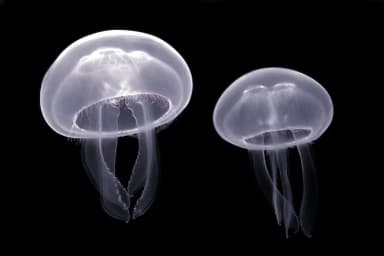
Beyond the four regions, the Herpetarium displays reticulated pythons, coral snakes, Mexican milksnakes, rattlesnakes, boa constrictors, gila monsters, crocodile monitors, eyelash vipers, and baby radiated and star tortoises. The Russell Aquatic Ecology Center, open daily at no extra charge, recreates South Texas aquatic habitats including open ocean, resacas, sea grass beds, and mangrove groves; its largest tank, the 30,000-gallon Deep Water Exhibit, holds red snapper, black drum, sandtrout, sheepshead, spadefish, snook, lookdowns, jacks, and sharks, while the Keppel AmFELS Ghostly Jellyfish exhibit displays moon jellies and smaller tanks hold seahorses, octopus, and crabs.
The Bear Grottos are naturalistic rock enclosures with caves and waterfalls for sun bears, spectacled bears, and black bears. The Tropical America Free-Flight Aviary, a renovated walk-through rainforest habitat with waterfalls and a stream, holds 18 species of birds including scarlet ibis, blue-crowned motmots, and roseate spoonbills. Realm of the Dragon houses the zoo's Komodo dragon, a species that can reach 10 feet and, in adult males, more than 220 pounds. Small World combines a nursery for newborn or hand-reared animals with a contact yard of Nigerian dwarf goats, a miniature horse, a miniature zebu, and minor-breed domestic chickens. The South Texas Botanical Exhibit & Park adds a themed playground with a 23-foot Discovery Tree and walking trails, and Butterflies, Bugs & Blooms houses live butterflies and other arthropods next to a breeding-facility viewing window. At the Giraffe Landing Feeding Experience, held weekends and during special events, visitors can buy treats to feed the zoo's reticulated giraffe herd from an ADA-accessible platform.
Animal highlights
The zoo lists at least 400 animal species on its website, including 47 endangered species and more than 250 tropical and neotropical species and subspecies — a figure that amounts to roughly 1,600 individual animals across the grounds. A three-quarter-mile walk through the exhibits passes 377 species of animals alongside 225 species of plants. Familiar names include reticulated giraffes, African lions, Western lowland gorillas, chimpanzees, white rhinos, and orangutans, alongside less commonly exhibited animals such as gaur, addax, bontebok, bongo, and Komodo dragons that can weigh over 220 pounds. Reptile variety runs deep in the Herpetarium, and the Russell Aquatic Ecology Center adds sharks, moon jellies, and fish species drawn from Gulf and coastal habitats. The zoo also functions as a sanctuary for wild birds such as chachalacas, egrets, herons, and great kiskadees, which are not part of the official collection but nest and feed on zoo grounds.
Conservation and programs
Gladys Porter Zoo carries out conservation work tied to specific species in its own collection, including Kemp's ridley sea turtles, Western lowland gorillas, and Philippine crocodiles, and it participates in the AZA's Species Survival Plan program. Since 1981, at the request of the U.S. Fish and Wildlife Service, the zoo has administered the United States' field portion of a bi-national program with Mexico — begun in 1978 — to protect Kemp's ridley sea turtles, the world's most endangered and smallest sea turtle species, at their nesting beaches in Tamaulipas. The zoo's Animal Health Department also assists ocelot health monitoring at the Laguna Atascosa National Wildlife Refuge and serves as the principal wildlife rehabilitation unit for the Rio Grande Valley, caring for injured, ill, and orphaned wild animals with the goal of releasing them back into their habitats.
Staff also hold leadership roles in outside conservation groups: the zoo's Director Emeritus sits on the board of the International Rhino Foundation, and its General Curator serves on the board of the International Iguana Foundation. The Department of Herpetology works with the Philippine government's National Recovery Team on Philippine crocodile conservation. Past field-project support has gone toward Galapagos tortoises, Matschie's tree kangaroos, and several rhino species.
Planning your visit
Gladys Porter Zoo is at 500 Ringgold Street in Brownsville, reachable from Expressway 77/83 via the 6th Street exit. As listed on the zoo's website, hours run 9:00 a.m. to 5:00 p.m.; check the official site before visiting, since hours can change.
All facilities are wheelchair accessible, and visitors may bring their own wheelchair, stroller, or wagon; wheelchairs are also available to rent at the Congo Bazaar Gift Shop. Bicycles are not permitted on the grounds. Outside food is not allowed, though water may be brought in; concession stands including the Oasis, Coyote Cafe, Asian Grille, Lion's Pride, and Pizzooria serve food during peak hours, and the Oasis and Zoofari Gift Shop close with the admission gate. Pets are not permitted anywhere on the grounds.
The zoo recommends weather-appropriate clothing and comfortable walking shoes for the Rio Grande Valley's hot, humid summers, and points visitors toward air-conditioned indoor stops such as the Herpetarium and the Australia exhibit. Four public restrooms are located near the Oasis, Eagle's Nest, the Asian Grill, and the Herpetarium. Members receive free admission every day during regular hours. Confirm current hours, admission pricing, and event schedules on the zoo's official website before you go.
What we haven't confirmed
Everything above came from public sources. These specifics we haven't stood behind yet:
- Current ticket prices
- Parking details
- Exact individual animal count
- Average time needed for a visit
- Phone number
Gladys Porter Zoo: common questions
Is Gladys Porter Zoo AZA accredited?
Yes. It has been an accredited member of the Association of Zoos and Aquariums since 1978.
When did Gladys Porter Zoo open?
It opened to the public on September 3, 1971, after being built and stocked entirely by the Earl C. Sams Foundation.
How big is Gladys Porter Zoo?
The zoo covers 31 acres in Brownsville, Texas.
How many species can you see there?
The zoo lists at least 400 animal species, including 47 endangered species, across four zoogeographic areas plus a Herpetarium and aquatic center.
Is the zoo wheelchair and stroller accessible?
Yes. All facilities are wheelchair accessible, and visitors may bring their own wheelchair, stroller, or wagon; wheelchairs can also be rented on site.
Is there food available inside the zoo?
Yes, at several concession stands, though outside food is not permitted; only water may be brought in.
Are pets allowed?
No, pets are not permitted anywhere on zoo grounds.
Something wrong here? Tell us — we correct in place, with a dated note.