
- Admission
- $29.95–$34.70
- Opened
- 1998
- Accreditation
- AZA
set by date and demand
Association of Zoos and Aquariums
Everything below is directory information drawn from public sources and the zoo's own site.
Animals at Alaska SeaLife Center
5 confirmed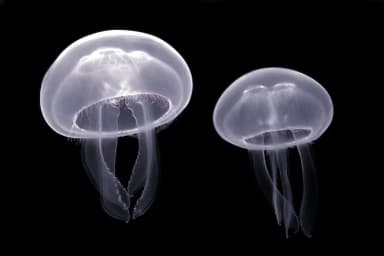
Feathers & Fangs from visitors
What people who've been to Alaska SeaLife Center say
A Feather is something this zoo does well; a Fang is something it gets wrong. Left by people who've been, and read by us before they appear.
Loading…
About Alaska SeaLife Center
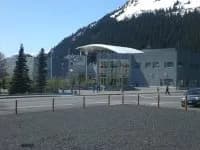
The Alaska SeaLife Center is a public aquarium on the shores of Resurrection Bay in Seward, Alaska, and it's the state's only permanent marine mammal rehabilitation facility. It opened in May 1998 and operates as a private, nonprofit corporation — legally the Seward Association for the Advancement of Marine Science — with roughly 105 full-time employees plus volunteers and interns. In September 2011, the center earned accreditation from the Association of Zoos and Aquariums, a distinction the center notes fewer than 5 percent of the nation's zoos and aquariums hold.
What sets the SeaLife Center apart from most zoos is its combination of public exhibits with a fully equipped research and rehabilitation program under one roof. It's affiliated with the University of Alaska Fairbanks and describes itself as the only facility in the world built from the outset to combine research on the northern marine environment with public education and visitor exhibits. Its mission centers on understanding and maintaining the integrity of Alaska's marine ecosystems through research, rehabilitation, conservation, and public education.
History
The idea for the center dates back more than 25 years, when Seward community leaders first proposed expanding the University of Alaska's existing Seward Marine Center research facilities. That vision gained urgency after the Exxon Valdez oil spill, which released 11 million gallons of oil into Prince William Sound, damaged nearly 1,500 miles of Alaska shoreline, and killed large numbers of marine birds, mammals, and fish. The disaster exposed how little baseline research existed on the region's marine wildlife and habitat, spurring calls for a dedicated research and rehabilitation facility.
In February 1990, a group of citizens and researchers formed the Seward Association for the Advancement of Marine Science (SAAMS) as a nonprofit dedicated to marine research, rehabilitation, and public education. In 1993, the Alaska Legislature appropriated $12.5 million in Exxon Valdez settlement funds toward the project, and in November 1994 the EVOS Trustee Council approved an additional $24.956 million for research facilities, later adding $1.247 million more for a fish pass and equipment. The City of Seward issued $1.75 million in revenue bonds in 1996 toward construction costs, and a private fundraising campaign — with over $1 million raised locally in a town of about 3,000 residents — brought in roughly $6 million more. Groundbreaking took place in May 1995, with site preparation and utility work completed that December, followed by construction of the main building, laboratories, and exhibits beginning in June 1996. The center held its grand opening on May 2, 1998.
Exhibits and habitats
The SeaLife Center's public exhibits include a touch tank where visitors can handle small invertebrates like sea stars and sea urchins in a shallow pool, and an aviary built around a two-story diving pool that also houses a wolf eel and several large saltwater fish species. Other tanks hold harbor seals, Steller sea lions, various nudibranchs, moon jellies, and giant Pacific octopuses, alongside displays of commercially important Alaska food fish such as salmon, halibut, king crab, and sablefish. In 2016, the center opened the Nose 2 Nose exhibit, adding an Octopus Grotto to its underwater viewing area along with interpretive installations that let visitors get eye-to-eye with octopuses, sea lions, seals, and various fish and birds.
Animal highlights
The center doesn't publish a species or animal count, but its exhibits and research programs point to a collection built around Alaska's marine wildlife rather than a broad global mix. Marine mammals on exhibit include harbor seals and Steller sea lions, both also central to the center's research and rehabilitation work, alongside sea otters and fur seals studied through its Science Department. The aviary houses the center's seabirds, and tanks elsewhere hold a wolf eel, giant Pacific octopuses, moon jellies, and nudibranchs, plus commercially important Alaska fish such as salmon, halibut, king crab, and sablefish.
Conservation and programs
Research is central to the SeaLife Center's identity. Its Science Department runs dedicated programs studying pinnipeds (seals and sea lions), eiders, sea otters, and salmon, with a particular focus on species experiencing population declines in Alaska, including Steller sea lions, harbor seals, fur seals, and sea otters. Ongoing projects include long-running remote monitoring of the Chiswell Island Steller sea lion rookery — the center's longest-running research project, underway since 1998 — as well as studies of walrus diets in Bristol Bay, marine bird sensitivity to hydrocarbons, and seabird habitat use in Resurrection Bay.
The center's Wildlife Response Program is the only permanent marine mammal stranding facility in Alaska, authorized by federal wildlife agencies to respond to strandings across the state's entire Gulf Coast. It rescues, treats, and works to release harbor seals, sea lions, walruses, sea otters, and seabirds; animals that can't be released may remain at the center or be transferred elsewhere. In one recent season, the program admitted six harbor seal pups, including two flown in by a volunteer pilot from Cordova, Alaska, and another spotted alone and malnourished on a Kenai beach before being reported through the center's Stranded Marine Animal Hotline. Center staff have also collaborated with NOAA Fisheries and Alaska Veterinary Pathology Services on necropsies of stranded whales, adding to the broader base of scientific knowledge about causes of death in Alaska's marine mammals.
The center's Discovery Education programs, built around Alaska's state science standards, run day programs and overnight "Nocturne" sleepovers on-site, along with outreach programs in Anchorage, the Mat-Su Valley, and the Kenai Peninsula, and distance-learning sessions available worldwide by video conference. The center also hosts a Veterinary and Research Externship in Marine Animal Health, run jointly with its research laboratory and veterinary sciences department, in which enrolled veterinary students spend three to twelve weeks shadowing staff on projects tied to marine animal health, ecosystem conservation, and disease research in the Arctic.
Planning your visit
As listed on the center's website, general hours run 9:00 a.m. to 5:00 p.m., though the schedule shifts seasonally — a recent winter season listed Thursday-through-Monday hours of noon to 5:00 p.m., with the center closed Tuesdays and Wednesdays. Online tickets are available in advance and guarantee entry, while walk-up tickets are possible but may not guarantee an entry time. Parking is free year-round in the lot adjacent to the center.
The center is wheelchair- and stroller-accessible, with a limited number of each available on-site, and it accommodates trained service animals in most public areas, with an exception for the open-air aviary. It holds Sensory Inclusive certification from KultureCity, with headphone zones, a free audio tour, and sensory bags — including headphones, fidgets, and cue cards — available at the admissions counter. The Porthole Café, inside the center, serves coffee and grab-and-go food and is open to visitors without general admission, as is the Discovery Gift Shop. Because hours and ticketing shift by season, confirm current details on the center's official website before visiting.
What we haven't confirmed
Everything above came from public sources. These specifics we haven't stood behind yet:
- Total site acreage
- Current ticket prices
- Total animal or species count
- Annual visitor figures
Alaska SeaLife Center compared with nearby zoos
How Alaska SeaLife Center lines up against the closest zoos we have details for — useful if you're deciding between them for the same day out.
| Zoo | Distance | Admission | Hours | Size | AZA |
|---|---|---|---|---|---|
| Alaska SeaLife CenterThis zooSeward, AK | — | $29.95–$34.70 | 9:00am – 5:00pm | — | Yes |
| Alaska Wildlife Conservation CenterPortage, AK | 52 mi | $30 | 10am – 4pm | 200 acres | No |
| Alaska ZooAnchorage, AK | 72 mi | $25 | 9am – 7pm | 25 acres | No |
Distances are straight-line. A dash means we haven't confirmed that detail yet, not that the zoo lacks it.
AZAThe Association of Zoos and Aquariums. Accredited members have passed an independent inspection of animal care and welfare, safety, conservation and education, repeated every five years. Many smaller facilities never apply, so “not accredited” isn't a verdict on its own. What accreditation means · How we check this
Alaska SeaLife Center: common questions
Is the Alaska SeaLife Center AZA accredited?
Yes, it has held Association of Zoos and Aquariums accreditation since September 2011.
When did it open?
It opened on May 2, 1998, after construction that began with groundbreaking in 1995.
What makes it different from a typical aquarium?
It combines public aquarium exhibits with a full marine research program and Alaska's only permanent marine mammal rehabilitation facility.
What animals can you see?
Exhibits include harbor seals, Steller sea lions, a wolf eel, giant Pacific octopuses, moon jellies, and seabirds, plus displays of Alaska food fish like salmon and king crab.
Is there parking?
Yes, and it's free year-round in the lot next to the center.
Is it stroller and wheelchair accessible?
Yes, with a limited number of each available on-site, and the center holds Sensory Inclusive certification for guests with sensory disabilities.
Is there food inside?
Yes — the Porthole Café serves coffee, pastries, and grab-and-go food, and doesn't require general admission to visit.
Something wrong here? Tell us — we correct in place, with a dated note.