- Where to see one
- 21 U.S. zoos in our directory hold sheep, confirmed against each zoo's own animal list.
- Native range
- descended from the wild mouflon of Europe and Asia; domesticated in the region around Iran
- Size
- ewes 100–220 pounds, rams 100–350 pounds
- Lifespan
- 10 to 12 years, with some living as long as 20
Conservation status
Not Evaluated
This species has not been assessed for the IUCN Red List, so it sits outside the threat scale entirely.
Not Evaluated (NE); domestic animals aren't assessed on the IUCN Red List
About the sheep
Sheep, or domestic sheep, are a domesticated ruminant mammal kept as livestock around the world, with around 1.2 billion alive as of 2019, making them the most common species of sheep by far. Like all ruminants, they belong to the order Artiodactyla, the even-toed ungulates. An adult female is a ewe, an intact male a ram, a castrated male a wether, and a young sheep a lamb. Sheep are most likely descended from the wild mouflon of Europe and Asia, with the area around Iran serving as a geographic center of their domestication.
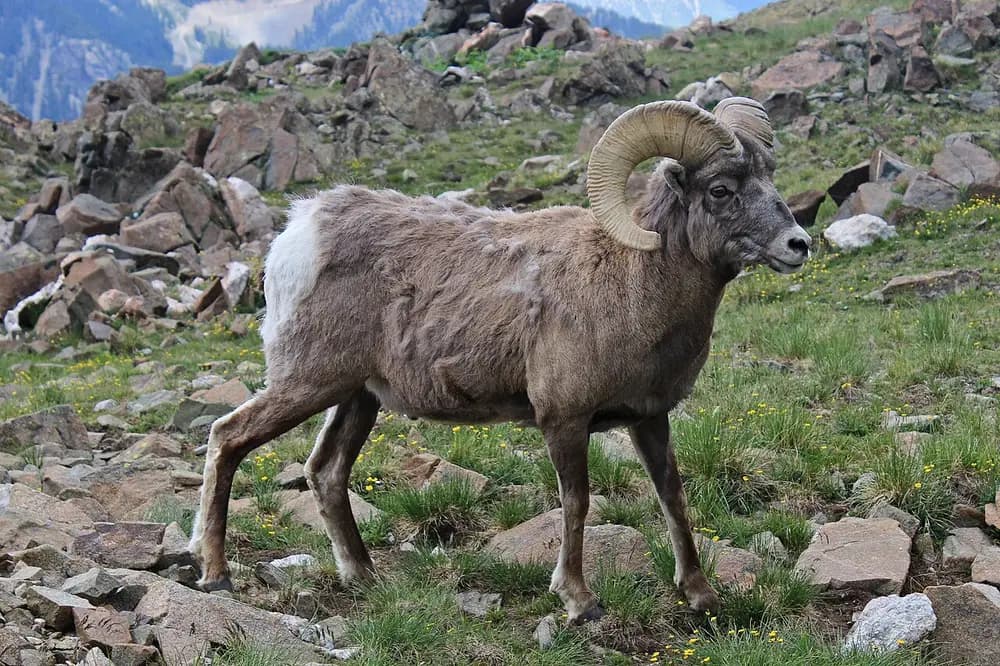
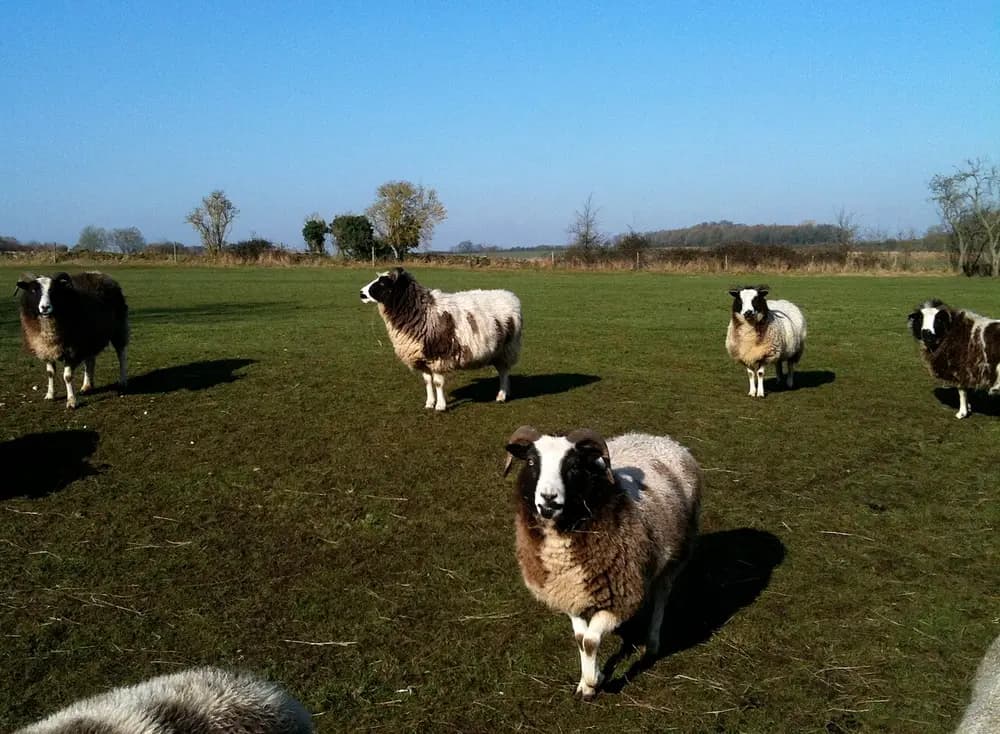
Domestic sheep usually carry crimped wool and, in many breeds, horns that form a lateral spiral; a few primitive breeds retain wilder traits such as short tails. Depending on the breed, sheep may be entirely hornless (polled), horned in both sexes, or horned in males only. Coloring varies widely, from pure white to dark chocolate brown and even piebald patterns, a range far greater than that seen in wild sheep, which run mostly in shades of brown. Ewes typically weigh between 100 and 220 pounds and rams between 100 and 350 pounds, with mature weight and growth rate both heritable traits that breeders select for.
More than 200 recognized breeds exist, with some looser counts running into the thousands; the UN's Food and Agriculture Organization listed 1,229 breeds as of 2006. Breeds are generally grouped by their main product — wool, meat, milk, or hides — and by traits such as face color, tail length, horns, and the terrain they were developed for. Fine wool breeds, mostly derived from Merino sheep, still dominate the world's wool industry, while Downs breeds are typically fast-growing meat and ram breeds, and long wool breeds are the largest sheep, prized for crossbreeding. Hair sheep, such as the Dorper, do not grow wool at all and are raised mainly for meat, since they need no shearing and tend to resist parasites and heat better than wooled breeds.
Behavior and diet
Diet
herbivore, primarily grass and short roughage
Sheep are herbivorous grazers that prefer grass and other short roughage, avoiding the taller woody growth that goats will readily eat; they do especially well in monoculture pastures where goats tend to struggle. Like other ruminants, they digest food through a four-chambered stomach. Grazed vegetation is chewed into a bolus, passed to the rumen — an organ holding 5 to 10 gallons — where bacteria, fungi, and protozoa ferment it, then brought back up as cud for further chewing before moving on through the reticulum and omasum.
Sheep have good hearing and are sensitive to noise. Their horizontal, slit-shaped pupils give them a visual field of roughly 270 to 320 degrees, letting them see behind themselves without turning their heads, though their depth perception is poor, and shadows or dips in the ground can make them balk. They generally move out of dark areas toward well-lit ones and prefer heading uphill when disturbed. Sheep also have a strong sense of smell and scent glands in front of the eyes and between the toes, whose exact purpose is uncertain but which may play a role in breeding behavior or in helping a stray sheep find its flock.
Sheep and goats are close relatives within the subfamily Caprinae but are separate species; hybrids, called geeps, are rare and always infertile. Visually, goats have beards and a divided upper lip, while sheep have tails that hang down rather than the goats' upturned ones, and sheep breeds are often naturally hornless in ways that naturally polled goats rarely are. A first set of teeth is gradually replaced as a sheep ages, with the full set of eight adult front teeth complete by about four years old; after that, ongoing wear from grazing makes feeding progressively harder, which is why many ranchers consider culling sheep not raised for meat around six years of age.
Range and habitat
Habitat
pastures and grazing land, kept as livestock across most of the inhabited world
Sheep husbandry today spans most of the inhabited world, and historically it was central to agriculture and textile production across Eurasia for thousands of years. Domestication is estimated to have occurred between 11,000 and 9,000 BC in Mesopotamia, spreading to the Indus Valley by around 7,000 BC and reaching Europe by about 6,000 BC, where early farming communities in what is now southern France were among the first Europeans to keep them. European colonists later carried sheep husbandry to the Americas starting in 1493. In the modern era, Australia, New Zealand, southern and western South America, South Africa, and the British Isles remain most closely associated with sheep production, while China and India now host among the largest flocks by sheer number.
Conservation status
The domestic sheep is not assessed on the IUCN Red List, because domestic animals aren't given Red List categories. As a widespread livestock animal numbering roughly 1.2 billion, it is in no danger as a whole.
Individual heritage breeds are a different story. The Rare Breeds Survival Trust estimated in 2008 that 22 breeds native to the United Kingdom had 3,000 or fewer registered animals each, and the Livestock Conservancy listed 8 North American breeds as "critical" or "threatened" that same year. The rise of large-scale, corporate sheep farming has pushed many of these heritage and heirloom breeds to the margins of the industry, as producers increasingly favor a smaller number of fast-growing, fertile commercial breeds.
Where to see sheep in the U.S.
21 zoos across 16 states
Find the closest one
Rank the 13 zoos holding sheep by how far they are from you. Your location is used in your browser to sort this list and is never sent to us.
8 more zoos hold sheep but have no coordinates on file yet, so they aren't ranked here. They're in the full list below.
Alabama· 1
Arkansas· 1
California· 2
Delaware· 1
Florida· 4
Georgia· 1
Illinois· 1
Maryland· 1
Michigan· 1
Minnesota· 1
New York· 2
North Carolina· 1
South Dakota· 1
Texas· 1
Virginia· 1
Wisconsin· 1
AZAThe Association of Zoos and Aquariums. Accredited members have passed an independent inspection of animal care and welfare, safety, conservation and education, repeated every five years. Many smaller facilities never apply, so “not accredited” isn't a verdict on its own. What accreditation means · How we check this
Built from each zoo's own published animal list.
Sheep: common questions
Is the sheep endangered?
No. Domestic sheep aren't assessed on the IUCN Red List, and with about 1.2 billion alive worldwide, they are among the most common livestock animals. A number of individual heritage breeds, however, are considered critical or threatened.
How big does a sheep get?
Ewes typically weigh 100 to 220 pounds and rams 100 to 350 pounds, depending on the breed.
What does a sheep eat?
Sheep are herbivores that mainly graze on grass and other short roughage.
How long do sheep live?
Typically 10 to 12 years, though some individuals live as long as 20.
Where do sheep live in the wild?
Domestic sheep are kept as livestock rather than living wild; they are believed to descend from the wild mouflon of Europe and Asia.
Which U.S. zoos have sheep?
Seven U.S. zoos list sheep, including the Minnesota Zoo, Fossil Rim Wildlife Center, and Lion Country Safari.