
Auburn Raptor Center
Auburn, AL
- Admission
- —
- Accreditation
- None listed
not accredited by the Association of Zoos and Aquariums
Everything below is directory information drawn from public sources and the zoo's own site.
Animals at Auburn Raptor Center
13 confirmedBirds13
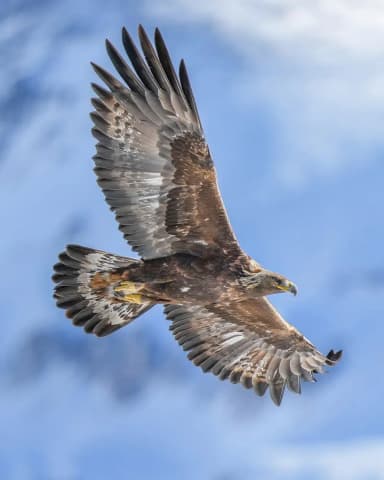 Giles Laurent · CC BY-SA 4.0
Golden Eagle
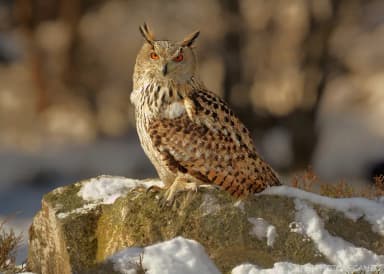 Martin Mecnarowski ( http://www.photomecan.eu/ ) · CC BY-SA 3.0
Eurasian Eagle-Owl
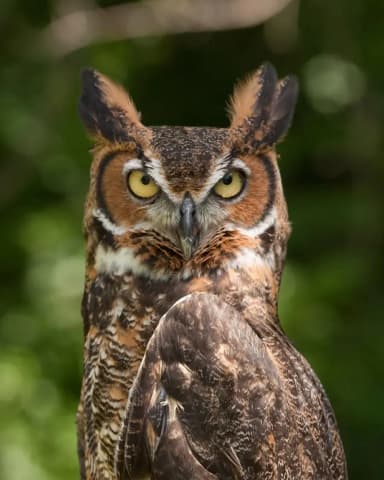 Greg Hume · CC BY-SA 3.0
Great Horned Owl
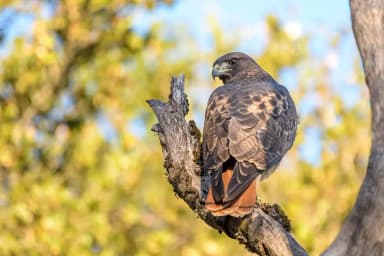 Becky Matsubara from El Sobrante, California · CC BY 2.0
Red-tailed Hawk
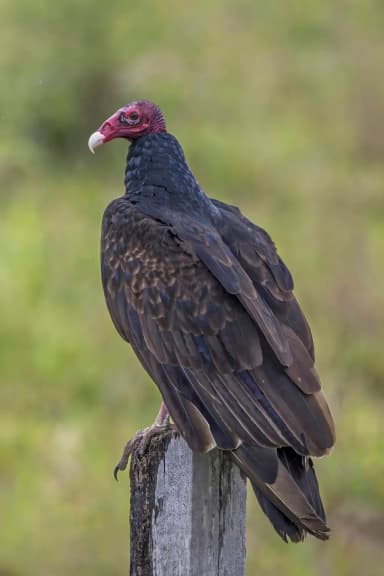 Charles J. Sharp · CC BY-SA 4.0
Turkey Vulture
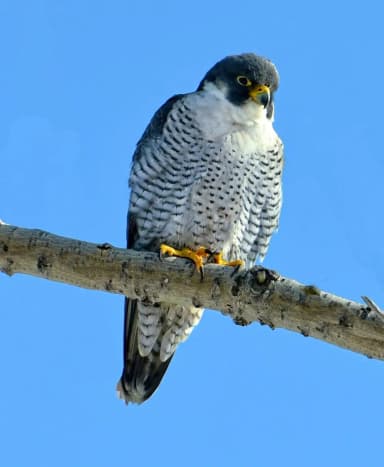 Mykola Swarnyk · CC BY-SA 3.0
Peregrine Falcon
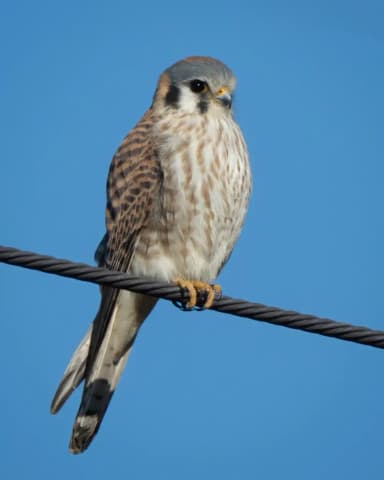 Channel City Camera Club from Santa Barbara, US · CC BY 2.0
American Kestrel
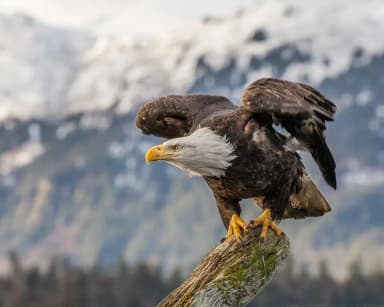 Andy Morffew from Itchen Abbas, Hampshire, UK · CC BY 2.0
Bald Eagle
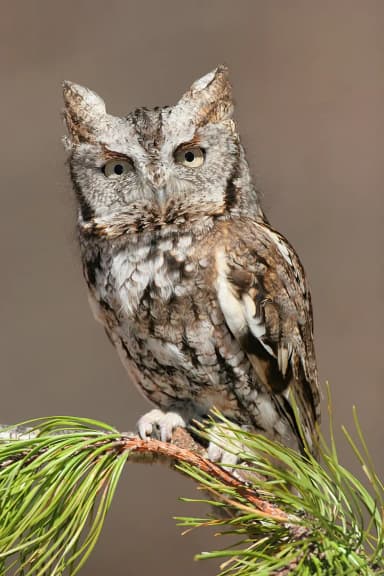 Wolfgang Wander · CC BY-SA 3.0
Eastern Screech-Owl
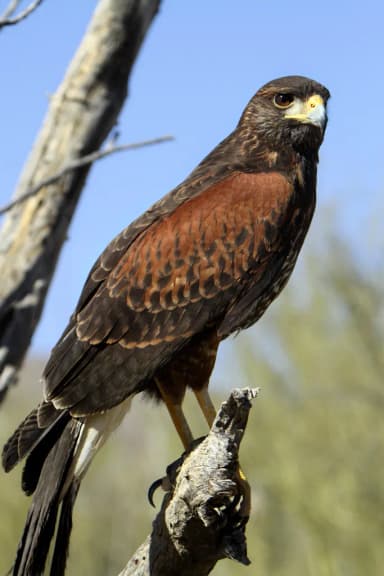 Alan Vernon · CC BY 2.0
Harris's Hawk
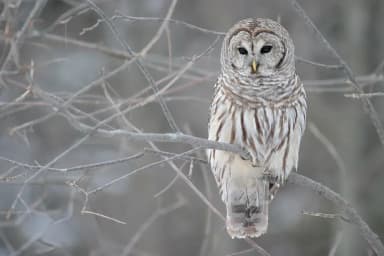 Mdf · CC BY-SA 3.0
Barred Owl
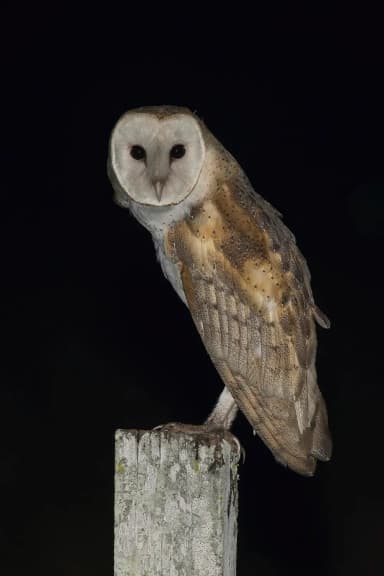 Charles J. Sharp · CC BY-SA 4.0
Barn Owl
Feathers & Fangs from visitors
What people who've been to Auburn Raptor Center say
A Feather is something this zoo does well; a Fang is something it gets wrong. Left by people who've been, and read by us before they appear.
Loading…
About Auburn Raptor Center
The Auburn University Raptor Center is a raptor rehabilitation, education and conservation program of Auburn University's College of Veterinary Medicine. It is located at 1350 Pratt-Carden Drive in Auburn, Alabama, off Shug Jordan Parkway. Its stated goals include advancing conservation through research, engaging the community through education, providing raptor care and carrying the Auburn spirit.
Unlike a traditional zoo, the center is not open for walk-in visits. According to its website, it is open to the public only for scheduled presentations. Visitors reach the birds through booked tours, amphitheater programs and public events, including a ticketed pregame show held on selected Fridays in the fall football season.
The center works with hawks, owls, eagles, falcons, kites and vultures. Some are wild patients in rehabilitation, and others are permanent residents that serve as educational ambassadors. Its website describes veterinary students and volunteers as part of the hands-on training the center provides.
History
The center's history page dates its start to 1972. In that year, Dr. Jimmy Milton established the Southeastern Raptor Rehabilitation Center, now the Auburn University Raptor Center, after the U.S. Fish and Wildlife Service asked Auburn to become a rehabilitation hub for injured birds of prey in the Southeast.
In the late 1970s a raptor barn was built behind the Small Animal Clinic through donations and volunteer efforts, and a hospital area was later added to the facility. In 1998 the Elmore Bellingrath Bartlett Raptor Center Hospital opened off Shug Jordan Parkway, made possible by a donation from Dr. Woody Bartlett honoring his mother.
The Carol Clark Laster and W.E. Clark Jr. Raptor Training Facility opened in 2002 with 24 mews and an office building, and the center's history page notes that Mrs. Laster also funded six large flight aviaries. On November 16, 2005, the Edgar B. Carter Educational Amphitheater opened, seating 350 visitors for on-site flight programs. In 2011 Dr. Bruce G. Pratt donated paving for the entrance road, which was renamed Pratt-Carden Drive. In November 2012 a restroom facility and memorial garden honoring Paul Daniel Flournoy, a 2002 Auburn graduate, were established.
Exhibits and habitats
The center's resident raptors are listed by name on its website. They include a barn owl named Phantom, a barred owl named Cypress, two eastern screech owls named Juniper and Stump, a Eurasian eagle owl named Freya and a great horned owl named Ophelia. The hawks are Tiny, a red-shouldered hawk, Petey, a red-tailed hawk, and two Harris's hawks named Eve and Harriet.
Two turkey vultures, Kramer and Vega, are also listed. The falcons include Pyro, an aplomado falcon, Gus, a peregrine falcon, and two American kestrels, Cora and Captain America. The eagles are two bald eagles named Independence and Spirit, two golden eagles named Nova and Aurea, and a Verreaux's eagle named Onyx.
The website describes these birds as educational ambassadors or foster raptors. They help with public education and with the care of orphaned birds rather than being released to the wild. For the Football, Fans and Feathers show, the center states that all birds are permanent residents that cannot be released because of prior injuries or imprinting.
The on-site facilities include the mews, the flight aviaries and the Edgar B. Carter Educational Amphitheater. The amphitheater is an open-air facility with minimal shade, according to the center's events page.
Conservation and programs
Rehabilitation is the center's founding activity. According to its rehabilitation page, the center treats injured, orphaned or ill wild raptors native to Alabama, including hawks, owls, eagles, falcons, kites and vultures, and admits roughly 250 or more raptors a year. It accepts only raptors from Alabama and does not accept other bird species. Admissions are accepted seven days a week with prior phone authorization, and close at 4:30 p.m. Central time. On holidays, the website lists hours of 8 a.m. to 12 p.m., with admissions by appointment from 12 to 4:30 p.m.
The center advises that a raptor should not be removed from its habitat unless it is obviously injured or ill, and that people should contact staff or state wildlife officials for guidance first. Its stated aim is to return rehabilitated raptors to the wild.
The education program reaches roughly 30,000 people a year through more than 300 public and private events, according to the center's education page. The page also states that the Eagle Flight Program reaches more than 500,000 spectators a year; the center's website notes that pregame stadium flights of its resident eagles have raised awareness for raptor conservation at Auburn football games.
Off-site presentations are offered for schools, daycares, businesses and retirement homes, in flighted, non-flighted and static formats, and can be tailored to curriculum units. The center is a nonprofit and charges fees for programs to cover expenses and support its education and conservation work.
The center also recruits volunteers, including Auburn University students and community members, for rehabilitation and education work.
Planning your visit
Visits are by booking. Groups of 20 or fewer can book a guided outdoor walk around the enclosures lasting about one hour. Groups of more than 20 can reserve an amphitheater show featuring seven raptors, including an eagle, lasting about one hour and weather permitting. According to the center, school groups need to book 90 days in advance, and other groups at least two weeks in advance. Tour and program request forms are on the center's website, and the education office can be reached at (334) 844-6943.
The public event Football, Fans and Feathers is held in the amphitheater. As listed on the center's website, it is an hour-long show in which hawks, falcons, eagles and other birds of prey are free-flown from towers. Gates open at 3:00 p.m. for the 4:00 p.m. shows, and children three and under are admitted free. The 2026 dates listed are Friday, October 23, Friday, November 6 and Friday, November 20. A spring event, Wing Fling, was listed for April 17, 2026 at 4:00 p.m. Visitors may bring chairs, food and beverages to these events; only service animals are permitted, and the campus is smoke-free. Ticket details are on the center's website.
What we haven't confirmed
Everything above came from public sources. These specifics we haven't stood behind yet:
- Parking arrangements at the center
- Wheelchair and stroller access at the amphitheater
- General visiting hours outside holidays and scheduled programs
Auburn Raptor Center compared with nearby zoos
How Auburn Raptor Center lines up against the closest zoos we have details for — useful if you're deciding between them for the same day out.
| Zoo | Distance | Admission | Hours | Size | AZA |
|---|---|---|---|---|---|
| Auburn Raptor CenterThis zooAuburn, AL | — | — | Open to the public only by scheduled private appointment/program or during public shows. Football, Fans and Feathers shows are held the Fridays before home football games at 4:00 PM (gates 3:00 PM); 2026 dates: Oct 23, Nov 6, Nov 20. | — | No |
| Montgomery ZooMontgomery, AL | 46 mi | — | — | 40 acres | No |
| Birmingham ZooBirmingham, AL | 96 mi | $24 | 9:00am – 4:00pm | — | Yes |
| Zoo AtlantaAtlanta, GA | 102 mi | $27.95–$36.95 | 9:00 am – 5:00 pm | — | Yes |
Distances are straight-line. A dash means we haven't confirmed that detail yet, not that the zoo lacks it.
AZAThe Association of Zoos and Aquariums. Accredited members have passed an independent inspection of animal care and welfare, safety, conservation and education, repeated every five years. Many smaller facilities never apply, so “not accredited” isn't a verdict on its own. What accreditation means · How we check this
Auburn Raptor Center: common questions
Can visitors walk in without an appointment?
No. The center states that it is open to the public only for scheduled presentations. Tours and programs are booked in advance.
What kinds of animals are at the center?
Raptors: owls, hawks, falcons, eagles, vultures and kites. The resident birds listed on the center's website include bald eagles, golden eagles, a Verreaux's eagle, Harris's hawks, turkey vultures and several owl species.
What should someone do after finding an injured raptor?
The center advises calling before removing a bird from its habitat. Its admissions line is (334) 844-6347, and it accepts only raptors from Alabama.
Who runs the Auburn Raptor Center?
It is part of Auburn University's College of Veterinary Medicine.
Where is it located?
1350 Pratt-Carden Drive, Auburn, Alabama, off Shug Jordan Parkway.
Is the center accredited by the AZA?
No. The center is not listed as AZA-accredited.
Something wrong here? Tell us — we correct in place, with a dated note.