- Where to see one
- 4 U.S. zoos in our directory hold sonoran desert toad, confirmed against each zoo's own animal list.
Conservation status
Not Evaluated
This species has not been assessed for the IUCN Red List, so it sits outside the threat scale entirely.
About the sonoran desert toad
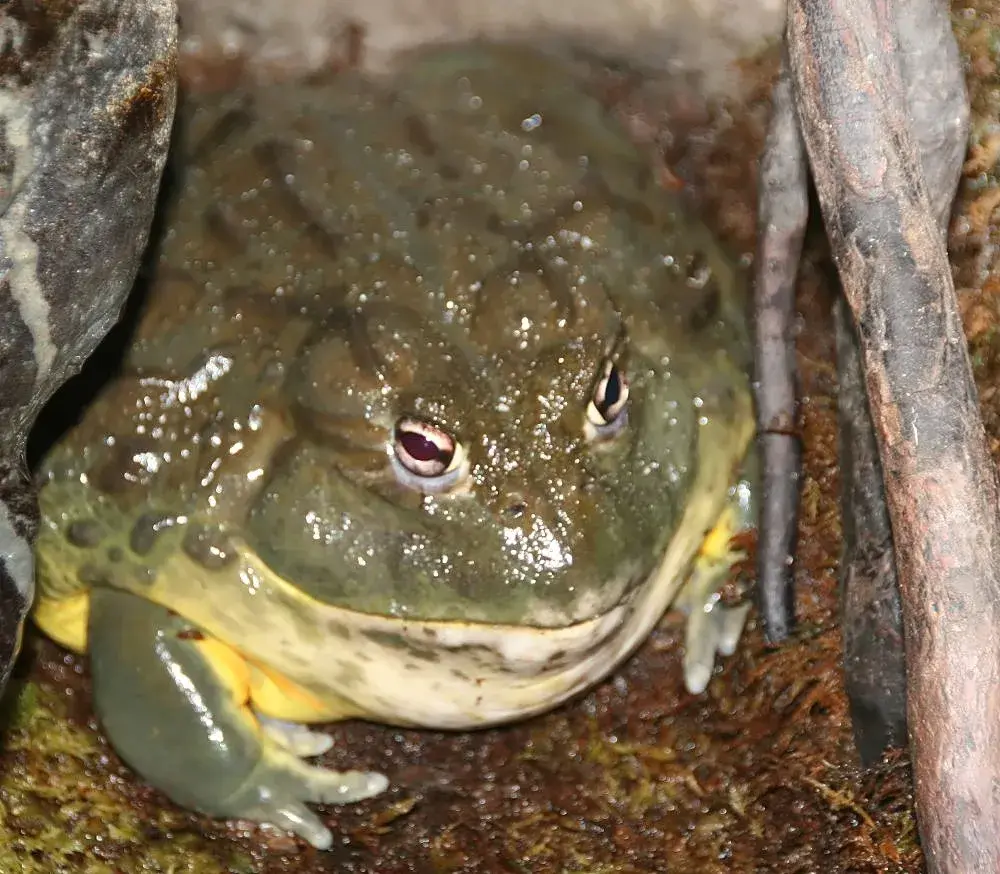
The Sonoran Desert toad, also called the Colorado River toad, lives in northwestern Mexico and the southwestern United States, including southern Arizona and southwestern New Mexico. It can grow to about 190 millimetres long, making it the largest toad in the United States apart from the non-native cane toad. Nocturnal and semiaquatic, it is found near streams, springs and canals and often shelters in rodent burrows. It feeds on invertebrates, lizards, small mammals and amphibians. Its skin glands produce toxic secretions, strong enough to paralyse or kill a dog, and these contain psychoactive compounds, including bufotenin and 5-MeO-DMT.
Sonoran Desert Toad facts
- It is the only toad species with enough bufotenin to have a psychoactive effect.
- Raccoons have learned to flip the toad over and eat its belly to avoid the poison glands.
- It absorbs most of its water through a patch of skin on the abdomen and hind legs.
- Its call is described as a weak, low-pitched toot lasting less than a second.
Where to see sonoran desert toad in the U.S.
4 zoos across 4 states
Find the closest one
Rank the 4 zoos holding sonoran desert toad by how far they are from you. Your location is used in your browser to sort this list and is never sent to us.
Kansas· 1
New Mexico· 1
Ohio· 1
Wisconsin· 1
AZAThe Association of Zoos and Aquariums. Accredited members have passed an independent inspection of animal care and welfare, safety, conservation and education, repeated every five years. Many smaller facilities never apply, so “not accredited” isn't a verdict on its own. What accreditation means · How we check this
Built from each zoo's own published animal list.