
- Admission
- $17
- Opened
- 1966
- Accreditation
- None listed
not accredited by the Association of Zoos and Aquariums
Everything below is directory information drawn from public sources and the zoo's own site.
Animals at Duke University Lemur Center
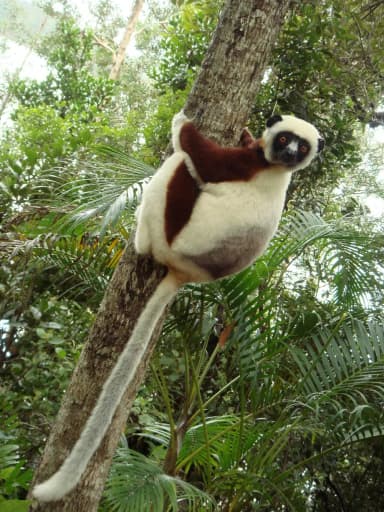
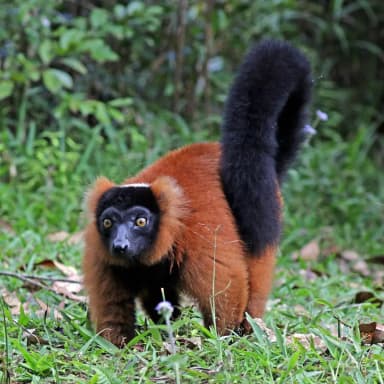
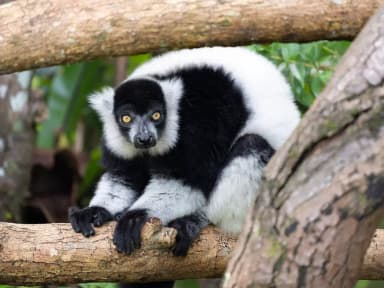
8 of the ~13 species this zoo lists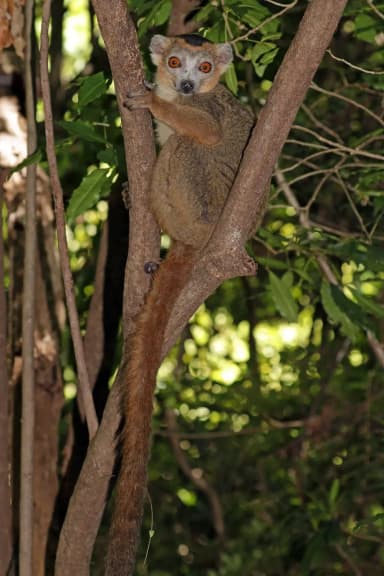
Feathers & Fangs from visitors
What people who've been to Duke University Lemur Center say
A Feather is something this zoo does well; a Fang is something it gets wrong. Left by people who've been, and read by us before they appear.
Loading…
About Duke University Lemur Center
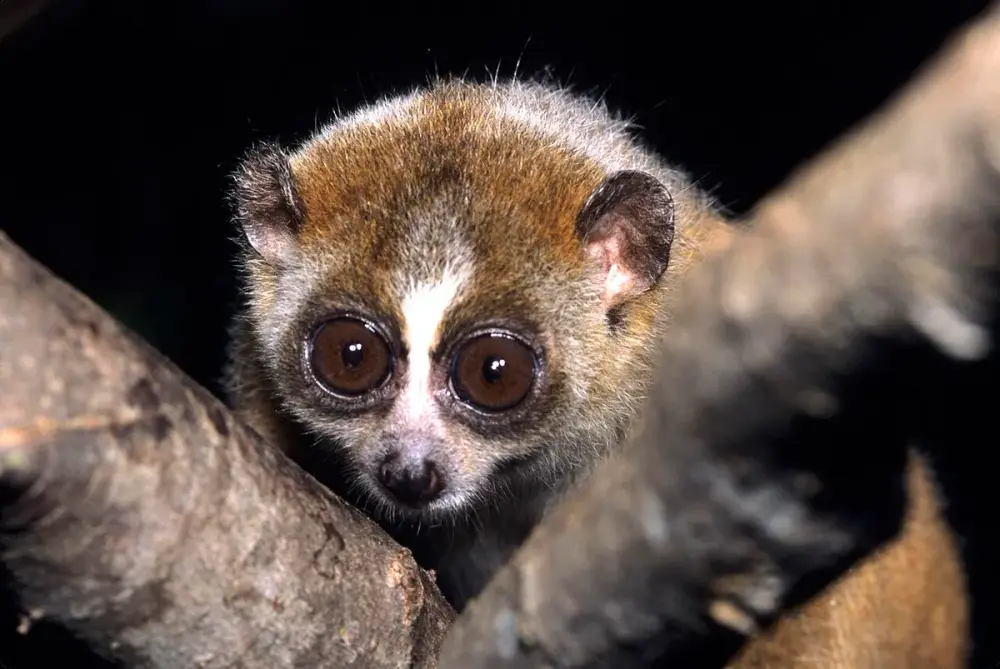
The Duke University Lemur Center sits on the campus of Duke University in Durham, North Carolina, inside a wooded stretch of Duke Forest. It was founded in 1966 and today houses more than 200 lemurs, bush babies, and other prosimian primates across 13 species, making it home to the most diverse population of lemurs found anywhere outside of Madagascar. It is not AZA accredited; it operates instead as a non-invasive research center affiliated with Duke University, and visitors can only see the animals by making a reservation for a guided tour.
The center's stated mission is to promote research and understanding of prosimians and their natural habitat, to contribute to conservation and international scholarship, and to advance the study of strepsirrhine primates. It bills itself as the only university-based facility in the world devoted to that group of animals, which includes lemurs, lorises, and bush babies. More than 85 percent of the animals living there today were born on site, a reflection of the center's long-running breeding program.
Rather than being organized around a single visitor path, the DLC is built around family groups of lemurs housed in a mix of natural forest enclosures and indoor/outdoor housing complexes, supported by a separate off-campus fossil collection, the DLC Museum of Natural History, a few miles away on Broad Street. The grounds are shared by researchers, animal care staff, and touring visitors, and the center's public programming is built entirely around scheduled, guide-led access rather than open self-guided wandering.
History
The Duke Lemur Center traces its origin to 1966, when a colony of roughly 90 prosimian primates belonging to researcher John Buettner-Janusch was relocated from the Center for Prosimian Biology at Yale University to Duke University. Through the 1970s that founding colony grew rapidly, reaching approximately 700 animals representing 33 species at its peak. Today the population is smaller and more focused, ranging between 200 and 250 animals across about 13 species.
The center was originally named the Duke University Primate Center, and its name changed to the Duke Lemur Center in April 2006 following a refocusing of its scientific mission; specimens from its scientific collection still carry the older DPC code as a result. In 1997 the center launched a reintroduction program for black-and-white ruffed lemurs into the 5,500-acre Betampona Natural Reserve in Madagascar, the first time any prosimian primates had been returned to the island nation.
Between 2009 and 2010 the DLC completed two new lemur housing buildings. The first, finished in 2009, totals 14,922 square feet including exterior animal runs and can house up to 60 animals that are given access to the surrounding 69-acre section of Duke Forest when weather allows. The second, completed in 2010, is larger still at 20,637 square feet including outdoor runs, and together the two buildings can house 140 lemurs. Both were designed by the firm Lord, Aeck & Sargent of Chapel Hill for low water and electricity use and are LEED registered; the combined construction cost was $10.4 million. The buildings are laid out with animal housing wings radiating from a central core holding laboratories, exam rooms, food preparation areas, and storage.
The center also has a notable television history: the PBS children's show "Zoboomafoo" was filmed there, using a custom-built animal sound stage constructed on the Duke campus. The Coquerel's sifaka who played the title character died at the DLC in November 2014 at the age of 20; his son, Ferdinand, still lives at the center today.
Exhibits and habitats
The DLC divides its animals between two kinds of living spaces. Natural Habitat Enclosures, or NHEs, are large forested areas of Duke Forest where lemurs are able to free-range among native trees and plants during warmer weather. Indoor Enclosures with Outdoor Yards make up the second type: each family group of lemurs has access to multiple interconnected indoor rooms, heated and cooled by season, that open onto multiple outdoor yards. A family of four lemurs, for example, is typically given at least four connected sets of indoor and outdoor space, totaling eight individual enclosures, with different doorways allowing natural movement, play, and privacy. Wire fencing between adjoining family enclosures still allows visual and scent contact between related groups.
What a visitor sees depends on the tour booked. The General Tour follows a paved path and shows only the outdoor portions of the indoor/outdoor enclosures; lemurs are visible through mesh wire rather than at close range. The premium Walking with Lemurs tour instead brings small groups directly into the forested Natural Habitat Enclosures, offering closer views and better photo opportunities, though it can be cancelled in rainy weather because wet conditions interfere with the positive-reinforcement training lemurs need to move in and out of the forest on cue. A separate Behind the Scenes tour, run most afternoons, visits family groups such as a ring-tailed lemur troop that is not on the general tour path.
Enclosures are re-branched and re-furnished regularly, and keepers rotate in enrichment activities such as forage bags and hanging sheets to encourage natural foraging behavior. Off campus, the DLC Museum of Natural History houses the center's separate fossil and osteological collections and is open to the public on select days for guided tours and occasional free open houses.
Animal highlights
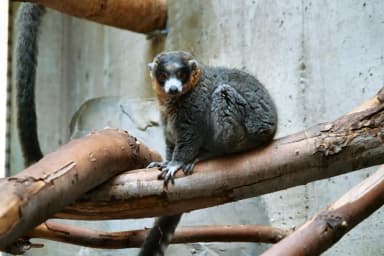
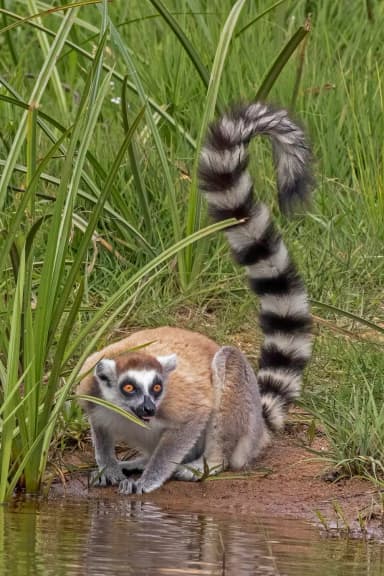
At least 13 species are listed as living at the Duke Lemur Center, with the total population running between 200 and 250 individual animals. Visitors on the General Tour can typically see up to nine lemur species over the course of a visit. Named residents mentioned by the center include ring-tailed lemurs, mongoose lemurs, Coquerel's sifakas, and aye-ayes — a nocturnal species known for building individualized nests, with some animals favoring fleece blankets and others weaving nests from browse and branches. Each animal has an individualized diet plan; lemurs receive a daily mix of high- and low-value vegetables and leafy greens, much of it grown in the center's own organic garden.
Because the DLC is a research and conservation facility rather than a traditional zoo, its animals are wild rather than domesticated, and no physical contact between visitors and lemurs is permitted on any tour, though flash-free photography is encouraged.
Conservation and programs
Conservation work extends well beyond the Durham campus. Since 1997, the center has run a reintroduction program returning black-and-white ruffed lemurs to Madagascar's Betampona Natural Reserve. Its SAVA Conservation team has also conducted fieldwork in remote areas of Madagascar such as the COMATSA-Sud protected area, surveying populations of the silky sifaka, one of the world's rarest primates; recent fieldwork located close to a dozen healthy groups in the mountains there. That work is carried out in partnership with local communities, the World Wildlife Fund, and funding from the Madagascar Biodiversity Fund and the Nashville Zoo.
The center's education programs extend to Madagascar as well, with field trips for students from rural communities to protected areas where many see wild lemurs, chameleons, and native forest for the first time. On the Durham campus, education staff also run virtual field trips for remote classrooms into the forest habitats. The center describes more than 85 percent of its current lemur population as having been born on site, underscoring its role as a managed breeding population for some of the world's most endangered primates.
Planning your visit
All visits to the Duke Lemur Center require a reservation, whether for a guided tour, the gift shop, or the grounds generally; there is no general walk-in admission. As listed on the center's website, hours run 10:00 AM to 4:00 PM, though the gift shop is closed on Tuesdays and the center is closed to the public on several holidays including Thanksgiving and the week around Christmas and New Year's. Tours are outdoor and run rain or shine unless lightning is forecast; guests should dress for weather and bring their own water, since bottled water is not sold on site.
The main entrance is off Erwin Road in Durham; the center asks visitors to follow signage to that entrance regardless of what a GPS suggests, since the nearby Cornwallis Road entrance is gated and private. The paved General Tour path and gift shop are ADA accessible for wheelchairs, canes, and walkers, and staff ask that visitors mention mobility needs when booking. Service dogs are welcome on General Tours outside of a seasonal restriction; pets are not permitted anywhere on the grounds. Visitors with nut allergies should also flag this when booking, since the center keeps peanuts and tree nuts on site as lemur food and training rewards.
As always, confirm current hours, tour offerings, and pricing on the center's official website before visiting.
What we haven't confirmed
Everything above came from public sources. These specifics we haven't stood behind yet:
- Ticket prices for each tour type
- Total acreage of the visitor grounds
- Current tour schedule and seasonal availability
- Total annual visitor count
Duke University Lemur Center compared with nearby zoos
How Duke University Lemur Center lines up against the closest zoos we have details for — useful if you're deciding between them for the same day out.
| Zoo | Distance | Admission | Hours | Size | AZA |
|---|---|---|---|---|---|
| Duke University Lemur CenterThis zooDurham, NC | — | $17 | Lemurs can be seen only on prepaid, reserved tours; no walk-ins. October–April is the off-season: Behind the Scenes tours (typically weekdays), Wild Workshops (Sat/Sun afternoons), and occasional weather-dependent Off-Season General Tours (Sat/Sun 10 AM–12 PM, posted 24–48 hours ahead). Gift shop open 10:00 AM – 4:00 PM daily except Tuesday. Closed Tuesdays; additional 2026 holiday closures listed on the hours page (e.g., Monday, January 19). | — | No |
| Museum of Life and ScienceDurham, NC | 4 mi | $24 | 10 am – 5 pm | 84 acres | Yes |
| Conservators CenterBurlington, NC | 27 mi | $16 | Guided tours Saturdays & Sundays and select holidays; reservations required. | 45 acres | No |
| Greensboro Science CenterGreensboro, NC | 50 mi | $22.99 | 9:00 am – 5:00 pm | — | Yes |
Distances are straight-line. A dash means we haven't confirmed that detail yet, not that the zoo lacks it.
AZAThe Association of Zoos and Aquariums. Accredited members have passed an independent inspection of animal care and welfare, safety, conservation and education, repeated every five years. Many smaller facilities never apply, so “not accredited” isn't a verdict on its own. What accreditation means · How we check this
Duke University Lemur Center: common questions
Is the Duke University Lemur Center AZA accredited?
No. It operates as a Duke University research center rather than an AZA-accredited zoo.
When did the center open?
It was founded in 1966, when a colony of prosimian primates was relocated from Yale University to Duke.
How many species live there?
At least 13 species are listed, with a total population of roughly 200 to 250 animals.
Can I just walk in and see the lemurs?
No. All visits require a reservation, and a prepaid tour is required to see the animals.
Can I touch the lemurs?
No. They are wild animals, and physical contact is not permitted on any tour, though photography is welcome.
Is the tour path wheelchair accessible?
The paved General Tour path and the gift shop are ADA accessible; mention mobility needs when reserving your tour.
Is there parking on site?
Yes, in a main parking lot reached via the Erwin Road entrance; the center asks visitors to follow its posted directions rather than GPS routing.
Something wrong here? Tell us — we correct in place, with a dated note.