Mexican Fireleg Tarantula
Brachypelma boehmei
Also known as Mexican Flame Leg Tarantula
- Where to see one
- 4 U.S. zoos in our directory hold mexican fireleg tarantula, confirmed against each zoo's own animal list.
Conservation status
Not Evaluated
This species has not been assessed for the IUCN Red List, so it sits outside the threat scale entirely.
About the mexican fireleg tarantula
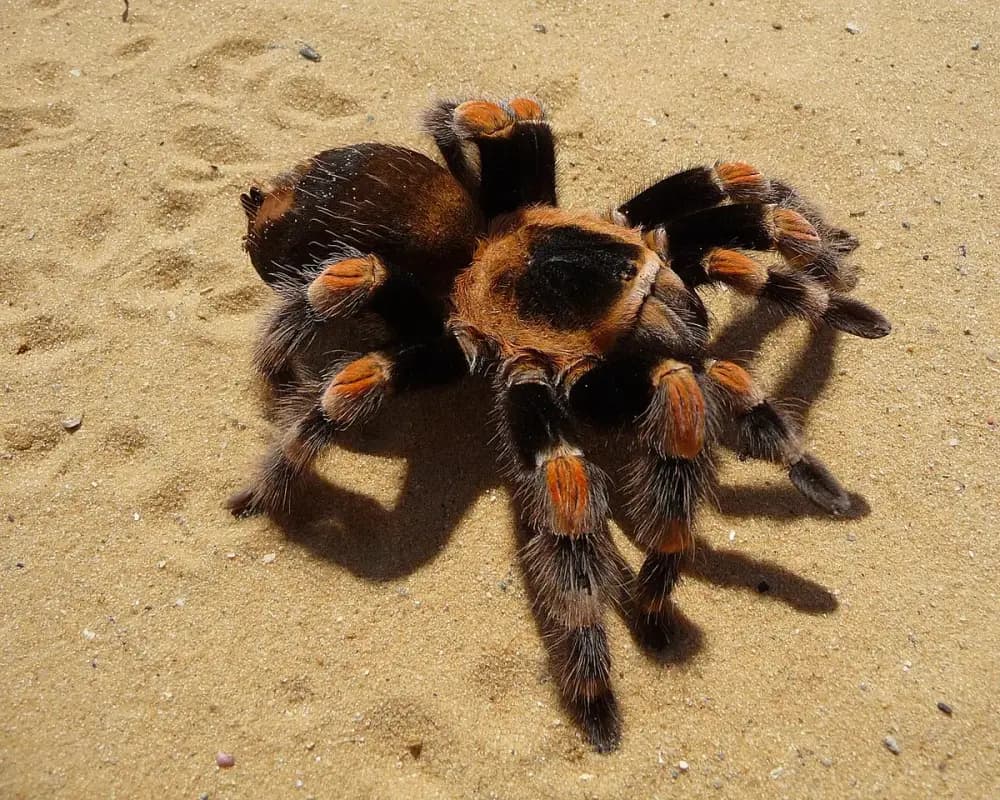
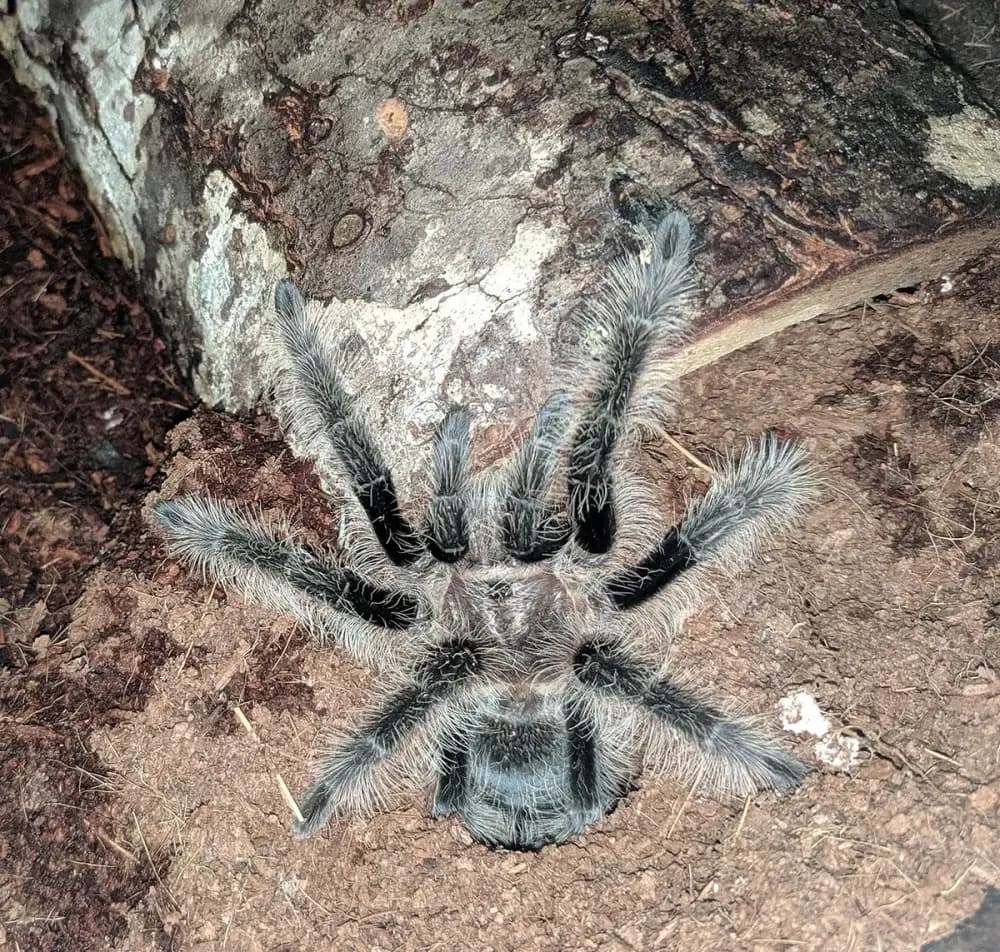
The Mexican fireleg tarantula is a burrowing spider native to the state of Guerrero in southern Mexico, where it lives on dry scrubland along the central Pacific coast. It shelters in burrows it digs itself or in abandoned rodent or lizard burrows, usually under rocks or fallen logs. Adults reach 5 to 6 inches and show orange and black coloring, with a rich orange carapace, black upper legs and knees of bright, fiery red. They are mostly active after dark, though they sometimes come out in the morning and evening. When provoked, they defend themselves by flicking urticating hairs. Growth is slower than in many larger South American tarantulas.
Mexican Fireleg Tarantula facts
- Males mature at seven to eight years and females at nine to ten.
- After their final molt, males live only about a year, while females may live ten more years.
- The species is listed on Appendix II of CITES to regulate cross-border trade.
- Females produce an egg sac that generally hatches three to four weeks before the rainy season begins.
Where to see mexican fireleg tarantula in the U.S.
4 zoos across 4 states
Find the closest one
Rank the 4 zoos holding mexican fireleg tarantula by how far they are from you. Your location is used in your browser to sort this list and is never sent to us.
California· 1
Connecticut· 1
Minnesota· 1
Ohio· 1
AZAThe Association of Zoos and Aquariums. Accredited members have passed an independent inspection of animal care and welfare, safety, conservation and education, repeated every five years. Many smaller facilities never apply, so “not accredited” isn't a verdict on its own. What accreditation means · How we check this
Built from each zoo's own published animal list.