- Where to see one
- 3 U.S. zoos in our directory hold kingsnake, confirmed against each zoo's own animal list.
Conservation status
Not Evaluated
This species has not been assessed for the IUCN Red List, so it sits outside the threat scale entirely.
About the kingsnake
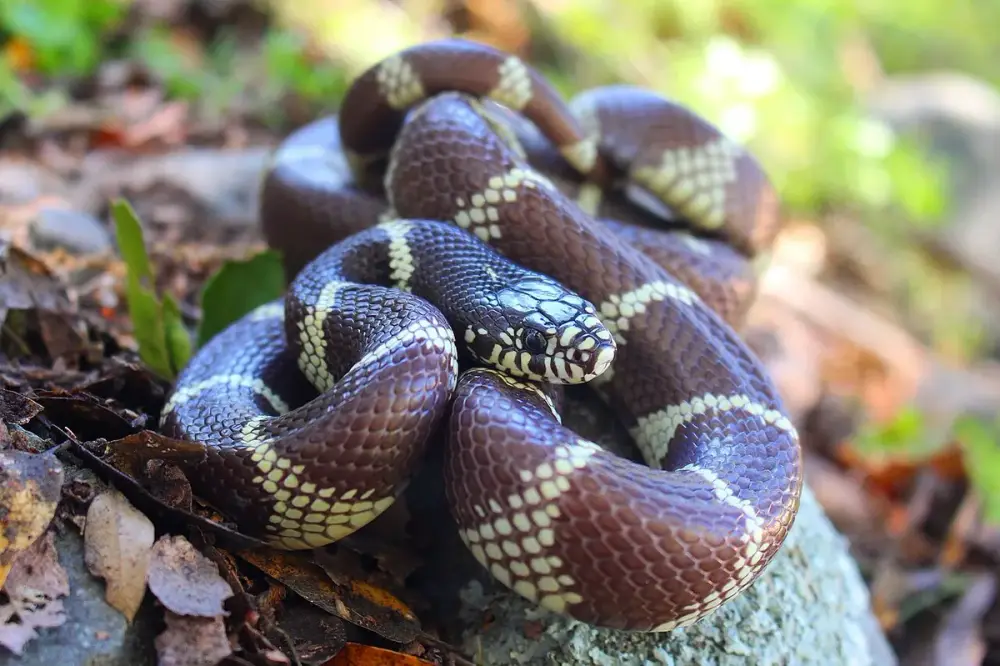
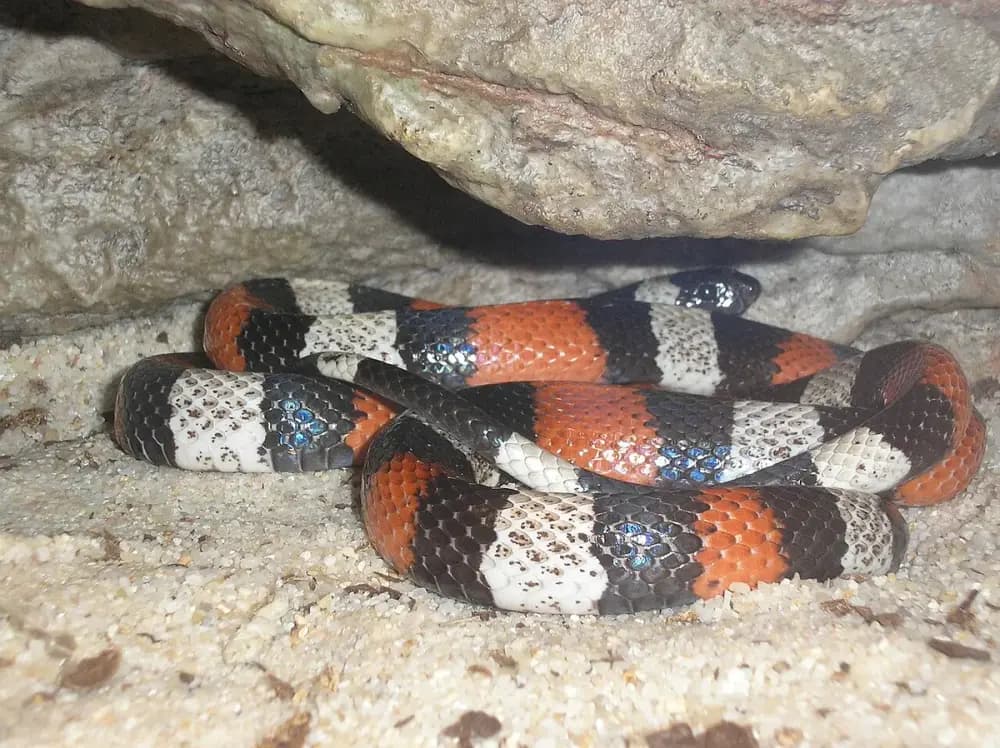
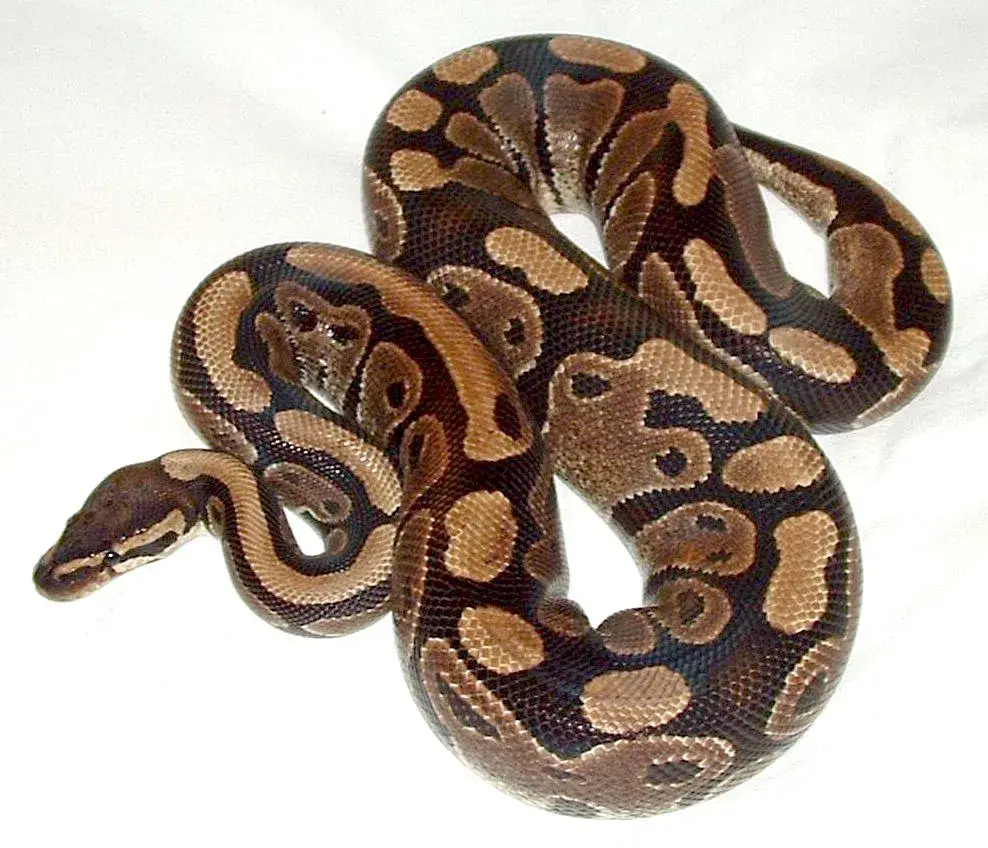
Kingsnakes are nonvenomous colubrid snakes of the genus Lampropeltis, native to North America from the United States into Mexico. They live in habitats from tropical forests to shrublands and deserts, and range from about 61 cm to 152 cm long. Patterns vary from muted browns and black to bright rings, stripes and saddles in white, red and yellow. They are mostly terrestrial but can climb and swim, kill by constriction, and feed on rodents, lizards, birds, eggs and other snakes, including venomous rattlesnakes. The common kingsnake is known to be immune to the venom of other snakes.
Kingsnake facts
- The name king refers to the snakes preying on other snakes.
- California kingsnakes can exert twice the constriction force of rat snakes and pythons relative to body size.
- Some red-banded kingsnakes resemble venomous coral snakes, which is why mnemonic rhymes exist.
- The genus name Lampropeltis means shiny shield, a reference to its smooth, enamel-like scales.
Where to see kingsnake in the U.S.
3 zoos across 2 states
Find the closest one
Rank the 3 zoos holding kingsnake by how far they are from you. Your location is used in your browser to sort this list and is never sent to us.
AZAThe Association of Zoos and Aquariums. Accredited members have passed an independent inspection of animal care and welfare, safety, conservation and education, repeated every five years. Many smaller facilities never apply, so “not accredited” isn't a verdict on its own. What accreditation means · How we check this
Built from each zoo's own published animal list.