- Where to see one
- 3 U.S. zoos in our directory hold greater siren, confirmed against each zoo's own animal list.
Conservation status
Not Evaluated
This species has not been assessed for the IUCN Red List, so it sits outside the threat scale entirely.
About the greater siren
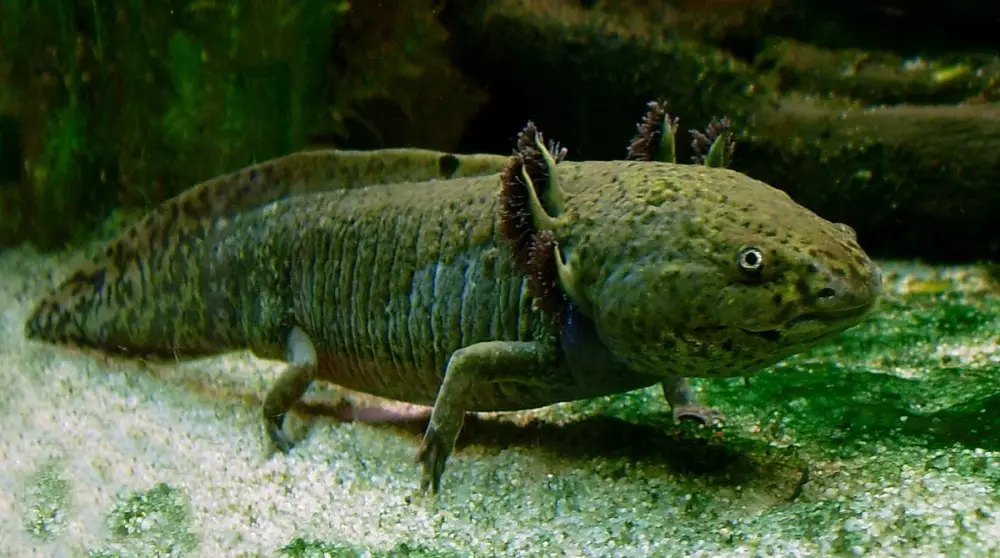
The greater siren is a large, aquatic salamander of the coastal plain of the southeastern United States, found from Washington, D.C., to Florida and Alabama. It is the third longest salamander in the Western Hemisphere, growing 18 to 97 cm long. Like all sirens it has no hindlimbs, keeps external gills throughout life, and lacks eyelids. It lives in slow or still wetlands with a thick layer of organic material, hiding by day under logs or in dense vegetation. It is nocturnal and carnivorous, eating invertebrates and small fish, with a possible preference for molluscs.
Greater Siren facts
- It can survive drought by burrowing into mud and forming a cocoon of dead skin cells, aestivating for up to three years.
- Greater sirens can click or yelp, sounding like an American green tree frog.
- A female lays about 500 eggs, and the father guards the nest, fanning his tail over it.
- Its front legs are so small that they can be hidden in the gills.
Where to see greater siren in the U.S.
3 zoos across 3 states
Find the closest one
Rank the 3 zoos holding greater siren by how far they are from you. Your location is used in your browser to sort this list and is never sent to us.
AZAThe Association of Zoos and Aquariums. Accredited members have passed an independent inspection of animal care and welfare, safety, conservation and education, repeated every five years. Many smaller facilities never apply, so “not accredited” isn't a verdict on its own. What accreditation means · How we check this
Built from each zoo's own published animal list.