- Where to see one
- 7 U.S. zoos in our directory hold brown pelican, confirmed against each zoo's own animal list.
- Native range
- Atlantic coast from New Jersey to the mouth of the Amazon, the Gulf of Mexico, and the Pacific coast from British Columbia to northern Peru, including the Galápagos
- Size
- 1–1.52 m (3 ft 3 in–5 ft) long; wingspan 2.03–2.28 m (6 ft 8 in–7 ft 6 in); weight 2–5 kg (4.4–11 lb)
- Lifespan
- Over 31 years recorded in captivity
- Clutch size
- Usually two or three eggs
- Group of young
- Juveniles gather in small groups called pods
Conservation status
Least Concernassessed 2018
IUCN Red List category LC — step 1 of 7.
The brown pelican is one of three pelican species in the Americas and one of two that feed by diving into the water. It ranges along the Atlantic coast from New Jersey to the mouth of the Amazon and along the Pacific coast from British Columbia to Peru, including the Galapagos Islands. Breeding adults have a white head with a yellowish crown and a dark maroon-brown nape. It feeds mainly on fish, occasionally taking amphibians, crustaceans and the eggs and nestlings of birds. Nesting is in colonies in secluded spots such as islands, mangroves and shrub thickets, where females lay two or three chalky white eggs and both sexes share incubation.
About the brown pelican
The brown pelican is a large, dark-plumaged seabird of the pelican family, Pelecanidae, found along the Atlantic, Gulf and Pacific coasts of the Americas. It is the smallest of the eight living pelican species and, with the closely related Peruvian pelican, one of only two that catch fish by diving into the water from the air.
Carl Linnaeus described the species in 1766 under the name Pelecanus occidentalis. It belongs to a New World group of pelicans along with the Peruvian pelican, its closest relative, and the American white pelican. The Peruvian pelican was once treated as a subspecies of the brown pelican but is now considered separate, mainly because it is about twice as heavy. Five subspecies of the brown pelican are recognized, differing in size, breeding colors and range.
Smallest pelican or not, it is still one of the larger seabirds in its range. Adults measure 1–1.52 m (3 ft 3 in–5 ft) long with a wingspan of 2.03–2.28 m (6 ft 8 in–7 ft 6 in) and weigh 2–5 kg (4.4–11 lb), about half as much as the other two pelicans of the Americas. In Florida, females averaged 3.17 kg (7 lb) and males 3.7 kg (8.2 lb). The bill is 28–34.8 cm (11–13.7 in) long, with a throat pouch underneath.
In breeding plumage, the adult has a white head washed with yellow on the crown, a dark maroon-brown nape and neck, a short chestnut crest, and a silvery grey back. The belly is dark and the legs and feet are black. Outside the breeding season the head and neck turn white, and the pink skin around the eyes fades to grey. During courtship the bill turns pinkish red to pale orange. Males and females look alike, though females are slightly smaller. Juveniles are greyish-brown with paler underparts and take three or more years to reach adult plumage.
Behavior and diet
Diet
Mostly fish such as menhaden, anchovies and sardines; some crustaceans
Brown pelicans are very social and live in mixed flocks all year. They fly in lines or single file, often low over the water, with heads drawn back onto their shoulders. Adults make harsh grunts during displays and an occasional low croak, while chicks squeal often.
They are fish eaters. Menhaden can make up 90% of the diet in some areas, and anchovies are especially important for nesting success. Other common prey includes pinfish, herring, mullet, sardines and silversides. In Southern California, Pacific sardines can make up as much as 26% of the diet. Crustaceans, especially prawns, add variety, and the birds occasionally eat amphibians or the eggs and chicks of other birds.
The hunting style is what sets the species apart. Flying 18–21 m (60–70 ft) above the sea, a brown pelican spots a school of fish, then plunges bill-first like a kingfisher, often disappearing completely below the surface. It surfaces, drains the water from its pouch, and swallows the catch. Other pelicans, apart from the Peruvian pelican, feed by scooping fish while swimming at the surface. Gulls, skuas and frigatebirds sometimes try to steal a pelican's catch. Powerful salt glands let brown pelicans drink seawater.
Pairs are monogamous for a season but do not mate for life. Nesting peaks in March and April. The male picks a site and bobs his head to attract a female, and both birds then perform head-swaying and bowing displays. Pelicans nest in colonies, some used for many years, on secluded islands, among sand dunes, in shrubs, trees and mangroves, and sometimes on cliffs. Nests can be just 1 m (3.3 ft) apart.
The female usually lays two or three chalky white eggs. Both parents incubate for 28–30 days, warming the eggs with their webbed feet. Chicks hatch pink and weigh about 60 g (2 oz), turning grey or black within 4 to 14 days. Parents feed them regurgitated fish, about 70 kg (150 lb) of it over the 8 to 10 months of care. Young leave the nest on foot at about 35 days, fledge at about 63 days, fly at 71–88 days, and gather in pods. Fledging success drops with hatching order: as high as 100% for the first chick, 60% for the second and just 6% for the third. Birds mature at three to five years.
Predators of eggs and chicks include gulls, bald eagles and other raptors, alligators, raccoons, crows and feral cats and dogs. Adults are rarely taken, though sea lions and sharks have grabbed them from below, and in California adult brown pelicans have become common prey for river otters.
Range and habitat
Habitat
Shallow coastal waters, salty bays, beaches, estuaries and mangroves
Brown pelicans live on the coasts of the Americas. On the Atlantic side they range from New Jersey to the mouth of the Amazon River, and on the Pacific side from British Columbia to northern Peru, including the Galápagos Islands. Along the Gulf Coast they occur in Texas, Louisiana, Mississippi, Alabama, Florida and Mexico. Most populations stay put year-round, though North American birds may move north along the coast after nesting and back to warmer waters for winter.
This is a strictly marine bird. It favors shallow coastal water near salty bays and beaches, estuaries and mangrove swamps, and seldom goes more than 20 miles (32 km) offshore. It roosts on rocks, cliffs, piers, jetties, sand beaches and mudflats. Storms occasionally carry birds far inland.
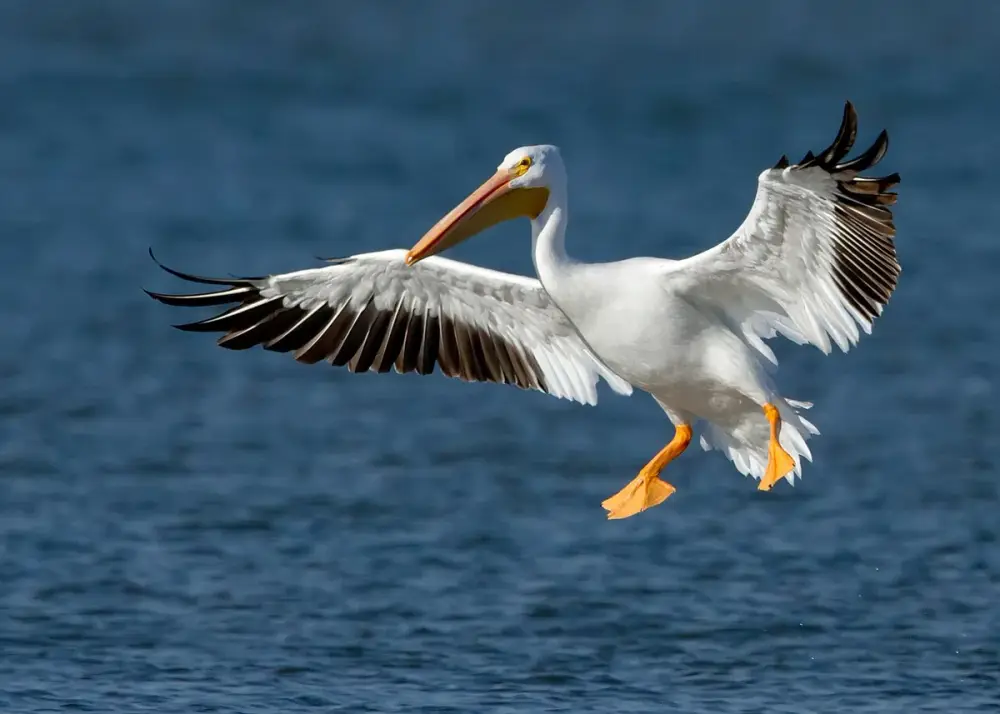
Brown pelican vs American white pelican
Both belong to the New World group of pelicans and both live in North America, but they are easy to tell apart.
| Trait | Brown pelican | American white pelican |
|---|---|---|
| Plumage | Brown and grey body, not white | White |
| Size | Smaller; 2–5 kg (4.4–11 lb) | About twice as heavy |
| Fishing method | Plunge-dives from the air | Fishes cooperatively from the surface |
Conservation status
Today the brown pelican is listed as Least Concern, most recently assessed by BirdLife International in 2018, with an increasing population estimated at about 650,000 birds worldwide. That is a recovery story. In 1903, Theodore Roosevelt created the first National Wildlife Refuge, Pelican Island in Florida, to protect the species from hunters.
The bigger threat came later. From the 1940s, the pesticide DDT made eggshells too thin to survive incubation. By the 1960s the brown pelican had nearly vanished from the Gulf Coast, it went extinct in Louisiana in 1963, and Southern California colonies suffered almost total breeding failure. The species was listed under the Endangered Species Act from 1970 to 2009. After DDT was banned in the United States in 1972, contamination fell and nesting success climbed. A Louisiana reintroduction program from 1968 to 1980 brought the birds back to the state, and the North American population grew by about 68% per decade over 40 years.
New pressures remain. Fishing line and hooks injure pelicans, people still hunt adults and take eggs in parts of the Caribbean and Latin America, and nesting birds may abandon colonies when disturbed. In Southern California, the collapse of Pacific sardine stocks has been linked to breeding failures between 2014 and 2016.
Where to see brown pelican in the U.S.
7 zoos across 6 states
Find the closest one
Rank the 5 zoos holding brown pelican by how far they are from you. Your location is used in your browser to sort this list and is never sent to us.
2 more zoos hold brown pelican but have no coordinates on file yet, so they aren't ranked here. They're in the full list below.
California· 1
Delaware· 1
District of Columbia· 1
Florida· 2
North Carolina· 1
Texas· 1
AZAThe Association of Zoos and Aquariums. Accredited members have passed an independent inspection of animal care and welfare, safety, conservation and education, repeated every five years. Many smaller facilities never apply, so “not accredited” isn't a verdict on its own. What accreditation means · How we check this
Built from each zoo's own published animal list.
Brown Pelican: common questions
How big is a brown pelican?
It is 1–1.52 m (3 ft 3 in–5 ft) long with a wingspan of up to 2.28 m (7 ft 6 in), and it weighs 2–5 kg (4.4–11 lb). It is the smallest pelican species.
How do brown pelicans catch fish?
By diving. They spot fish from 18–21 m (60–70 ft) up, plunge bill-first into the water, then drain the pouch and swallow.
What do brown pelicans eat?
Mostly fish, especially menhaden, anchovies and sardines, plus some crustaceans.
How long do brown pelicans live?
One has been recorded living more than 31 years in captivity.
Is the brown pelican still endangered?
No, not as a species. It is rated Least Concern worldwide, and its listing under the U.S. Endangered Species Act ran from 1970 to 2009 as it recovered from DDT.
Where do brown pelicans live?
On the Atlantic, Gulf and Pacific coasts of the Americas, from New Jersey and British Columbia south to Brazil and Peru.
Is the brown pelican a state or national bird?
Yes. Louisiana is nicknamed "The Pelican State," and the brown pelican is its official state bird and appears on its flag and seal. It is also the national bird of Barbados, Saint Kitts and Nevis, Saint Martin, and the Turks and Caicos Islands.