- Where to see one
- 3 U.S. zoos in our directory hold dart frog, confirmed against each zoo's own animal list.
Conservation status
Not Evaluated
This species has not been assessed for the IUCN Red List, so it sits outside the threat scale entirely.
About the dart frog
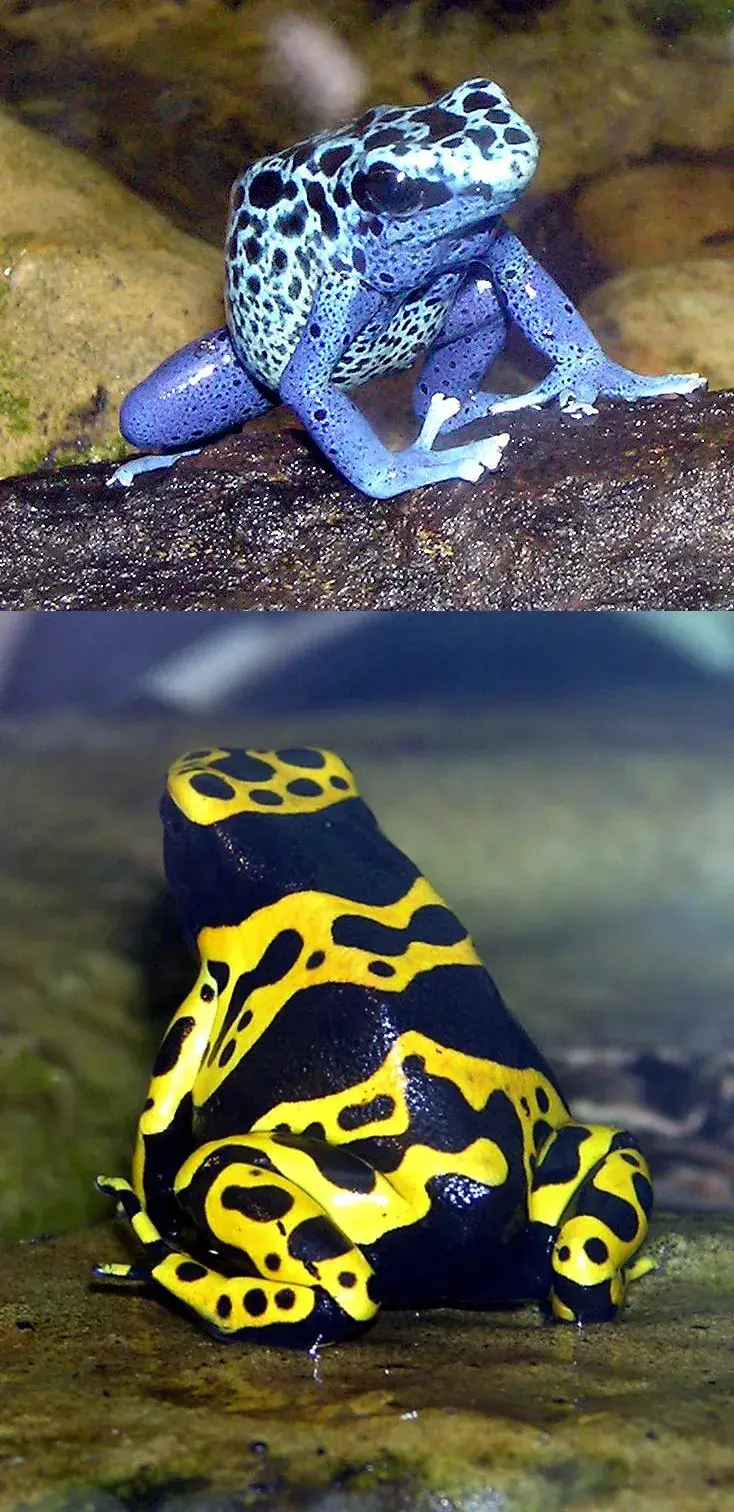
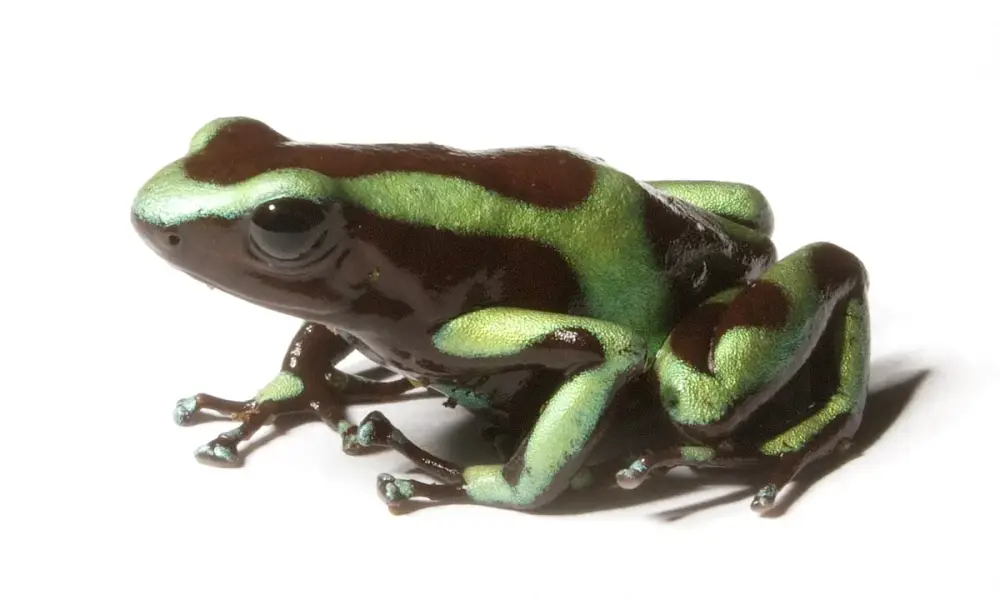
Poison dart frogs make up the family Dendrobatidae, a group of roughly 200 species native to the tropics of Central and South America. Most are small, some under 1.5 cm as adults, and many are brightly colored in patterns that warn predators of toxic skin secretions. The toxins come from a diet of ants, mites and termites rather than being made by the frog itself. Adults lay eggs in moist places, and a parent then carries the tadpoles, one at a time, on its back to a pool or to water held in bromeliads. Of the many species, only four have been recorded as a source of blowdart poison.
Dart Frog facts
- Their skin toxins are derived from a diet of ants, mites and termites.
- Only four of over 170 species have been documented as providing poison for blowdart tips.
- A parent piggybacks tadpoles one at a time to pools or water in bromeliads.
- In some species, tadpoles are fed unfertilized eggs laid at regular intervals.
Where to see dart frog in the U.S.
3 zoos across 3 states
Find the closest one
Rank the 3 zoos holding dart frog by how far they are from you. Your location is used in your browser to sort this list and is never sent to us.
California· 1
Illinois· 1
New York· 1
AZAThe Association of Zoos and Aquariums. Accredited members have passed an independent inspection of animal care and welfare, safety, conservation and education, repeated every five years. Many smaller facilities never apply, so “not accredited” isn't a verdict on its own. What accreditation means · How we check this
Built from each zoo's own published animal list.