
Oklahoma City Zoo and Botanical Garden
Oklahoma City, OK
- Admission
- $20
- Size
- 130 acres
- Animals
- 2,000
- Opened
- 1902
- Accreditation
- AZA
Association of Zoos and Aquariums
Everything below is directory information drawn from public sources and the zoo's own site.
Animals at Oklahoma City Zoo and Botanical Garden
10 of the ~500 species this zoo listsThis is a partial list — we only show species we've confirmed against the zoo's own pages, and their full collection is considerably larger.
Mammals8
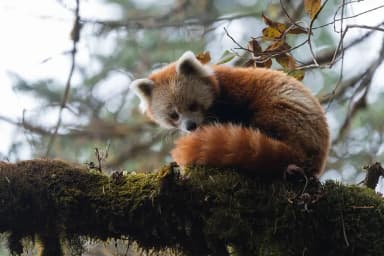 Sunuwargr · CC BY-SA 4.0
Red panda
 Joe Ravi · CC BY-SA 3.0
Prairie Dog
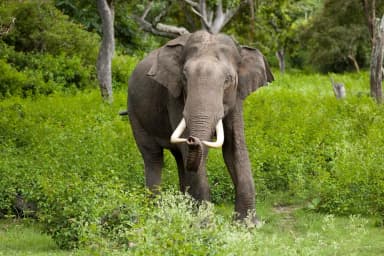 Yathin S Krishnappa · CC BY-SA 3.0
Asian Elephant
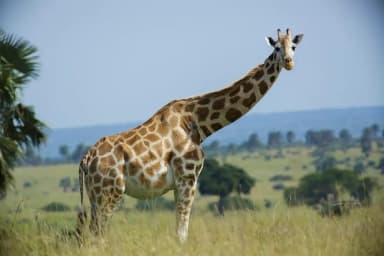 Thomas Fuhrmann · CC BY-SA 4.0
Giraffe
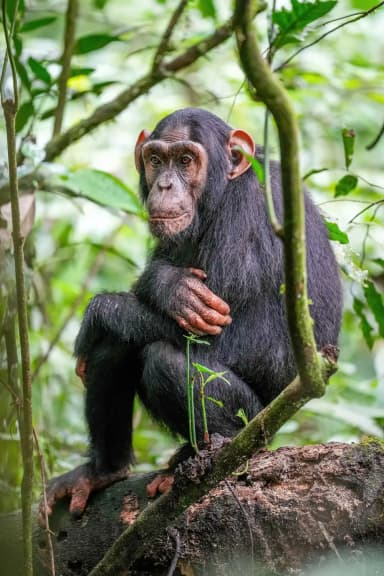 Giles Laurent · CC BY-SA 4.0
Chimpanzee
 Giles Laurent · CC BY-SA 4.0
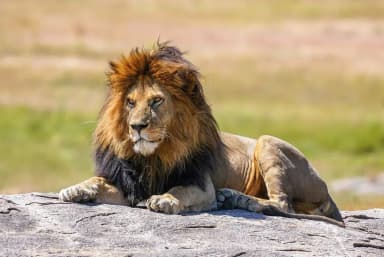
Lion
 Mayank1704 · CC BY-SA 4.0
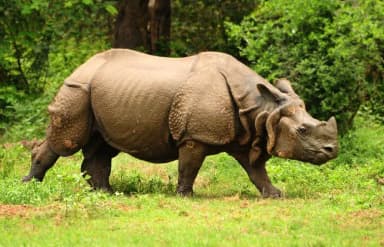
Greater One-horned Rhinoceros
 Charles J. Sharp · CC BY-SA 4.0
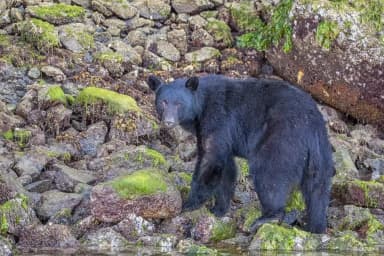
American Black Bear
Feathers & Fangs from visitors
What people who've been to Oklahoma City Zoo and Botanical Garden say
A Feather is something this zoo does well; a Fang is something it gets wrong. Left by people who've been, and read by us before they appear.
Loading…
About Oklahoma City Zoo and Botanical Garden
The Oklahoma City Zoo and Botanical Garden covers 130 acres in the city's Adventure District in northeast Oklahoma City, at the crossroads of I-35 and I-44, alongside attractions like the National Cowboy and Western Heritage Museum and Science Museum Oklahoma. The zoo houses more than 2,000 animals of more than 500 species, drawing more than one million visitors a year, and it is open every day except Thanksgiving and Christmas. It holds accreditation from both the Association of Zoos and Aquariums and the American Alliance of Museums.
Beyond its animal collection, the zoo maintains 12 botanical gardens across the grounds. Its exhibits are organized largely by continent and habitat type, ranging from the recently expanded Expedition Africa to the historic Herpetarium, built in 1928 and still one of the zoo's most-visited attractions. The zoo describes its mission as envisioning a world where people take action to conserve wildlife and wild places, a theme that runs through both its exhibits and its published conservation programs.
History
The zoo's roots run back to 1902, and it has operated at points under earlier names, including the Lincoln Park Zoo, before settling into its current identity in the Adventure District. Two of its exhibits closed for reasons documented in its own history: Monkey Island, opened in 1935 near the entrance so that monkeys could play, eat, and sleep on an island dug into the ground, was dismantled in 1998 after visitors repeatedly dropped or threw hazardous materials onto it, endangering the animals; the site is now a plaza with a gift shop and restaurant. The Primate House, built in the 1950s, held apes until 1993, when they moved to more naturalistic habitats and the building was replaced by the Canopy Food Court. A dolphinarium kept bottlenose dolphins from 1986 until 2001, when the animals were returned to Mississippi and the exhibit became a sea lion habitat.
The zoo's most significant recent expansion, Expedition Africa, opened in 2024 as the largest single habitat addition in the zoo's history, adding 12 acres that include a new giraffe barn and a renovated Love's Pachyderm Building with added event space. The zoo has also had well-known individual animals over the decades: Judy, an elephant who lived at the zoo for almost 50 years; Malee, an Asian elephant born in 2011 who died in 2015 of elephant endotheliotropic herpesvirus; and Tusko, a male Indian elephant who, in a controversial 1962 experiment by University of Oklahoma researchers, was injected with a massive dose of LSD and died roughly 100 minutes later.
Exhibits and habitats
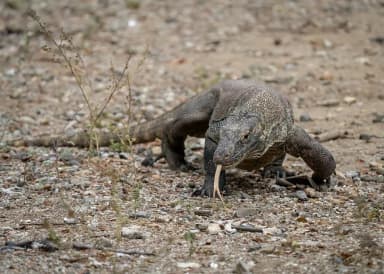
Expedition Africa, at 12 acres, is the zoo's newest and largest habitat, presented by the Inasmuch Foundation. It includes a giraffe barn, a savanna area where multiple African species mingle, and the renovated Love's Pachyderm Building, with covered pavilions for eye-level animal viewing and elevated decks overlooking the habitats. Sanctuary Asia, at 9.5 acres, centers on the zoo's herd of Asian elephants, housed with three spacious outdoor yards, pools, a waterfall, and a barn with a raised boardwalk for viewing; the section also includes Indian rhinoceroses, Komodo dragons, and red pandas across five habitats, plus the Lotus Pavilion restaurant.
Oklahoma Trails spans roughly 7.7 to 8 acres and groups animals native to the state across eleven distinct life zones, including areas modeled on Black Mesa, the Ozark Highlands, and Big Rivers; it holds black bears, grizzly bears, alligators, bison, prairie dogs, and more than two dozen snakes, plus a Nocturnal Barn for owls, bats, and rodents. The Cat Forest and Lion Overlook, at 4.2 acres, house African lions, tigers, and other big and small cats among more than 4,000 plants recreating native habitats, with both indoor and outdoor viewing areas. Great EscApe, covering roughly 3 to 6 acres depending on the source, is home to two troops of Western lowland gorillas and a community of chimpanzees within a naturalistic rainforest setting with waterfalls.
The Herpetarium, built in 1928, holds more than 65 to 80 exhibits of reptiles and amphibians and connects to the outdoor Wetlands Walkway, home to more turtles and amphibians. The Children's Zoo, presented by Primrose Schools, includes a Barnyard for up-close animal encounters, a Waterway for splashing and play, and a Galapagos Barn housing some of the zoo's longest-lived residents, alongside flamingos, goats, monkeys, and lorikeets. Other attractions across the grounds include a giraffe feeding platform, the Elephant Express tram, the Endangered Species Carousel, Stingray Bay, Wild Encounters animal experiences, elephant presentations, a Monarch Flyway Zipline, and the Jungle Gym Playground.
Animal highlights
The zoo describes its collection as more than 2,000 animals of more than 500 species, with mammal, bird, invertebrate, and fish groups represented across its habitats. Documented invertebrate species include the Arizona blond tarantula, Chaco golden knee tarantula, Madagascar hissing cockroach, and monarch butterfly, the last found in the zoo's butterfly gardens. Elsewhere across the zoo, named species include African lions, tigers, Western lowland gorillas, chimpanzees, Asian elephants, Indian rhinoceroses, Komodo dragons, red pandas, black bears, grizzly bears, American alligators, American bison, and Galápagos tortoises, along with flamingos and lorikeets in the Children's Zoo. Wild Encounters at the zoo have specifically featured bears, Galápagos tortoises, Indian rhinos, bison, Komodo dragons, and Asian elephants.
Conservation and programs
The Oklahoma City Zoo funds conservation work both locally and internationally through its Conservation Action Now (CAN) grant program, which supports researchers studying imperiled species and habitats around the world. Recent grant recipients have studied microkayla frogs in Bolivia, bright-eyed frogs in Madagascar, dusky gopher frogs in Mississippi, narrow-headed softshell turtles in India, humpback whales in Nicaragua, seagrass meadows in Sri Lanka, Cross River gorillas in Cameroon, scarlet macaws and oncilla in Costa Rica, and white-shouldered ibis in Cambodia, among other projects.
The zoo also runs its own named initiatives, including the Sri Lanka Elephant Project, founded in response to threats facing Asian elephants, of which fewer than 40,000 remain worldwide, and a program supporting Sri Lanka's non-human primates, including the critically endangered purple-faced langur. Other stated conservation priorities include protecting Oklahoma's migratory birds and Texas horned lizards, restoring monarch butterfly habitat, supporting the critically endangered Guatemalan beaded lizard, and combating the illegal wildlife trade that threatens African painted dogs and cheetahs — an estimated 300 cheetah cubs are taken from the wild each year to be sold as pets. On its own grounds, the zoo has worked to reduce waste through composting and solar-powered EV chargers as part of its broader sustainability efforts.
Planning your visit
As listed on the zoo's website, the Oklahoma City Zoo is generally open 9:00 a.m. to 5:00 p.m., though hours have shifted seasonally and for extreme weather, with last entry typically at 4:00 p.m. General admission has been listed at $20 for adults and $17 for children and seniors; children two and under are free but still require a ticket for entry. Starting December 1, 2025, the zoo has moved to a cashless system, with "reverse ATM" machines available to convert cash into a prepaid card accepted throughout the grounds.
The zoo offers discounted admission for Oklahoma EBT/SNAP/WIC cardholders, Oklahoma Tribal WIC participants, active-duty and veteran military members, Oklahoma Fosters and Big Brothers Big Sisters participants, and members of other AZA-accredited zoos at 50 percent off with proof of membership. Strollers, wagons, wheelchairs, and electric convenience vehicles are available to rent on a first-come, first-served basis near the entry plaza. Dining options include the Canopy Restaurant near the Children's Zoo and the Lotus Café in Sanctuary Asia, along with several quick-service stands throughout the grounds; outside food and non-alcoholic beverages are also permitted. Sensory bags are available at no cost from Guest Services for visitors who benefit from them. Because hours, prices, and policies change, confirm current details on the zoo's official website before visiting.
What we haven't confirmed
Everything above came from public sources. These specifics we haven't stood behind yet:
- Current parking details
- Time typically needed for a full visit
- Phone number for general inquiries
- Total acreage of botanical gardens versus animal habitats
Oklahoma City Zoo and Botanical Garden compared with nearby zoos
How Oklahoma City Zoo and Botanical Garden lines up against the closest zoos we have details for — useful if you're deciding between them for the same day out.
| Zoo | Distance | Admission | Hours | Size | AZA |
|---|---|---|---|---|---|
| Oklahoma City Zoo and Botanical GardenThis zooOklahoma City, OK | — | $20 | 9:00 AM – 5:00 PM | 130 acres | Yes |
| Tulsa Zoo and Living MuseumTulsa, OK | 99 mi | $22.99 | 9 am – 5 pm | 84 acres | Yes |
| Frank Buck ZooGainesville, TX | 132 mi | $9 | Daily 9:00 AM – 3:30 PM; last tickets and entry 2:30 PM. | 30 acres | No |
| Sedgwick County ZooWichita, KS | 152 mi | $28–$33 | Daily 9:00 AM – 5:00 PM; onsite ticket sales end 4:00 PM. | — | Yes |
Distances are straight-line. A dash means we haven't confirmed that detail yet, not that the zoo lacks it.
AZAThe Association of Zoos and Aquariums. Accredited members have passed an independent inspection of animal care and welfare, safety, conservation and education, repeated every five years. Many smaller facilities never apply, so “not accredited” isn't a verdict on its own. What accreditation means · How we check this
Oklahoma City Zoo and Botanical Garden: common questions
Is the Oklahoma City Zoo AZA accredited?
Yes, it is accredited by both the Association of Zoos and Aquariums and the American Alliance of Museums.
How big is the Oklahoma City Zoo?
It covers 130 acres in Oklahoma City's Adventure District.
When did the Oklahoma City Zoo open?
Its history dates to 1902.
How many animals and species can visitors see?
The zoo's collection totals more than 2,000 animals of more than 500 species.
What are the zoo's major habitat areas?
Expedition Africa, Sanctuary Asia, Oklahoma Trails, Cat Forest and Lion Overlook, Great EscApe, the Herpetarium, and the Children's Zoo.
Are wheelchairs and strollers available to rent?
Yes, along with wagons and electric convenience vehicles, on a first-come, first-served basis.
Is food available inside the zoo, and can visitors bring their own?
Yes to both — the zoo has multiple restaurants and snack stands, and also allows outside food and non-alcoholic beverages.
Something wrong here? Tell us — we correct in place, with a dated note.