
- Admission
- $22.95
- Size
- 6.5 acres
- Opened
- 1934
- Accreditation
- AZA
Association of Zoos and Aquariums
Everything below is directory information drawn from public sources and the zoo's own site.
Animals at Central Park Zoo
7 confirmedMammals6
 Sunuwargr · CC BY-SA 4.0
Red panda
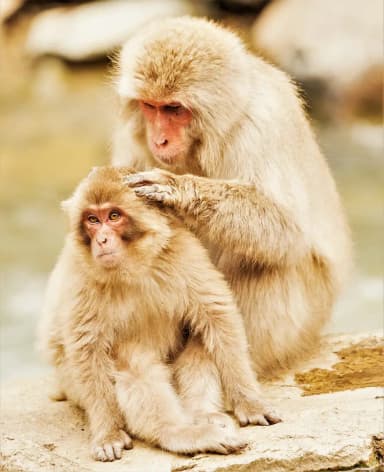 Rocktendo & Adam Gman · CC BY-SA 4.0
Japanese Macaque
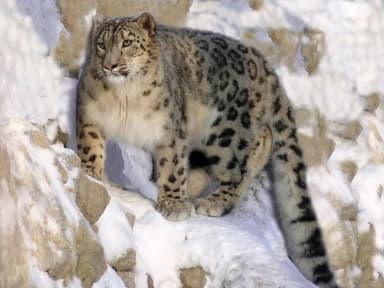 Irbis1983 · Public domain
Snow Leopard
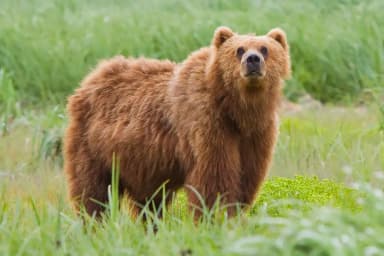 Yathin S Krishnappa · CC BY-SA 3.0
Grizzly bear
 Chensiyuan · CC BY-SA 4.0
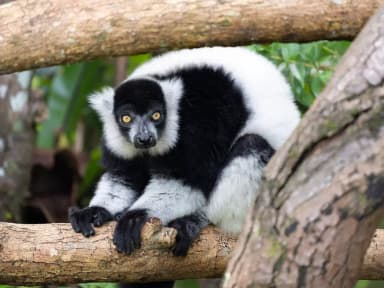
Black-and-white Ruffed Lemur
 (c) Jonathan Eisen, some rights reserved (CC BY) · CC BY 4.0
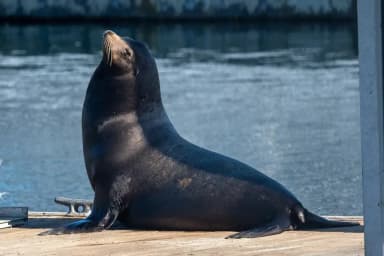
California Sea Lion
Feathers & Fangs from visitors
What people who've been to Central Park Zoo say
A Feather is something this zoo does well; a Fang is something it gets wrong. Left by people who've been, and read by us before they appear.
Loading…
About Central Park Zoo
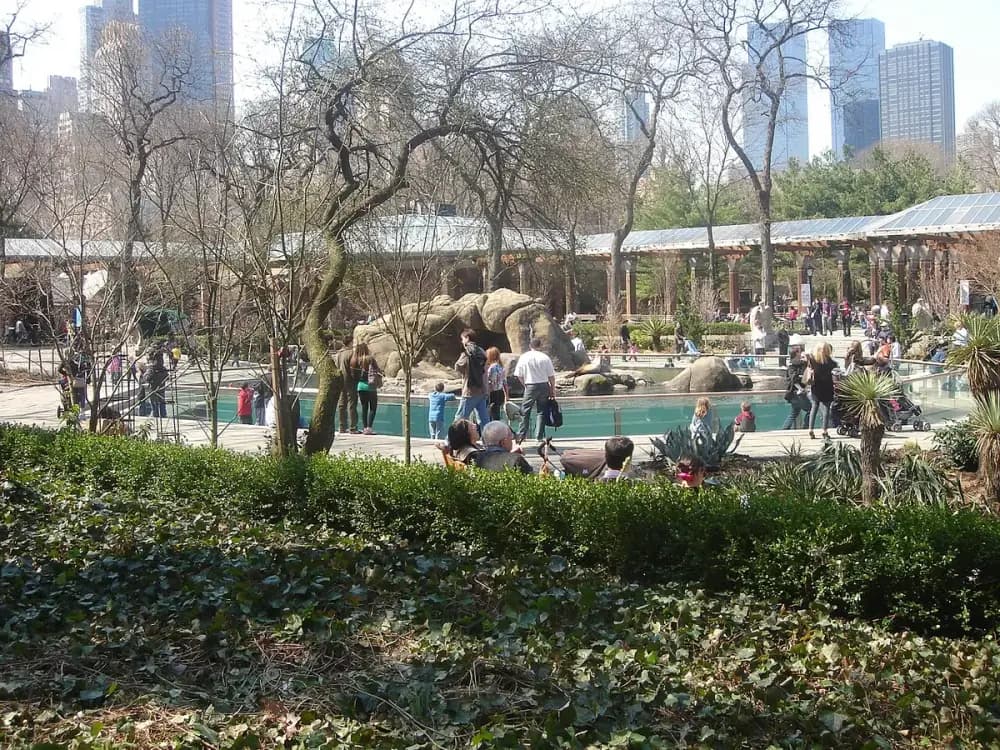
Central Park Zoo occupies about 6.5 acres near the southeast corner of Central Park in Manhattan, at 830 Fifth Avenue. It opened in 1934 and is accredited by the Association of Zoos and Aquariums. The zoo is run by the Wildlife Conservation Society, or WCS, the same organization behind the Bronx Zoo, Queens Zoo, Prospect Park Zoo, and the New York Aquarium.
Despite its small footprint, the zoo organizes its collection into distinct zones: the Polar Circle, the Central Garden and Sea Lion Pool, the Tropic Zone rainforest building, a dedicated snow leopard habitat, a grizzly bear overlook, and the Tisch Children's Zoo. A 4-D Theater is included with general admission. The zoo describes itself as compact but dense with things to see, and visitors quoted in its own materials describe it as small but packed with fascinating, informative exhibits.
The zoo's stated mission is to protect wildlife and inspire the next generation of zoologists and conservationists, work carried out both through its public exhibits and through WCS's broader conservation programs, which extend into the Wildlife Conservation Society's field projects around the world. Membership is shared across all five WCS-run parks in New York City, letting visitors move between the Bronx Zoo, Central Park Zoo, Queens Zoo, Prospect Park Zoo, and the aquarium under a single pass.
History
Central Park Zoo is part of a wildlife-conservation effort that the Wildlife Conservation Society traces back roughly 131 years, to the founding of the New York Zoological Society. In more recent decades, the zoo's bird program has produced some notable firsts: in 2015, Central Park Zoo became home to the first king penguin ever hatched in New York City, a result the zoo attributes to its keepers' and curatorial staff's husbandry techniques. The zoo's aviary staff also worked for nearly a decade to breed the superb bird-of-paradise, a rainforest species from New Guinea, successfully hatching three chicks in 2018 and another in 2019.
Exhibits and habitats
The Polar Circle combines indoor and outdoor space for cold-climate species. Indoors, it houses chinstrap penguins, recognizable by the helmet-like black stripe across their heads; outdoors, harbor seals occupy a pool, moving on land by contracting their stomach muscles in a caterpillar-like wiggle that has earned them the nickname "crawling seals." The Polar Circle is also home to macaroni penguins, known for their bright yellow crests, tufted puffins, whose yellow head tufts appear only in summer, and gentoo penguins, recognized for their loud, trumpeting calls.
Beyond the Polar Circle, the zoo's named habitats include the Allison Maher Stern Snow Leopard exhibit, the Central Garden and Sea Lion Pool, the Grizzly Bear and Treena's Overlook, and the Tropic Zone, an indoor rainforest building. The Tisch Children's Zoo gives younger visitors a hands-on area with goats, a cow, and sheep, where keepers sometimes offer brushes for grooming or hay for feeding, depending on the day. General admission also includes one visit to the zoo's 4-D Theater.
Animal highlights
No published species count is listed for Central Park Zoo, so this section draws only on the animals the zoo names in its own materials. Visitors can expect to see snow leopards, sea lions, and snow monkeys, along with a grizzly bear. The Polar Circle is stocked with chinstrap, macaroni, and gentoo penguins, tufted puffins, and harbor seals. The Tisch Children's Zoo keeps domestic animals, including goats, a cow, and sheep, for hands-on interaction.
The zoo's bird program also works with several rare species behind the scenes as part of conservation breeding efforts, including the scaly-sided merganser, a sea duck from eastern Asia with a wild population estimated at fewer than 2,000 birds; the Baer's pochard, a critically endangered diving duck with fewer than 300 birds left in the wild in China and Russia; and the superb bird-of-paradise, a New Guinea rainforest species known for its elaborate courtship dance.
Conservation and programs
Central Park Zoo's conservation work sits within the wider Wildlife Conservation Society, which says its more than 4,000 staff work in nearly 60 countries and every ocean, focused on species including great apes, big cats, elephants, sharks and rays, marine mammals, and turtles. At the zoo itself, staff have worked extensively on rare waterfowl and tropical birds. Central Park was the first zoo in North America to successfully reproduce the scaly-sided merganser, and its conservationists recruited other zoos to build a genetically healthy assurance population of the species. The zoo also works to help save the Baer's pochard, a diving duck now reduced to fewer than 300 wild birds in China and Russia.
The zoo's decade-long effort to breed the superb bird-of-paradise, a rainforest species from New Guinea threatened by habitat loss and hunting for its feathers, produced three chicks in 2018 and a fourth in 2019; with a U.S. zoo population of only 26 birds, Central Park and the San Diego Zoo are described as the only two institutions currently reproducing the species successfully.
Planning your visit
As listed on the zoo's website, Central Park Zoo opens daily at 10 a.m. From April through October, the grounds close at 5 p.m. Monday through Friday and 5:30 p.m. on weekends and holidays; from November through March, closing time is 4:30 p.m. every day. Last entry is one hour before closing, and the zoo is open all 365 days of the year, including holidays. Confirm current hours on the official site, since they can change.
- All visitors need a date-specific ticket, purchased in advance online, though same-day tickets and limited on-site sales are sometimes available depending on availability; WCS members do not need a reservation for regular daytime visits.
- There is no parking at the zoo itself; nearby parking garages can be booked in advance through a third-party parking service. The zoo is easily reached by subway (N, R, W trains to Fifth Avenue/59th Street, or the 6 train to 68th Street/Hunter College) and by several bus routes along Fifth Avenue.
- All buildings are wheelchair accessible, with elevator access to the Tropic Zone mezzanine, and a limited number of free wheelchairs are available on a first-come, first-served basis. Indoor exhibits have some stroller restrictions due to narrow pathways, though accommodations are available for children who use a stroller as a mobility aid.
- The zoo is partnered with KultureCity and offers free sensory bags with noise-canceling headphones and fidget tools, along with marked quiet zones and "headphone zones" in its noisier indoor spaces.
- The Dancing Crane Café offers meals, snacks, and desserts, and outside picnic spots are available on benches in the surrounding park.
- According to the zoo's own FAQ, the average visit lasts about 1 to 1.5 hours.
Confirm current ticket prices, hours, and any schedule changes on Central Park Zoo's official website before visiting.
What we haven't confirmed
Everything above came from public sources. These specifics we haven't stood behind yet:
- Ticket prices for adult, child, and senior admission
- Total published species and animal counts
- Annual visitor attendance figures
- Phone number for general visitor questions
- Full list of exhibits beyond those named on the zoo's website
Central Park Zoo compared with nearby zoos
How Central Park Zoo lines up against the closest zoos we have details for — useful if you're deciding between them for the same day out.
| Zoo | Distance | Admission | Hours | Size | AZA |
|---|---|---|---|---|---|
| Central Park ZooThis zooNew York City, NY | — | $22.95 | 10:00 AM – 5:00 PM | 6.5 acres | Yes |
| Liberty Science CenterJersey City, NJ | 6 mi | — | Hours vary by date. Oct 1: 10–6; Oct 2: 10–4; Oct 3–4: 10–5; Oct 5–7: closed; Oct 8–9: 10–4; Oct 10–11: 10–5; Oct 12: 10–4. Closed Oct 5–7, 2026. | — | No |
| Queens ZooNew York City, NY | 7 mi | $10.95 | Apr 2 – Oct 31, 2026: Mon–Fri 10:00 AM – 5:00 PM; weekends and federal holidays 10:00 AM – 5:30 PM. Last entry 30 minutes before closing. | 11 acres | Yes |
| Prospect Park ZooNew York City, NY | 7 mi | $10.95 | 10:00 AM – 5:00 PM | 12 acres | Yes |
Distances are straight-line. A dash means we haven't confirmed that detail yet, not that the zoo lacks it.
AZAThe Association of Zoos and Aquariums. Accredited members have passed an independent inspection of animal care and welfare, safety, conservation and education, repeated every five years. Many smaller facilities never apply, so “not accredited” isn't a verdict on its own. What accreditation means · How we check this
Central Park Zoo: common questions
Is Central Park Zoo AZA accredited?
Yes. It is accredited by the Association of Zoos and Aquariums.
How big is Central Park Zoo?
It covers about 6.5 acres near the southeast corner of Central Park.
When did Central Park Zoo open?
It opened in 1934.
How long does a visit take?
The zoo's own FAQ estimates an average visit of about 1 to 1.5 hours.
Is there parking at the zoo?
No. There is no on-site parking, though nearby garages can be booked through a third-party service, and the zoo is accessible by subway and bus.
Is the zoo stroller and wheelchair accessible?
All buildings are wheelchair accessible, and free wheelchairs are available on a first-come, first-served basis; some indoor exhibits have stroller restrictions because of narrow pathways.
Is there food inside the zoo?
Yes. The Dancing Crane Café offers meals, snacks, and desserts, and there are picnic spots nearby in the park.
Something wrong here? Tell us — we correct in place, with a dated note.