
World Center for Birds of Prey
Boise, ID
- Admission
- $14
- Size
- 580 acres
- Opened
- 1970
- Accreditation
- None listed
not accredited by the Association of Zoos and Aquariums
Everything below is directory information drawn from public sources and the zoo's own site.
Animals at World Center for Birds of Prey
8 confirmed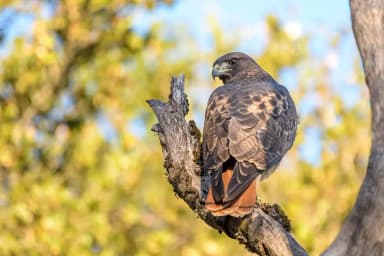
Feathers & Fangs from visitors
What people who've been to World Center for Birds of Prey say
A Feather is something this zoo does well; a Fang is something it gets wrong. Left by people who've been, and read by us before they appear.
Loading…
About World Center for Birds of Prey
The World Center for Birds of Prey is the headquarters of The Peregrine Fund, an international nonprofit founded in 1970 to conserve endangered raptors around the world. The campus sits on 580 acres on a hilltop overlooking Boise, Idaho, south of the airport and east of Kuna, and was built in 1984. It combines several functions on one property: The Peregrine Fund's business offices, breeding facilities for endangered raptors, the public-facing Velma Morrison Interpretive Center, and the Herrick Collections Building, which holds a large research library and the Archives of Falconry.
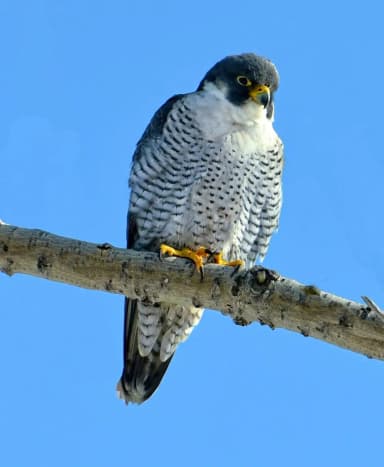
The Peregrine Fund's founding mission was the recovery of the peregrine falcon, which had been driven toward extinction by the widespread use of the pesticide DDT. That recovery effort succeeded: the peregrine falcon was removed from the U.S. Endangered Species list in 1999, an occasion marked with an international celebration in Boise. The organization has since expanded its work to other endangered raptors worldwide, and the World Center for Birds of Prey now functions both as a working breeding and research facility and as a public interpretive center that draws roughly 30,000 visitors a year.
History
The Peregrine Fund's original breeding facilities were established at Cornell University in central New York in 1970, with a second site added at a Colorado Division of Wildlife facility in Fort Collins in 1974. Both operations were consolidated in Boise after the organization built the World Center for Birds of Prey in 1984, a move driven in part by Morley Nelson, a well-known Boise raptor expert and Peregrine Fund board member who helped bring the organization to his hometown.
The first structures on the new site were an administrative office and barns for the captive breeding program. The organization's first climate-controlled breeding barn, the Gerald D. and Kathryn Swim Herrick Tropical Raptor Building, went up in 1986. The Velma Morrison Interpretive Center opened to the public in 1992 with exhibits on rare and endangered raptors, interactive displays, and school outreach programs. The first of three California condor breeding barns followed in 1993, and the Gerald D. and Kathryn S. Herrick Collections Building — housing the research library, scientific specimen collections, and the Archives of Falconry — opened in 2002. The Archives of Falconry roughly doubled in size in 2006 with a 3,000-square-foot addition donated by His Highness Sheikh Mohamed bin Zayed in honor of his father, the founding president of the United Arab Emirates. Most recently, a new Welcome Center, completed in April 2023, added the Inspiration Wall, an art installation representing the peregrine falcon's global range and the organization's worldwide conservation work.
Exhibits and habitats
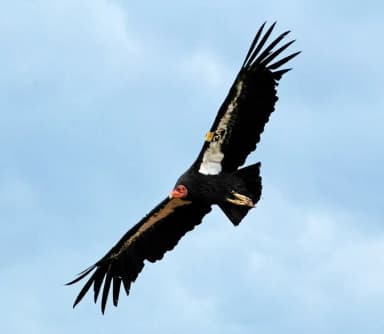
The Velma Morrison Interpretive Center, open to the public since 1992, is built around interactive displays, multimedia shows, and live demonstrations featuring hawks, falcons, eagles, and owls; visitors can also observe a live California condor. General admission includes access to the interpretive center, the Archives of Falconry, and the gift shop, and the center runs live bird programs three times daily.
The Herrick Collections Building, completed in 2002, holds the organization's research library and specimen collections along with the Archives of Falconry — a museum devoted to falconry equipment, memorabilia, artwork, field notes, and media, including an authentic Arab tent and related displays added with the 2006 expansion. The property also includes an amphitheater set in the sagebrush steppe, used for seasonal flight demonstrations by the center's trained birds, and the Marcia and Bob Ross Gallery, which shows artwork related to raptor conservation.
Behind the public-facing spaces, the center's breeding facilities include barns built specifically for endangered species programs — among them the Tropical Raptor Building and the California condor breeding barns — where captive birds are monitored by video as part of the organization's research into their health, growth, reproduction, and lifespan.
Animal highlights
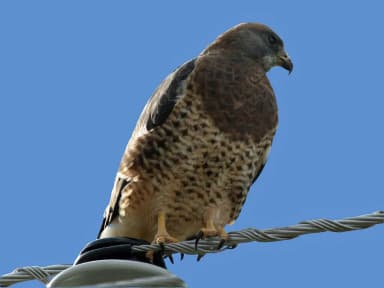
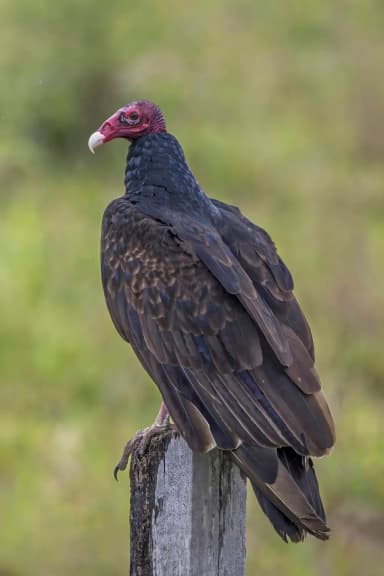
The center's public programs feature eagles, hawks, falcons, owls, and vultures representing the range of raptor species The Peregrine Fund works to conserve. Its captive breeding program currently focuses on two endangered species: the California condor, bred at the center and released to the wild in northern Arizona and southern Utah, and the aplomado falcon, whose chicks are released in Texas and New Mexico. No published total species or animal count is available beyond these named breeding and program species.
Conservation and programs
The Peregrine Fund's founding project was the recovery of the peregrine falcon from the brink of extinction after DDT use collapsed its population; that species was removed from the U.S. Endangered Species list in 1999. The organization now runs conservation and research programs across multiple continents, describing its approach as "Complete Conservation" — combining scientific research, community partnerships, international collaboration, and species-to-ecosystem-scale planning rather than protecting single species in isolation. Recent examples cited by the organization include a captive-breeding restart for endemic hawks in Puerto Rico and a new vulture recovery program in Tanzania, alongside its ongoing California condor and aplomado falcon breeding work in Boise.
The center's research library, housed in the Herrick Collections Building, holds more than 20,000 books and monographs and full or partial runs of more than 1,400 technical journals, newsletters, and other periodicals, along with specimen collections that include more than 13,000 eggshells and nearly 300 avian study skins used by researchers. Its Global Raptor Information Network provides online, encyclopedia-style accounts of raptor species and connects researchers worldwide. Education efforts extend to schools: the World Center for Birds of Prey hosts more than 5,000 local and regional youth on field trips each year, built around Idaho's science content standards, and the organization runs adult and teen volunteer programs.
Planning your visit
As listed on The Peregrine Fund's website, the World Center for Birds of Prey is open Tuesday through Sunday, 10:00 a.m. to 5:00 p.m., with last entry and trail access at 4:15 p.m.; it adds Monday hours between Memorial Day and Labor Day, with last entry at 3:15 p.m. on those days. The center is closed on New Year's Day, Independence Day, Thanksgiving, Christmas Eve, and Christmas Day. Live bird programs run daily at 11:00 a.m., 1:00 p.m., and 3:00 p.m., and the Archives of Falconry is open to the public from 11:00 a.m. to 4:00 p.m.
General admission covers the interpretive center, the Archives of Falconry, and the gift shop. The center accepts both walk-in visitors and pre-purchased online tickets. Homeschool tours are offered as a specific ticket category, and school groups can arrange field trips through the organization directly. As with any listed hours or admission details, check the official website for current pricing and directions before visiting.
What we haven't confirmed
Everything above came from public sources. These specifics we haven't stood behind yet:
- Ticket prices
- Parking
- Accessibility details
- Total species/animal count on view
- Time needed for a typical visit
World Center for Birds of Prey compared with nearby zoos
How World Center for Birds of Prey lines up against the closest zoos we have details for — useful if you're deciding between them for the same day out.
| Zoo | Distance | Admission | Hours | Size | AZA |
|---|---|---|---|---|---|
| World Center for Birds of PreyThis zooBoise, ID | — | $14 | 10am – 5pm | 580 acres | No |
| Zoo BoiseBoise, ID | 7 mi | $15 | Daily 10:00 AM – 5:00 PM; last admission 4:00 PM. Closed Thanksgiving, Christmas, New Year's Day. | — | Yes |
| Zoo IdahoPocatello, ID | 199 mi | $7 | 10AM – 4PM | 25 acres | No |
| Idaho Falls Zoo at Tautphaus ParkIdaho Falls, ID | 211 mi | $12.50 | Regular season ended Sept 27. Open Oct 2–4 and Oct 9–11 (Fri–Sun) 9:30 AM – 5:00 PM, last admission 4:30 PM, weather permitting. | — | Yes |
Distances are straight-line. A dash means we haven't confirmed that detail yet, not that the zoo lacks it.
AZAThe Association of Zoos and Aquariums. Accredited members have passed an independent inspection of animal care and welfare, safety, conservation and education, repeated every five years. Many smaller facilities never apply, so “not accredited” isn't a verdict on its own. What accreditation means · How we check this
World Center for Birds of Prey: common questions
Is the World Center for Birds of Prey AZA accredited?
No. It operates as the headquarters of The Peregrine Fund, a conservation nonprofit.
How big is the property?
It covers 580 acres on a hilltop overlooking Boise, Idaho.
When did it open?
The Peregrine Fund was founded in 1970; the World Center for Birds of Prey campus was built in 1984, and its public interpretive center opened in 1992.
What animals can you see?
Live eagles, hawks, falcons, owls, and vultures, including a California condor, as part of the center's public programs and daily bird demonstrations.
Is there parking?
Not specified in available source material.
Does the center offer school programs?
Yes. It hosts more than 5,000 students a year on field trips tied to Idaho's science standards, plus dedicated homeschool tours.
How long does a visit take?
Not specified, though the daily schedule includes three live bird programs (11 a.m., 1 p.m., and 3 p.m.) that visitors can plan a visit around.
Something wrong here? Tell us — we correct in place, with a dated note.