- Where to see one
- 3 U.S. zoos in our directory hold shingleback skink, confirmed against each zoo's own animal list.
Conservation status
Not Evaluated
This species has not been assessed for the IUCN Red List, so it sits outside the threat scale entirely.
About the shingleback skink
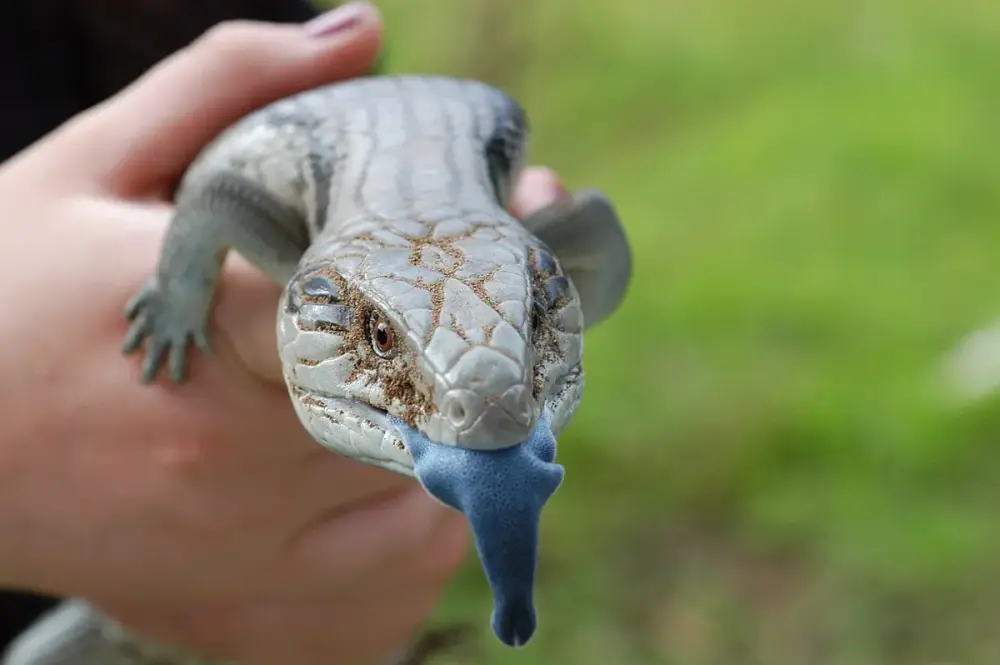
The shingleback skink, also known as the bobtail, is a short-tailed, slow-moving blue-tongued skink native to Australia. It lives in arid to semiarid regions of the south and west, in shrubland, eucalyptus forest, desert grassland and sandy dunes, and is often seen basking on roadsides. Its heavily armoured body ranges from dark brown to cream, and it has a triangular head, a bright blue tongue and a bright pink mouth. The stumpy tail resembles the head and may confuse predators. It is an omnivore that eats snails, insects, carrion, flowers and vegetation, crushing snail shells with its strong jaws.
Shingleback Skink facts
- Some herpetologists claim it has more common names than any other lizard, including two-headed skink and pinecone lizard.
- Unlike many skinks, it cannot shed its tail, which stores fat used during winter brumation.
- Some wild individuals are known to have lived as long as 50 years.
- Individuals have a home range averaging four hectares and can move up to 500 metres a day.
Where to see shingleback skink in the U.S.
3 zoos across 3 states
Find the closest one
Rank the 2 zoos holding shingleback skink by how far they are from you. Your location is used in your browser to sort this list and is never sent to us.
1 more zoo holds shingleback skink but has no coordinates on file yet, so it isn't ranked here. It's in the full list below.
Louisiana· 1
Texas· 1
Virginia· 1
AZAThe Association of Zoos and Aquariums. Accredited members have passed an independent inspection of animal care and welfare, safety, conservation and education, repeated every five years. Many smaller facilities never apply, so “not accredited” isn't a verdict on its own. What accreditation means · How we check this
Built from each zoo's own published animal list.