- Where to see one
- 5 U.S. zoos in our directory hold indian flying fox, confirmed against each zoo's own animal list.
Conservation status
Not Evaluated
This species has not been assessed for the IUCN Red List, so it sits outside the threat scale entirely.
About the indian flying fox
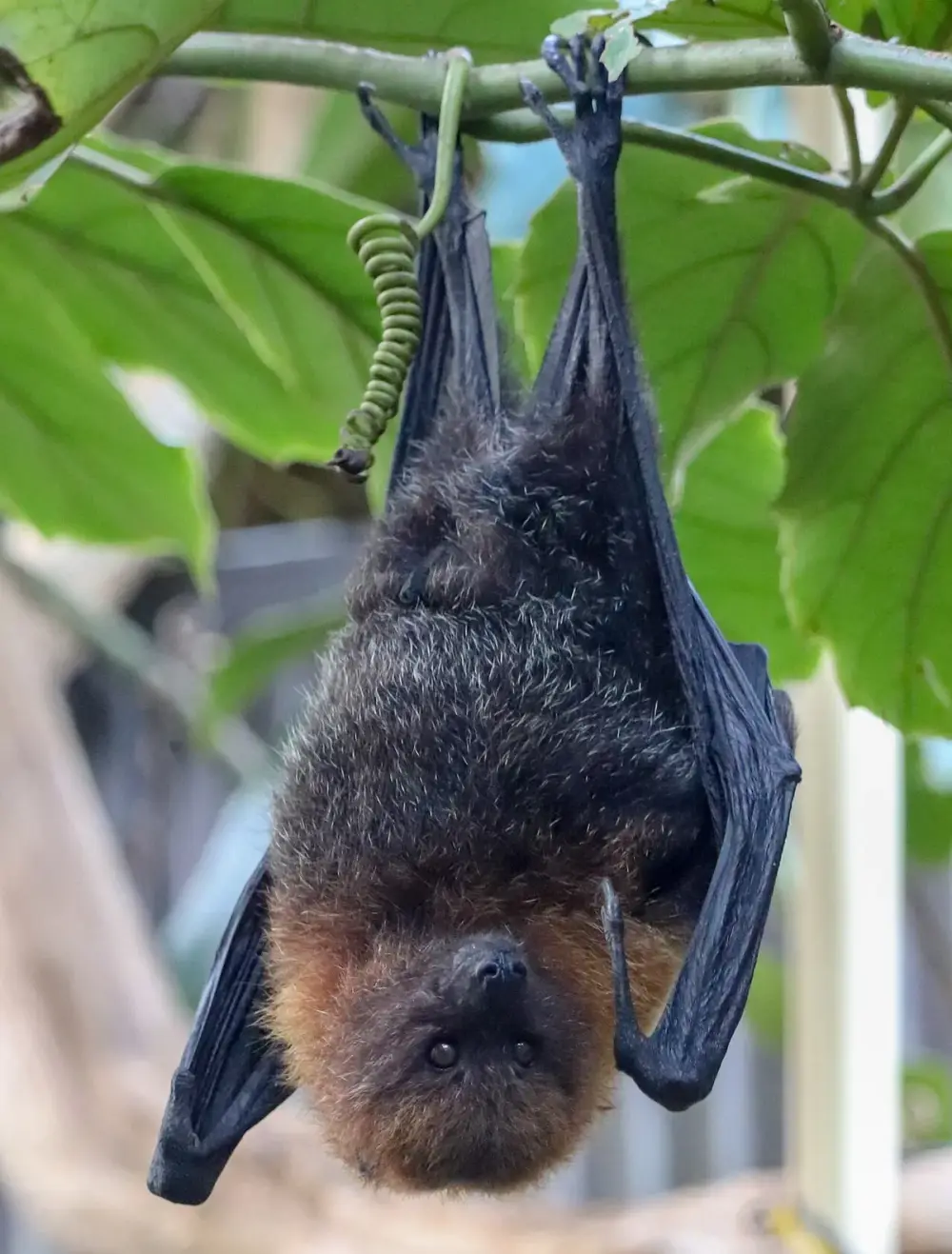
The Indian flying fox, also called the greater Indian fruit bat, is native to the Indian subcontinent and is one of the largest bats in the world. Body mass is 0.6 to 1.6 kg and wingspan 1.2 to 1.5 m. It is nocturnal and feeds mainly on ripe fruits such as mangoes and bananas, and on nectar. It roosts communally in large, established colonies on open treetop branches, often in camps of thousands of bats, especially in urban areas or temples, and roosts tend to be used for upwards of ten years. Fruit farmers often regard it as vermin, but its pollination and seed propagation often outweigh the damage. It is also of interest as a disease vector.
Indian Flying Fox facts
- It is India's largest bat.
- Its scientific name is disputed: some authors use Pteropus medius, others still recognise Pteropus giganteus.
- Roosts tend to be used for upwards of ten years and are usually occupied year-round.
- Males flap their wings continuously during courtship, probably to spread scent from their scent glands.
Where to see indian flying fox in the U.S.
5 zoos across 4 states
Find the closest one
Rank the 5 zoos holding indian flying fox by how far they are from you. Your location is used in your browser to sort this list and is never sent to us.
AZAThe Association of Zoos and Aquariums. Accredited members have passed an independent inspection of animal care and welfare, safety, conservation and education, repeated every five years. Many smaller facilities never apply, so “not accredited” isn't a verdict on its own. What accreditation means · How we check this
Built from each zoo's own published animal list.