- Where to see one
- 3 U.S. zoos in our directory hold kudu, confirmed against each zoo's own animal list.
Conservation status
Not Evaluated
This species has not been assessed for the IUCN Red List, so it sits outside the threat scale entirely.
About the kudu
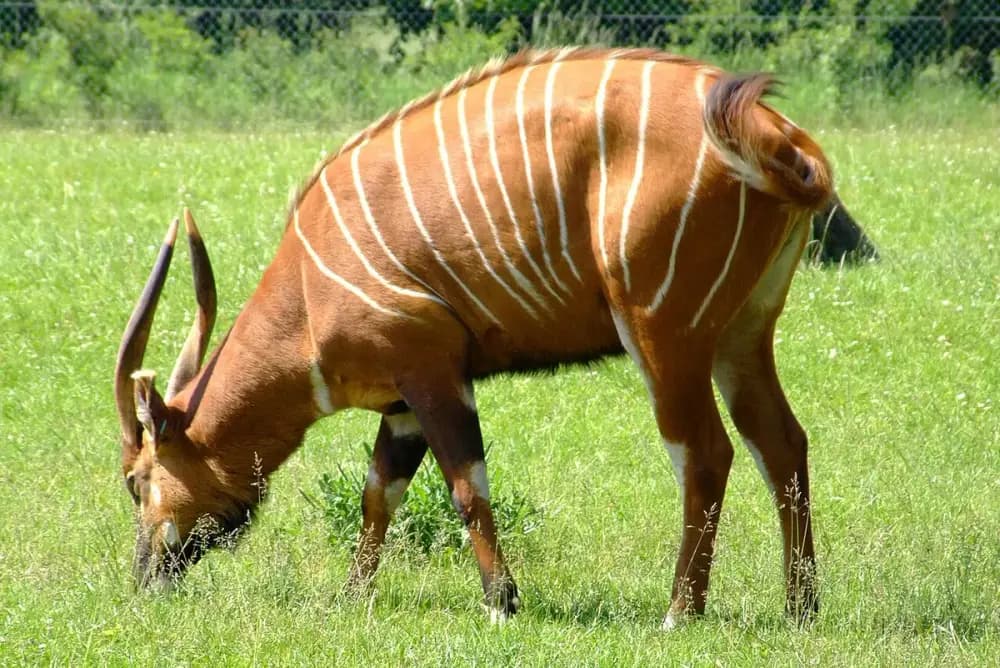
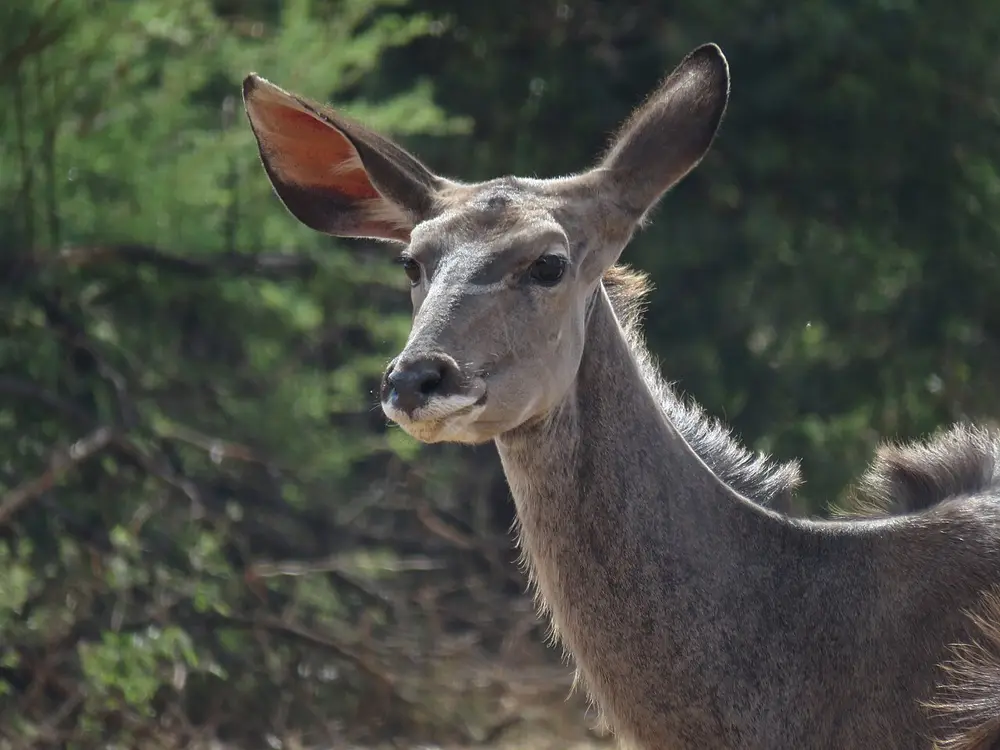
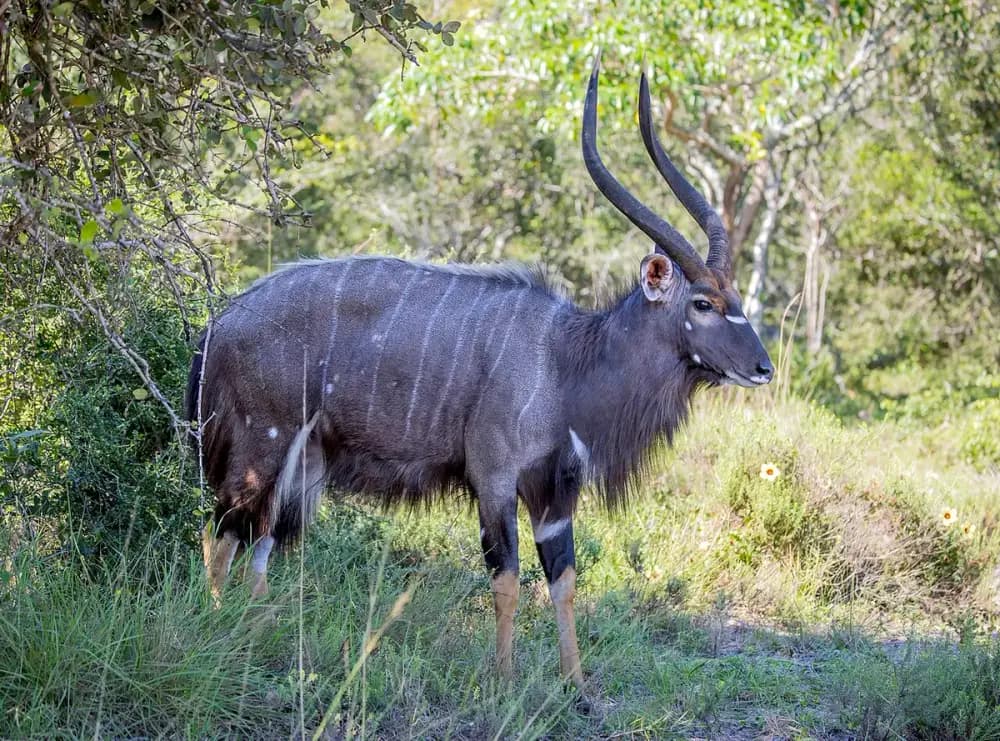
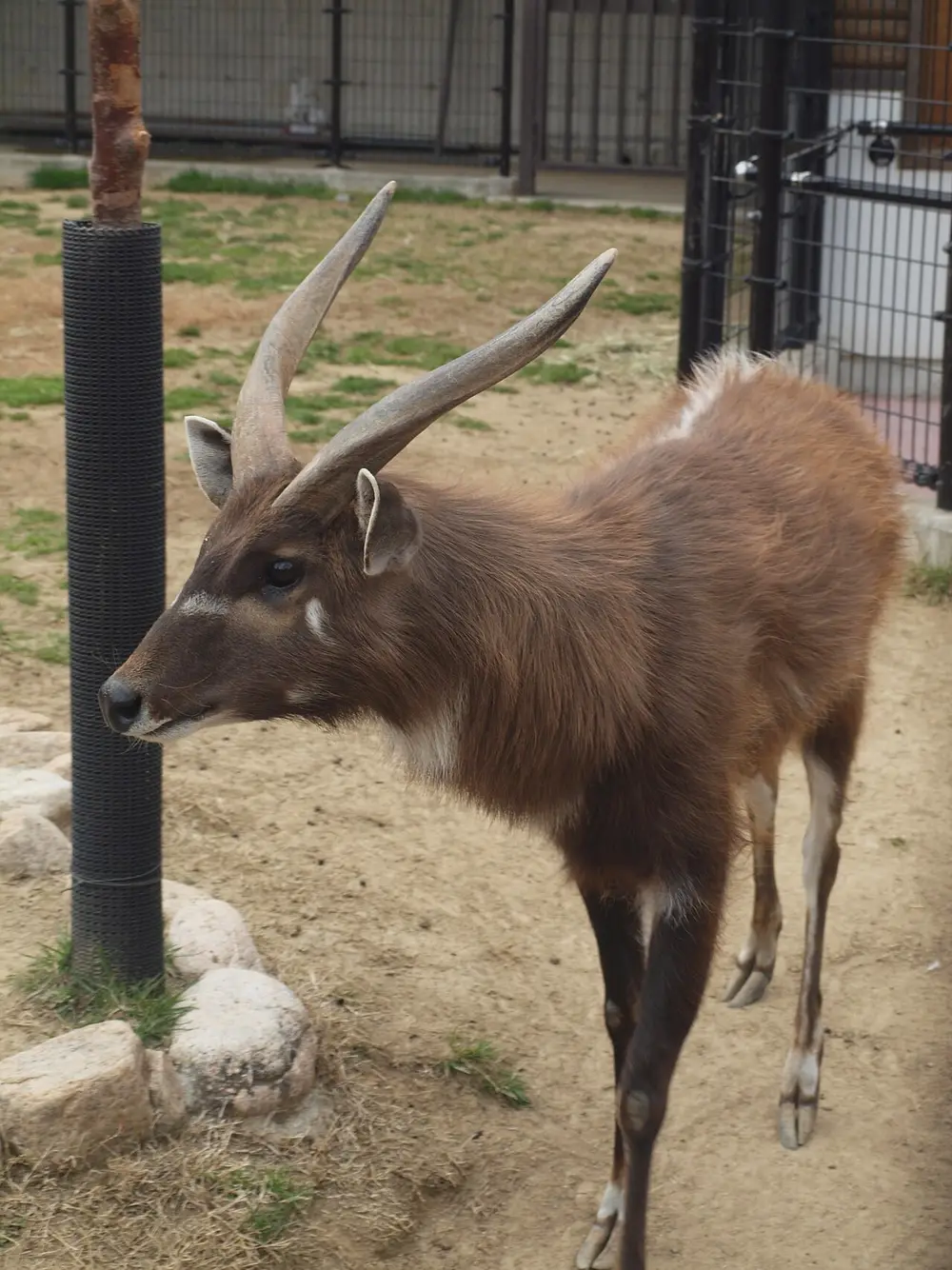
The greater kudu is a large woodland antelope found across eastern and southern Africa, from Ethiopia and Kenya to Namibia, Botswana and South Africa. Males carry spectacular spiralled horns and a beard along the throat, while females are hornless. Its coat ranges from brownish or bluish grey to reddish brown, with 4 to 12 white stripes on the torso. It lives in scrub woodland, favouring cover over open plains, and eats leaves, grass, shoots and sometimes tubers, roots and fruit. It feeds and drinks in the early morning and late afternoon, and relies on camouflage and keen hearing to avoid lions, hyenas and wild dogs.
Kudu facts
- Bull horns have two and a half twists, and straightened they would average about 120 cm long.
- Bulls weigh 190 to 270 kg, while cows weigh 120 to 210 kg.
- Kudus are especially fond of oranges and tangerines.
- When alarmed they often stand still, and they leap over shrubs and small trees to shake off pursuers.
Where to see kudu in the U.S.
3 zoos across 3 states
Find the closest one
Rank the 2 zoos holding kudu by how far they are from you. Your location is used in your browser to sort this list and is never sent to us.
1 more zoo holds kudu but has no coordinates on file yet, so it isn't ranked here. It's in the full list below.
California· 1
Indiana· 1
North Carolina· 1
AZAThe Association of Zoos and Aquariums. Accredited members have passed an independent inspection of animal care and welfare, safety, conservation and education, repeated every five years. Many smaller facilities never apply, so “not accredited” isn't a verdict on its own. What accreditation means · How we check this
Built from each zoo's own published animal list.