
- Admission
- $14.50
- Size
- 250 acres
- Opened
- 1973
- Accreditation
- AZA
Association of Zoos and Aquariums
Everything below is directory information drawn from public sources and the zoo's own site.
Animals at International Crane Foundation
15 confirmedBirds15
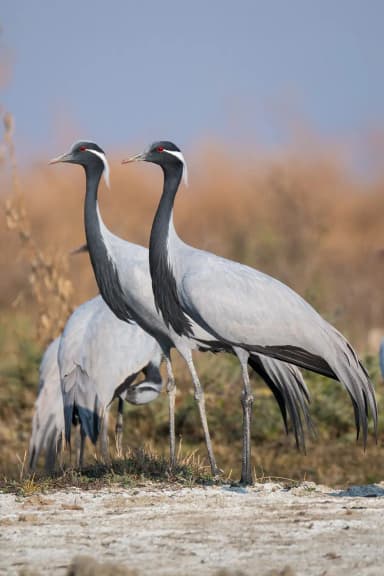 Sumeet Moghe · CC BY-SA 3.0
Demoiselle Crane
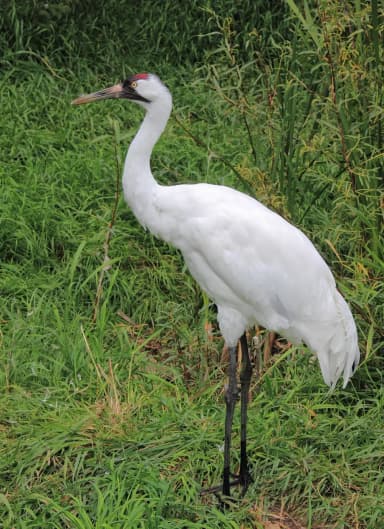 Sasata · CC BY-SA 3.0
Whooping Crane
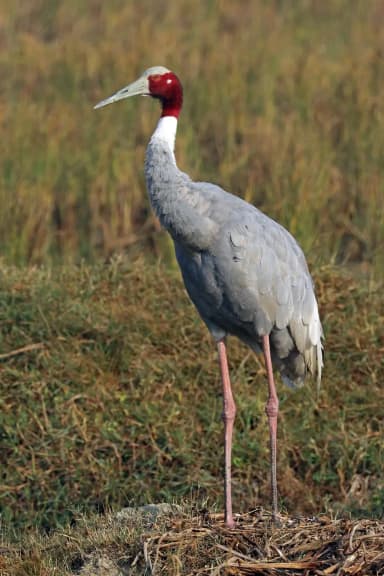 Charles J. Sharp · CC BY-SA 4.0
Sarus Crane
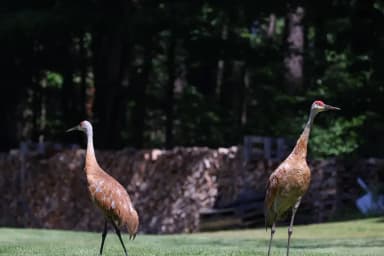 HappiestFish · CC BY 4.0
Sandhill Crane
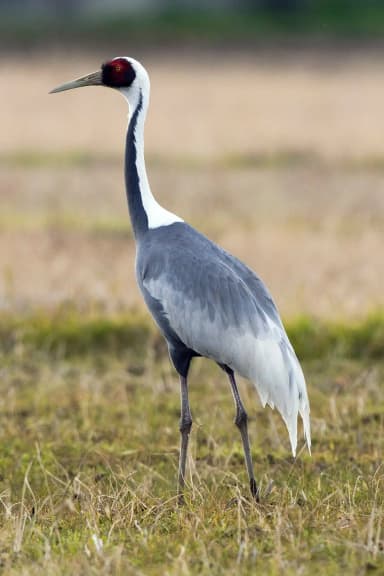 Spaceaero2 · CC BY-SA 3.0
White-naped Crane
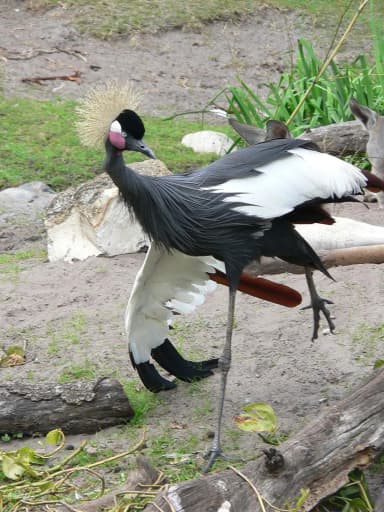 Wikimedia Commons · CC BY-SA 3.0
Black Crowned Crane
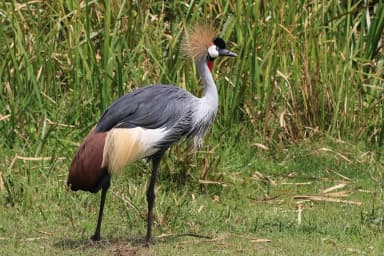 Charles J. Sharp · CC BY-SA 4.0
Grey Crowned Crane
 http://www.birdphotos.com · CC BY 3.0
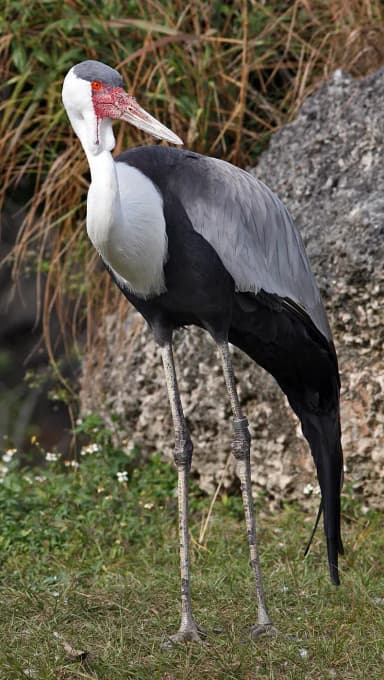
Wattled Crane
 Alastair Rae from London, United Kingdom · CC BY-SA 2.0
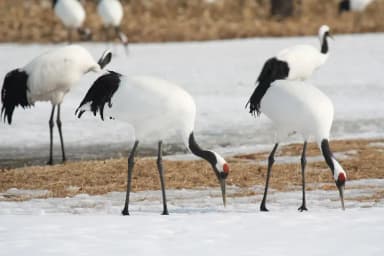
Red-crowned Crane
 Ron Knight from Seaford, East Sussex, United Kingdom · CC BY 2.0
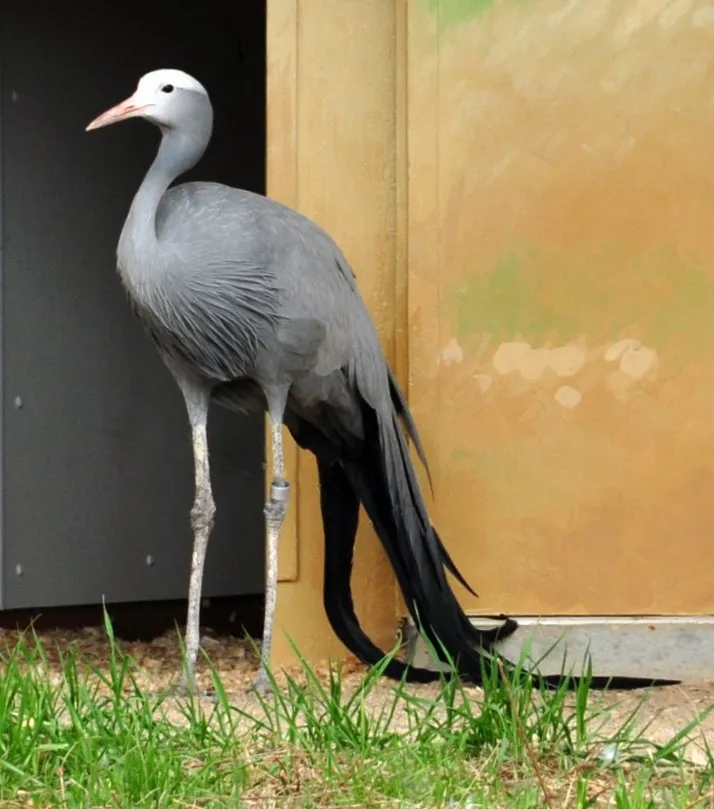
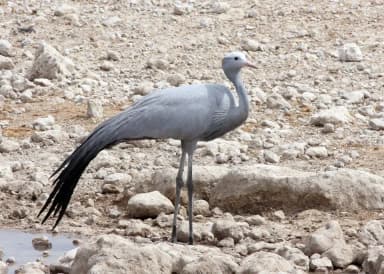
Blue Crane
Feathers & Fangs from visitors
What people who've been to International Crane Foundation say
A Feather is something this zoo does well; a Fang is something it gets wrong. Left by people who've been, and read by us before they appear.
Loading…
About International Crane Foundation
The International Crane Foundation is a nonprofit conservation organization headquartered on roughly 250 to 300 acres (sources give slightly different figures) in Baraboo, Wisconsin, dedicated to conserving cranes and the ecosystems, watersheds, and flyways they depend on. It was founded in 1973, and its Baraboo site includes live crane exhibits featuring all 15 of the world's crane species, breeding facilities, a research library, a welcome center, and nature trails. The organization is accredited by the Association of Zoos and Aquariums.
While headquartered in Wisconsin, the foundation's reach is global. It maintains offices in China, Uganda, Kenya, Rwanda, Zambia, South Africa, and Texas, working through partnerships with local organizations, governments, universities, and businesses. More than 125 to 175 staff and associates (figures vary by source and year) collaborate with a network of hundreds of specialists across more than 50 countries on five continents. The foundation groups its work into four key regions: Asia, Africa, North America, and its Wisconsin headquarters.
The heart of the visitor experience is the Crane Discovery Center at the Baraboo headquarters — the only place in the world where all 15 crane species can be seen in one collection. The resident flock, split between the public-facing Discovery Center and an off-limits breeding area called Crane City, typically numbers between 100 and 120 birds total, with about 80 housed at Crane City specifically. Roughly 25,000 people visit the Baraboo headquarters each year.
History
The foundation traces its origin to 1971 at Cornell University, where ornithology students Ron Sauey and George Archibald bonded over a shared passion for cranes and began envisioning an organization that would combine research, captive breeding and reintroduction, landscape restoration, and education to protect the world's 15 crane species. In 1973, the Sauey family rented their horse farm to Ron and George for $1 a year, and the International Crane Foundation was founded on that property in Baraboo. The organization moved to its current Shady Lane Road location in the early 1980s, after the Saueys wanted their farm back and the growing bird and staff population had become overcrowded at the original site.
George Archibald directed the foundation from 1973 to 2000 and pioneered techniques for rearing cranes in captivity, most famously the use of crane costumes worn by human handlers to avoid imprinting chicks on people. In one widely told episode, Archibald spent three years behaving like a male crane — walking, calling, dancing — with a highly endangered Whooping crane named Tex, to bring her into reproductive condition. The effort worked: Tex laid a fertile egg, using artificial insemination, that hatched into a chick named Gee Whiz. A related crane hatched at the foundation, Walnut, was bred using similar techniques by a keeper at the Smithsonian Conservation Biology Institute.
The foundation's office in Rockport, Texas, was destroyed by Hurricane Harvey in 2017. More recently, in December 2025, the foundation marked what it calls the first conservation land deal in its 52-year history: it took ownership of a 1,150-acre coastal property near the Aransas National Wildlife Refuge, now named the Wolfberry Whooping Crane Sanctuary, intended to anchor a new Central Flyway Whooping Crane research program. A parallel effort by The Conservation Fund secured an adjoining 2,232-acre property, the Costa Grande Ranch, for eventual transfer to the Coastal Bend Bays & Estuaries Program. Together the two deals protect more than 3,300 acres of wintering habitat for the Aransas–Wood Buffalo population of Whooping Cranes — the only wild, self-sustaining flock in existence, which has rebounded from a small handful of birds to roughly 500 to 540 individuals through decades of conservation work.
Exhibits and habitats
The Baraboo headquarters is built around highly visible crane enclosures that let visitors observe all 15 species up close, plus a paved trail system through the main exhibit area and roughly three to four miles of additional nature trails winding through prairie, oak savanna, wetland, and forest ecosystems. About 120 acres of the property is restored prairie and oak savanna. The Global Crane Conservation Theater is equipped with a Listen Loop hearing-assistance system.
Public guided tours run up to one hour and cover a themed topic; they're offered on weekends only during May, September, and October, and daily throughout June, July, and August, at 10 a.m., 1 p.m., and 3 p.m. Visitors touring independently can use a self-guided tour app, downloadable for iPhone and Android, with iPads available to check out on-site. The grounds also include a gift shop and a welcome center.
Because the cranes at the front-facing exhibit area may approach the fence line as visitors walk by — a territorial rather than friendly behavior — the foundation asks guests not to reach past enclosure barriers or call out to or imitate the birds. The breeding area, Crane City, at the back of the property, is closed to the public because breeding cranes are sensitive to human disturbance.
Animal highlights
The International Crane Foundation holds all 15 species in the crane family Gruidae: the Black Crowned Crane, Black-necked Crane, Blue Crane, Brolga, Common Crane, Demoiselle Crane, Grey Crowned Crane, Hooded Crane, Red-crowned Crane, Sandhill Crane, Sarus Crane, Siberian Crane, Wattled Crane, White-naped Crane, and Whooping Crane — the only place in the world with a complete collection of every species. Ten of the 15 species are listed as threatened or endangered, with the Siberian Crane considered the most endangered, the Whooping Crane the rarest, and the Red-crowned Crane the second rarest.
The species vary enormously in size: Demoiselle Cranes, the lightest, weigh four to seven pounds, while Red-crowned Cranes, the heaviest, can reach 22 pounds. Sarus Cranes stand about six feet tall, making them the world's tallest flying bird, and wingspans across the family range from five to eight feet. In the wild, cranes typically live 20 to 30 years; in human care, with veterinary support and steady food, they can live 40 to 50 years, and the oldest known crane — a Siberian Crane kept at a zoo — reached 83.
Conservation and programs
Conservation runs through nearly every part of the foundation's work, not just its Baraboo collection. Its programs are organized around community-based conservation (partnering with people living near key crane habitats), protected-areas management, education at the Crane Discovery Center, public outreach through media and events, and grounding all of it in scientific research. The foundation has led long-running captive breeding and reintroduction efforts, including isolation rearing — raising chicks with a crane puppet and a costumed handler so they imprint on cranes rather than people, which better prepares them for release into wild flocks such as the Eastern Migratory and Louisiana Whooping Crane populations.
In Wisconsin, the foundation's North America Program staff has studied crop damage caused by cranes feeding on corn and potato fields, working with farmers to test a corn-kernel treatment called Avipel that makes seeds less palatable to the birds. On the research side, the foundation has also studied nest predation, monitoring 81 Whooping Crane nests across Wisconsin between 2019 and 2024 to identify the population's main egg predators, and it tracks differences in migration behavior between the remnant Aransas–Wood Buffalo population, which flies roughly 2,500 miles along the Central Flyway, and the reintroduced Eastern Migratory Population established in 2001. Annual USFWS aerial surveys put the Aransas–Wood Buffalo flock at around 540 birds in the 2025–2026 count, its tenth consecutive year above 500. The foundation is funded mainly through private grants, donations, memberships, and admission and gift-shop revenue, along with a federal stipend to help care for the Whooping Cranes on-site.
Planning your visit
As listed on the foundation's website, the Baraboo headquarters is open daily from May 1 through October 31, 9 a.m. to 5 p.m., with last entry at 4:30 p.m. Adult admission is listed at $12 and child admission at $2, and AAA members can present their card for a 20 percent discount on adult admission. Children age five and under are admitted free. Members of participating AZA Reciprocal Admissions Program institutions may receive free or discounted entry.
Parking is free, with accessible spaces and three electric-vehicle charging stations available. The grounds feature a paved trail system suitable for wheelchairs, strollers, and scooters (scooters are not permitted on unpaved trails), scooter rentals on a first-come, first-served basis, ADA-approved door handles, an accessible welcome center and gift shop, sensory bags and hidden-disabilities lanyards available for checkout, and an accessible theater with a Listen Loop system. Visitors can bring food and non-alcoholic drinks or buy snacks in the gift shop, with picnic tables available on-site; feeding the resident cranes is discouraged since their diet is carefully managed. Pets aren't allowed, though ADA service animals are permitted under standard guidelines.
Check the foundation's official website before visiting to confirm current hours, admission prices, and tour schedules, since these can change seasonally.
What we haven't confirmed
Everything above came from public sources. These specifics we haven't stood behind yet:
- Total annual visitor count (a range of about 25,000 is given, but not a precise current figure)
- Senior admission pricing
- Typical time needed for a visit
- Exact current acreage
International Crane Foundation compared with nearby zoos
How International Crane Foundation lines up against the closest zoos we have details for — useful if you're deciding between them for the same day out.
| Zoo | Distance | Admission | Hours | Size | AZA |
|---|---|---|---|---|---|
| International Crane FoundationThis zooBaraboo, WI | — | $14.50 | 9 am – 5 pm | 250 acres | Yes |
| Ochsner Park ZooBaraboo, WI | 5 mi | Free | April–October 9:00 AM – 5:30 PM; November–March 9:00 AM – 3:30 PM. | — | No |
| Wisconsin Deer ParkWisconsin Dells, WI | 5 mi | $18 | Labor Day – late October: daily 10:00 AM – 4:00 PM (off-season hours); admission sales stop 45 minutes before closing. | — | No |
| MacKenzie CenterPoynette, WI | 22 mi | Free | Grounds & trails dawn to dusk daily; wildlife exhibits open daily 10:00 AM – 4:00 PM. | — | No |
Distances are straight-line. A dash means we haven't confirmed that detail yet, not that the zoo lacks it.
AZAThe Association of Zoos and Aquariums. Accredited members have passed an independent inspection of animal care and welfare, safety, conservation and education, repeated every five years. Many smaller facilities never apply, so “not accredited” isn't a verdict on its own. What accreditation means · How we check this
International Crane Foundation: common questions
Is the International Crane Foundation AZA accredited?
Yes, it is accredited by the Association of Zoos and Aquariums.
How many crane species can I see there?
All 15 species in the crane family Gruidae — the only collection of its kind in the world.
When was the International Crane Foundation founded?
In 1973, by Cornell ornithology students Ron Sauey and George Archibald.
How big is the property?
Sources give the Baraboo headquarters as roughly 250 to nearly 300 acres, including about 120 acres of restored prairie and oak savanna.
What does admission cost?
As listed on the foundation's website, adult admission is $12 and child admission is $2 — confirm current pricing before visiting.
Is the site wheelchair and stroller accessible?
Yes, the main exhibit area has a paved trail system, and scooter rentals and accessible parking are available.
Can I bring food or a picnic?
Yes, outside food and non-alcoholic drinks are allowed, and picnic tables are available on-site.
Something wrong here? Tell us — we correct in place, with a dated note.