
- Admission
- —
- Size
- 100 acres
- Opened
- 1997
- Accreditation
- None listed
not accredited by the Association of Zoos and Aquariums
Everything below is directory information drawn from public sources and the zoo's own site.
Animals at Center for Great Apes
2 confirmed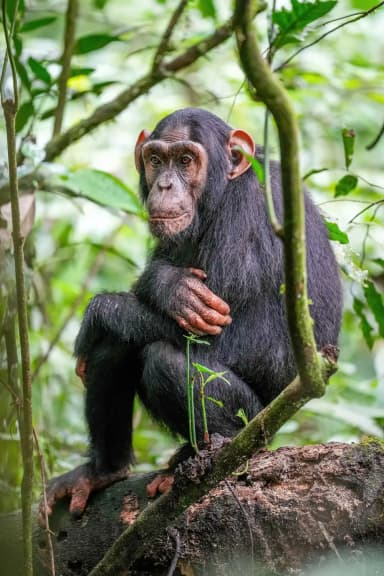
Feathers & Fangs from visitors
What people who've been to Center for Great Apes say
A Feather is something this zoo does well; a Fang is something it gets wrong. Left by people who've been, and read by us before they appear.
Loading…
About Center for Great Apes
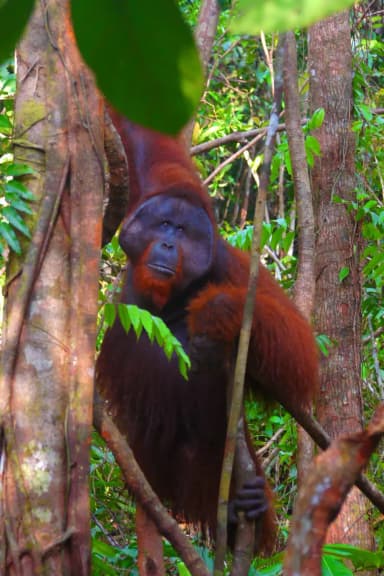
The Center for Great Apes is a permanent sanctuary for orangutans and chimpanzees in Wauchula, in southern central Florida. On its website, the center says it provides lifelong care for apes rescued or retired from the entertainment industry, from research, and from the exotic pet trade. It operates as a 501(c)(3) nonprofit, and Wikipedia gives its legal name as the Center for Orangutan and Chimpanzee Conservation, Inc.
The center describes its vision as a world where all captive great apes live in a community of care and compassion without the threat of exploitation, experimentation, abuse, or neglect. It says it receives no government funding. The sanctuary is not a conventional zoo. Its website states that it is not open to the general public as an attraction or zoo, and that visits are limited to members at certain membership levels, members-only events, and scheduled educational programs and tours.
The center is not accredited by the Association of Zoos and Aquariums. The center's FAQ page says it is accredited by the Global Federation of Animal Sanctuaries, and Wikipedia describes it as a founding member of the North American Primate Sanctuary Alliance. The website also displays a USDA logo among its affiliations. The center describes itself as the only accredited orangutan sanctuary in North America.
History
According to the center's About page, the organization was founded in 1993 by Patti Ragan. Her involvement with great apes began with volunteer work in 1984 rehabilitating orangutans in Indonesian Borneo. In 1990 she was asked to help care for a four-week-old infant orangutan held at a tourist attraction in Miami. The About page says she learned that accredited zoos did not want a mixed Bornean and Sumatran orangutan, especially a hand-raised one, and that no U.S. sanctuary at the time had orangutans. After she was also asked to foster an infant chimpanzee, she decided to start a sanctuary for both species. She formally established the nonprofit in 1993, and the About page says it took four more years to find the site in Wauchula.
The first two residents were Pongo, an orangutan, and Grub, a chimpanzee who died in 2011. The property began with an initial 15 acres and has since expanded to more than 100 acres of wooded tropical habitat, according to the About page. Wikipedia reports a population of about 71 apes, consisting of 27 orangutans and 44 chimpanzees, though the count changes over time.
In 2021, six chimpanzees from a Missouri facility were relocated to the sanctuary following a PETA lawsuit, according to Wikipedia. Wikipedia notes that their backstory was featured in the documentary series Chimp Crazy.
Exhibits and habitats
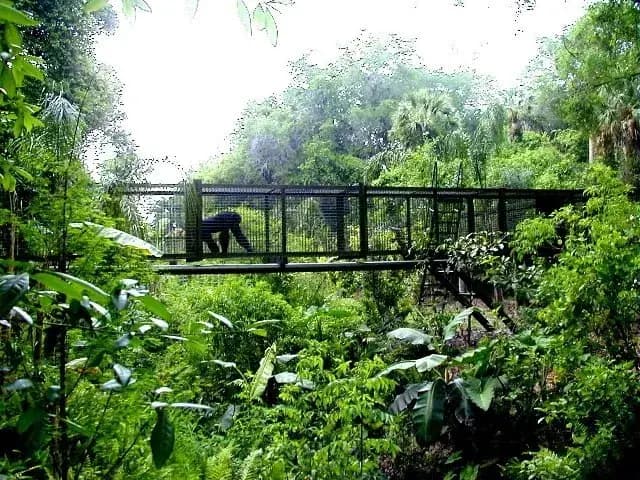
The center's FAQ says it does not allow direct encounters between visitors and the apes, and its visit page says residents are not asked to come out, interact, or perform, so sightings of any individual are not guaranteed. Wikipedia reports about 2 miles of aerial trailways that allow the apes to travel across the grounds. The center's About page describes the property as tropical wooded habitat surrounded by orange groves. According to the visit page, most of the tour route centers on the orangutans, with some chimpanzee groups visible along the way.
Residents named by Wikipedia include Bubbles, a chimpanzee formerly kept by Michael Jackson; Bella, who Wikipedia says starred in a CareerBuilder Super Bowl advertising campaign; the twin chimpanzees Jonah and Jacob, one of whom appeared in the 2001 film Planet of the Apes; Sandra, an orangutan granted legal personhood status in Argentina; and Mari, a Sumatran orangutan missing both arms. Wikipedia notes that several residents have special needs. The center's FAQ confirms that Bubbles lives at the sanctuary and says the center does not intentionally breed apes.
Conservation and programs
The center lists several ways for the public to support its work: an Adopt an Ape program, Ape Allies monthly giving, enrichment and sponsorship options, legacy and planned giving, volunteer opportunities, and an online merchandise store. It also lists educational outreach among its programs.
Its website displays memorial pages for residents who have died, for both orangutans and chimpanzees. The website also lists a Candid Platinum Seal for 2026, a four-star Charity Navigator rating, and grantee status with the Doris Day Animal Foundation.
Planning your visit
The center's website states that the sanctuary is not open to the general public as an attraction or zoo, so there is no walk-in admission. Visits are arranged in a few ways, according to its Plan Your Visit page:
- Members at the Great Ape Hero level can schedule a private guided tour, which the FAQ says is for up to four family members and lasts about two hours.
- Ticketed programs include Ape-ology: In the Field, a workshop on the grounds focused on an ape-specific topic, and Afternoon With the Apes, an educational walking tour. Special supporter events are held through the year.
- Educational group tours, by appointment only, are offered for students in 5th through 12th grade (age 12 and up), college students, and adult clubs or civic groups, each with a group size of 10 to 20 people.
As listed on the center's website, tours run during a tour season from September through May, on select days each week, and should be scheduled at least one month in advance. All tours are subject to change or cancellation. Donation amounts for tours and membership levels are on the center's website. The FAQ locates the sanctuary in Wauchula, southwest of Orlando. The website lists a mailing address of P.O. Box 488, Wauchula, FL 33873, a telephone number of 863-767-8903, and the email address info@centerforgreatapes.org.
What we haven't confirmed
Everything above came from public sources. These specifics we haven't stood behind yet:
- Current event and program dates
- Street address for visitors
- Current number of residents
- Parking
Center for Great Apes compared with nearby zoos
How Center for Great Apes lines up against the closest zoos we have details for — useful if you're deciding between them for the same day out.
| Zoo | Distance | Admission | Hours | Size | AZA |
|---|---|---|---|---|---|
| Center for Great ApesThis zooWauchula, FL | — | — | Not open to the general public. Private guided tours (~2 hrs) for members at the Great Ape Hero level ($350+ gift), up to 4 family members, offered September–May on designated days; reserve via Donor Relations 863-767-8903. | 100 acres | No |
| Sarasota Jungle GardensSarasota, FL | 49 mi | $24.99 | 10:00 am – 4:00 pm | 10 acres | No |
| Croc EncountersTampa, FL | 49 mi | $27 | Guided tours 7 days a week at select times; reserve online or by phone. Booking office 8:00 AM – 8:00 PM. | — | No |
| Busch Gardens Tampa BayTampa, FL | 53 mi | from $61.99 | Hours vary by date. Typical October 2026: Thu–Sun 10:00 AM – 6:00 PM; Mon–Wed 10:00 AM – 5:00 PM (some dates differ, e.g., Mon Oct 12 until 7 PM, Tue–Wed Oct 27–28 until 6 PM). Separate-ticket Howl-O-Scream nights run 7 PM – midnight/1 AM on select dates. | 335 acres | Yes |
Distances are straight-line. A dash means we haven't confirmed that detail yet, not that the zoo lacks it.
AZAThe Association of Zoos and Aquariums. Accredited members have passed an independent inspection of animal care and welfare, safety, conservation and education, repeated every five years. Many smaller facilities never apply, so “not accredited” isn't a verdict on its own. What accreditation means · How we check this
Center for Great Apes: common questions
Is the Center for Great Apes open to the public?
Not as a walk-in attraction. The center says visits are by member tours, ticketed programs and events, and scheduled group tours during its September-through-May tour season.
What animals live there?
Orangutans and chimpanzees. Wikipedia reports about 71 residents, made up of 27 orangutans and 44 chimpanzees.
Is it AZA accredited?
No. It is accredited by the Global Federation of Animal Sanctuaries.
Who founded it?
The center's About page says it was founded in 1993 by Patti Ragan.
Where is it?
It is in Wauchula, in southern central Florida.
Something wrong here? Tell us — we correct in place, with a dated note.