- Where to see one
- 3 U.S. zoos in our directory hold tapir, confirmed against each zoo's own animal list.
Conservation status
Not Evaluated
This species has not been assessed for the IUCN Red List, so it sits outside the threat scale entirely.
About the tapir
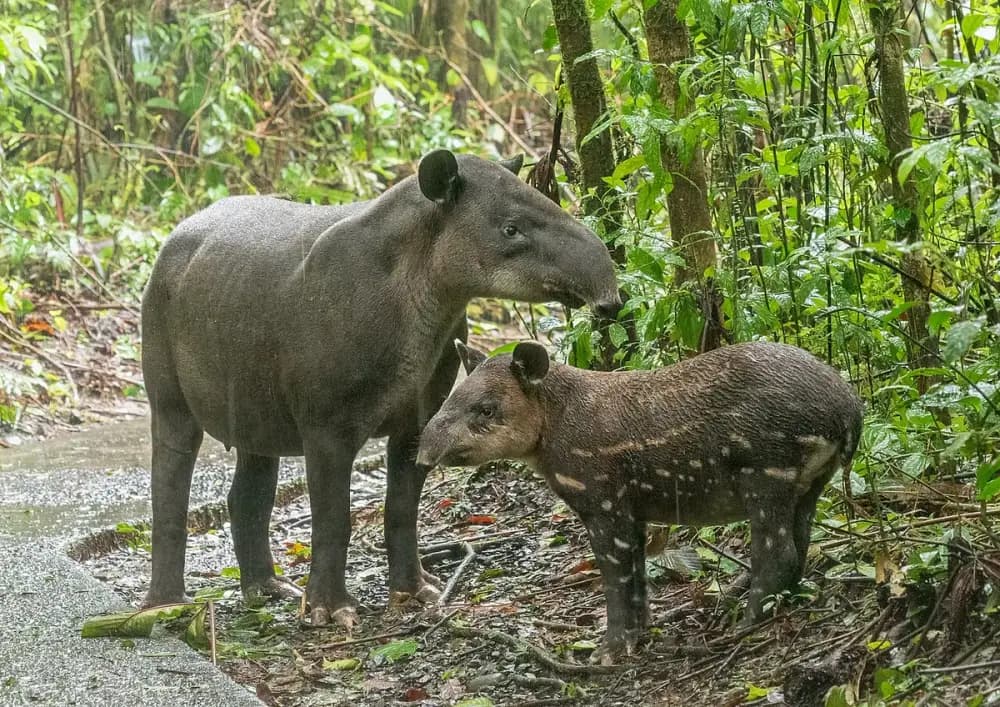
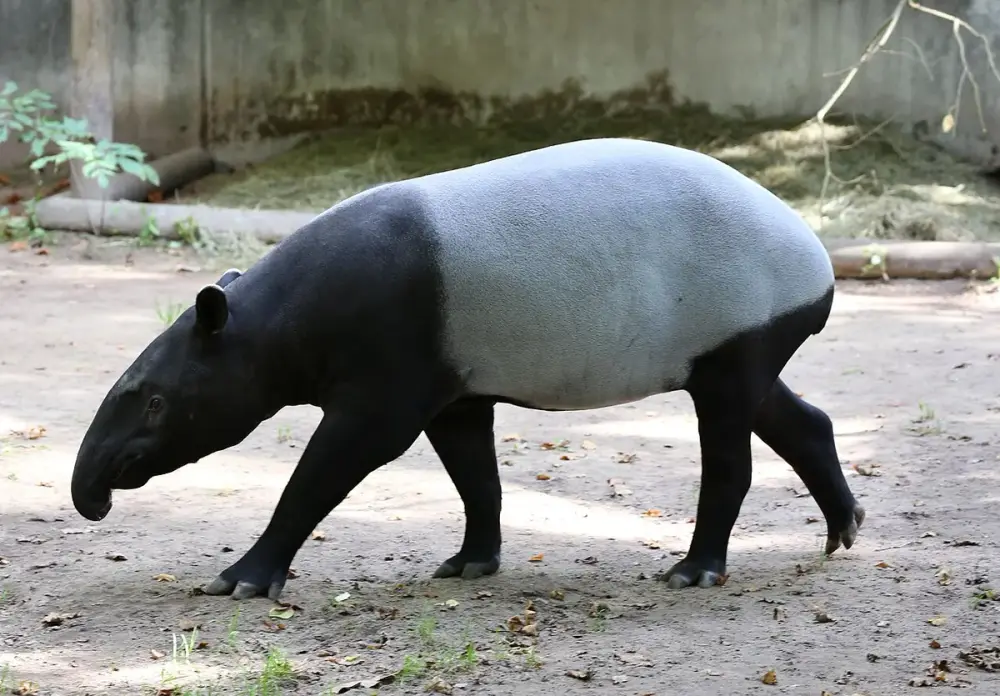
Tapirs are large, pig-shaped herbivores with a short, flexible, prehensile nose trunk. They live in jungle and forest regions of South and Central America and Southeast Asia, and the living species all belong to the single genus Tapirus. Most are about 2 m long and weigh between 150 and 300 kg. In the wild they eat fruit, berries and leaves, especially young, tender vegetation, foraging along well-worn trails mostly at night and around dusk. Tapirs often spend time in rivers and mud wallows, where they cool off and escape insects. Apart from mothers with young, they lead almost entirely solitary lives.
Tapir facts
- Baby tapirs of every kind have striped-and-spotted coats that act as camouflage.
- Tapirs near rivers will sink and walk along the bottom to feed, and let small fish pick parasites off them.
- A female tapir carries a single calf for about 13 months before it is born.
- Baird's tapirs have been seen eating around 40 kg of vegetation in a single day.
Where to see tapir in the U.S.
3 zoos across 2 states
Find the closest one
Rank the 3 zoos holding tapir by how far they are from you. Your location is used in your browser to sort this list and is never sent to us.
California· 1
Massachusetts· 2
AZAThe Association of Zoos and Aquariums. Accredited members have passed an independent inspection of animal care and welfare, safety, conservation and education, repeated every five years. Many smaller facilities never apply, so “not accredited” isn't a verdict on its own. What accreditation means · How we check this
Built from each zoo's own published animal list.