- Where to see one
- 5 U.S. zoos in our directory hold olive baboon, confirmed against each zoo's own animal list.
Conservation status
Not Evaluated
This species has not been assessed for the IUCN Red List, so it sits outside the threat scale entirely.
About the olive baboon
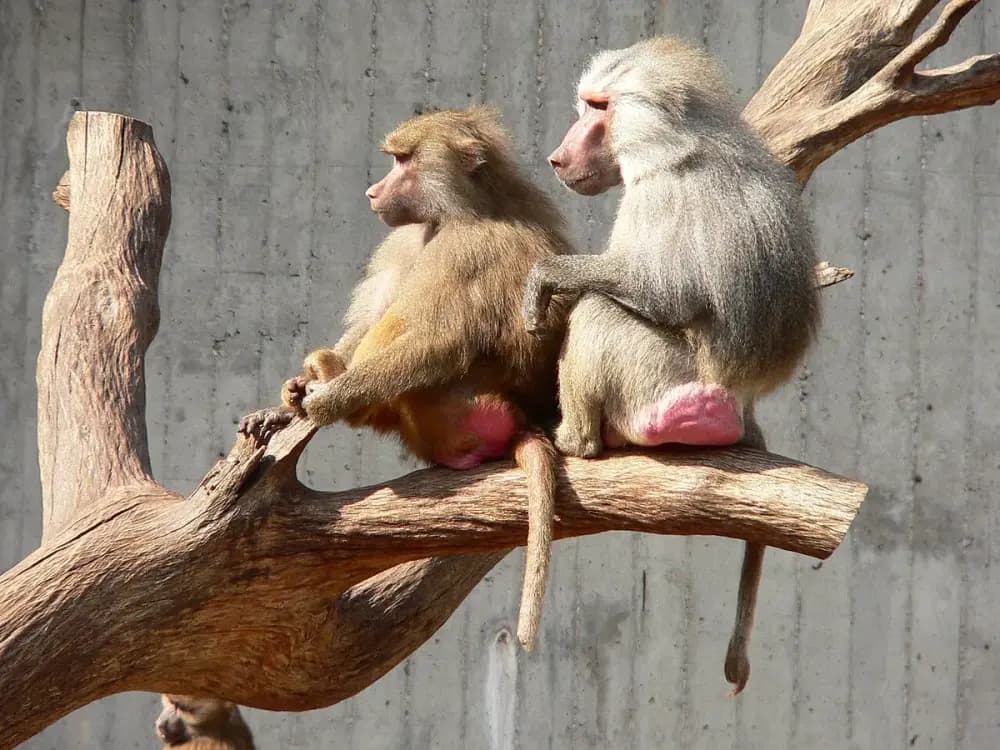
The olive baboon is the most wide-ranging baboon, native to 25 countries across Africa from Mali east to Ethiopia and Tanzania. It lives in savannahs, steppes and forests, with isolated populations in mountainous parts of the Sahara. Named for its green-grey coat, it is one of the largest monkeys, with males averaging 24 kg and females 14.7 kg. Troops of 15 to 150 contain a few males, many females and their young, and a daughter's rank is largely inherited from her mother. Omnivorous, it eats leaves, grass, roots, fruit, seeds and insects, and also hunts small mammals and birds. It stores food in cheek pouches.
Olive Baboon facts
- It is also called the Anubis baboon.
- Its tail is erect for the first quarter, then drops sharply, so it looks as if it is broken.
- Corms and rhizomes are especially important in its diet during drought.
- It hybridises with the hamadryas baboon in Ethiopia.
Where to see olive baboon in the U.S.
5 zoos across 5 states
Find the closest one
Rank the 4 zoos holding olive baboon by how far they are from you. Your location is used in your browser to sort this list and is never sent to us.
1 more zoo holds olive baboon but has no coordinates on file yet, so it isn't ranked here. It's in the full list below.
Idaho· 1
Louisiana· 1
New York· 1
North Carolina· 1
West Virginia· 1
AZAThe Association of Zoos and Aquariums. Accredited members have passed an independent inspection of animal care and welfare, safety, conservation and education, repeated every five years. Many smaller facilities never apply, so “not accredited” isn't a verdict on its own. What accreditation means · How we check this
Built from each zoo's own published animal list.