
Coral reef fish in U.S. zoos
Coral reef fish are marine fish that live among or in close relation to coral reefs, the most fish-rich habitat on Earth with perhaps 6,000 to 8,000 species. Most are ray-finned fish with sharp, bony fin spines, and many rely on bright or cryptic color, shelter in the reef and close partnerships to survive.
Most widely held
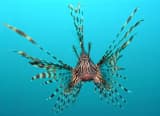 LionfishPterois volitansAt 8 zoos · Least Concern
 ClownfishAmphiprion ocellarisAt 7 zoos · Least Concern
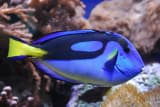 Blue TangParacanthurus hepatusAt 6 zoos · Least Concern
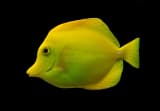 Yellow TangZebrasoma flavescensAt 6 zoos · Least Concern
What makes a reef fish
Coral reef fish live among or in close relation to coral reefs, which hold the most diverse fish communities on Earth. Perhaps 6,000 to 8,000 species live in reef ecosystems worldwide, and hundreds can share a small patch of healthy reef.
There are two main reef regions, and their fish don't naturally overlap. The Indo-Pacific, which includes the Red Sea, has an estimated 4,000 to 5,000 reef-associated species. The tropical western Atlantic, or greater Caribbean, has another 500 to 700. The clownfish, blue tang, yellow tang and red lionfish are all native to the Indo-Pacific.
Most reef fish are ray-finned fish, with sharp, bony spines in their fins. When raised, the spines can often be locked in place, and in some species they are venomous.
Hiding, partnering and defending
A crowded reef rewards clever survival tactics. The diurnal clownfish lives inside a host sea anemone, protected from its stinging tentacles by a coat of mucus. Its social life is just as unusual: all clownfish start as males, and if a group's breeding female dies, the breeding male becomes female.
Tangs are surgeonfish, named for the scalpel-like spine on each side of the tail base. A frightened blue tang dives into branching coral and wedges itself in by extending that spine, so a predator can't pull it out. The yellow tang spreads its fins and flashes its spines at rivals, and at night it rests alone in a coral crevice.
The mostly nocturnal lionfish takes the opposite approach. Its 18 venomous spines are purely defensive, and its stripes, so obvious in an aquarium, blend into branching coral and sea urchins on a reef. It hunts by slowly stalking prey and then sucking it in whole.
Reef fish and reef health
Some reef fish help keep reefs alive. Tangs graze algae that would otherwise overgrow and kill coral, and the yellow tang has even been seen cleaning algae off sea turtles' shells.
The reefs themselves are in trouble. Shallow tropical coral reefs have declined by 50% since 1950, and reef fish face habitat loss, pollution and overfishing, including destructive methods. The aquarium trade adds pressure on popular species. The blue tang is one of the most traded marine aquarium fish, mostly wild-caught. Collection of yellow tangs in Hawaii, the main source, led to collapsing stocks by the late 1990s. Marine protected areas helped the fishery recover, and Hawaii later banned collection for the aquarium trade.
Out of place, a reef fish can become a threat. The red lionfish, released from aquariums, is now invasive in the Atlantic and Caribbean, where few predators eat it and it is lowering fish numbers on reefs.
Common questions
How many species of fish live on coral reefs?
Perhaps 6,000 to 8,000 species. The Indo-Pacific alone has an estimated 4,000 to 5,000 reef-associated fish species, while the greater Caribbean has another 500 to 700.
Why don't clownfish get stung by anemones?
A coat of mucus protects them from the anemone's stinging tentacles. The anemone gives the clownfish a safe home, and the clownfish cleans it and chases off fish that would nibble its tentacles.
Is Dory a blue tang?
Yes. The character is a blue tang, also called the regal blue tang or palette surgeonfish, an Indo-Pacific reef fish. The name blue tang is also used for a different Atlantic fish, Acanthurus coeruleus.
Why are they called surgeonfish?
Tangs and other surgeonfish have a sharp, scalpel-like spine on each side of the tail base. They flash or slash with it when threatened or fighting rivals.
Are lionfish venomous?
Yes. The red lionfish has 13 venomous spines on its dorsal fin, 2 on its pelvic fins and 3 on its anal fin, used purely for defense.
What threatens coral reef fish?
Loss and degradation of reef habitat, pollution and overfishing, including destructive fishing methods. Collection for the aquarium trade has also reduced some species in parts of their range.
Sources
Last reviewed