
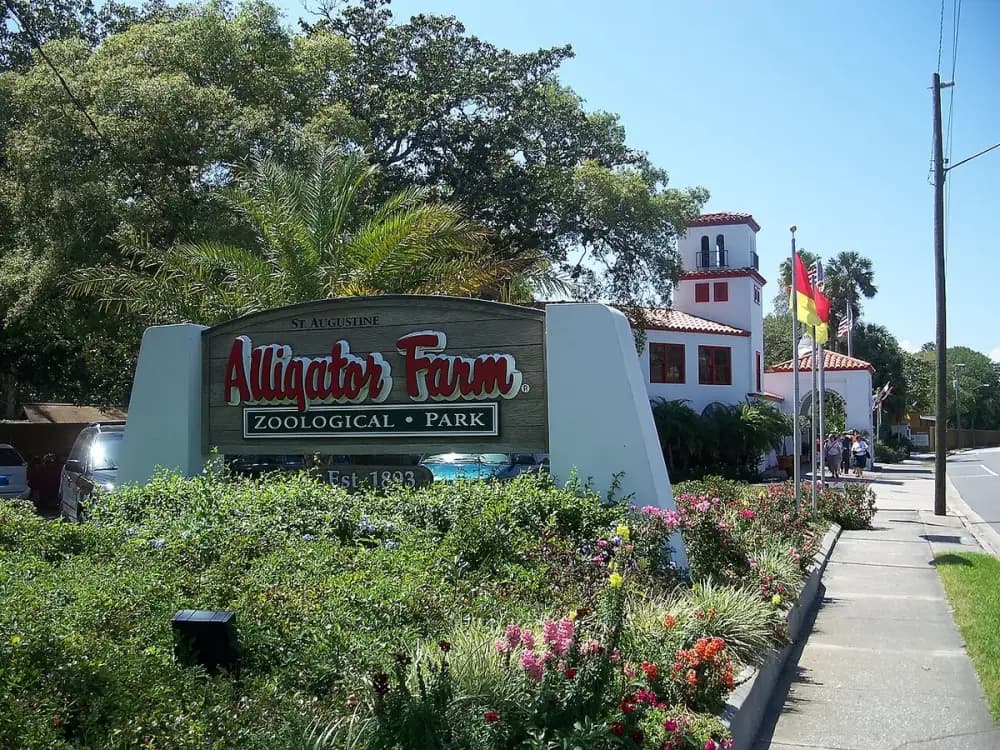
- Admission
- $36.99
- Opened
- 1893
- Accreditation
- AZA
Association of Zoos and Aquariums
Everything below is directory information drawn from public sources and the zoo's own site.
Animals at St. Augustine Alligator Farm Zoological Park
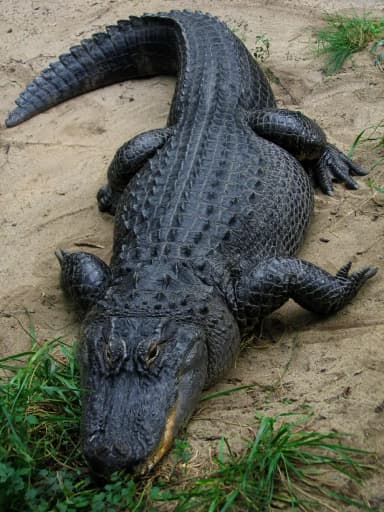
1 of the ~24 species this zoo listsThis is a partial list — we only show species we've confirmed against the zoo's own pages, and their full collection is considerably larger.
Feathers & Fangs from visitors
What people who've been to St. Augustine Alligator Farm Zoological Park say
A Feather is something this zoo does well; a Fang is something it gets wrong. Left by people who've been, and read by us before they appear.
Loading…
About St. Augustine Alligator Farm Zoological Park
St. Augustine Alligator Farm Zoological Park sits at 999 Anastasia Boulevard in St. Augustine Beach, Florida, and it has been open since May 20, 1893, making it one of Florida's oldest continuously running attractions. The park is accredited by the Association of Zoos and Aquariums and is also a member of the Florida Attraction Association. It has been in the Drysdale family since 1937, when David C. Drysdale's father and his partner Charlie Usina purchased the attraction; David Drysdale, a Vanderbilt graduate, has led the organization's expansion projects for the last five decades and continues to serve as Board Chairman and President.
The park is built around its crocodilian collection: it houses 24 species, representing every living species of alligator, crocodile, caiman, and gharial, a distinction it first achieved in 1993 for its 100th anniversary. Beyond crocodilians, the collection has expanded over the years to include other reptiles, mammals, and birds. In 1992 the property was designated a U.S. Historic District, listed as the St. Augustine Alligator Farm Historic District, covering less than one acre and containing one building and one structure on the National Register of Historic Places.
The zoo is organized around its animal-focused features: alligator feedings, interactive experiences, and educational demonstrations run throughout the day, with show times and locations subject to change for weather. The park also conducts wildlife research and partners with other institutions worldwide on conservation work tied to species in its collection.
History
The park began in 1893 on St. Augustine Beach as a minor attraction at the end of a railway running through neighboring Anastasia Island, originally known as the South Beach Alligator Farm and Burning Springs Museum. Alligators were first added to draw visitors toward the souvenirs and museum on site, but the reptiles quickly became the main attraction themselves. The operation moved to its current location in the early 1920s, changed owners in the 1930s, and rebuilt and expanded after a fire.
In 1993, for its 100-year anniversary, the park became the first place in the world to exhibit every species of crocodilian, a milestone tied to an addition that brought all 24 species of the world's crocodilians to the site. The Anastasia Island Conservation Center opened to support the park's education and conservation mission, and in 2008 the zoo opened a Komodo dragon facility that also displays lizards and snakes native to Southeast Asia. Later additions included the Crocodile Crossing zip line and the Python Challenge climbing wall, and the park later marked its 125th year.
On September 10, 1992, the Alligator Farm was designated a U.S. Historic District by the National Register of Historic Places, formally known as the St. Augustine Alligator Farm Historic District.
Exhibits and habitats
The Alligator Farm's core exhibit is its crocodilian collection, which historically made it one of the first institutions anywhere to display every species of alligator, crocodile, caiman, and gharial. Visitors can also see Chance the Snapper, an American alligator that lives at the farm. Additions over the years have broadened the collection to include mammals, birds, and other reptiles alongside the crocodilians, including a Komodo dragon facility, opened in 2008, that also houses lizards and snakes from Southeast Asia.
The back section of the park holds a large bird rookery, where free-roaming local wading birds such as egrets, herons, wood storks, and roseate spoonbills nest and raise their young in the wild, rather than in an enclosed exhibit.
For guests who want a different vantage point, Crocodile Crossing is a zip-line attraction that runs across obstacles and treetops over the Alligator Lagoon, putting alligators and crocodiles beneath riders as they move through the property. Dining areas are built into the exhibit layout as well: the ToucanTina sits in a shaded space overlooking the Galapagos tortoise exhibit, and George's on Green Island, near the Pacific Island Reptiles area, offers snacks and cold drinks during selected hours.
Animal highlights
The zoo lists at least 24 species on its website, all crocodilians — alligators, crocodiles, caimans, and gharials — the full living roster of that group. The collection also includes a variety of other reptiles, mammals, and birds beyond the headline crocodilian exhibit. Notable individual animals include Chance the Snapper, an American alligator, and Maximo, referenced on the site as part of a VIP viewing encounter that requires guests to climb a set of wooden stairs to a feeding platform.
The park's Species Survival Plan animals include the black and white ruffed lemur, the prehensile-tailed porcupine, and the West African crowned crane, species the farm manages as part of cooperative breeding programs across accredited zoos and aquariums. In the rookery, wild-nesting birds such as egrets, herons, wood storks, and roseate spoonbills add to what visitors can see beyond the ticketed exhibits.
Conservation and programs
St. Augustine Alligator Farm Zoological Park participates in the Species Survival Plan program, a cooperative population-management effort that began in 1981 among zoos and aquariums across North America to manage captive-bred populations of selected species, keeping them genetically diverse and demographically stable. The park's staff describes its SSP work as central to survival efforts for species that face habitat loss, overexploitation, and environmental pollution in the wild, and lists the black and white ruffed lemur, prehensile-tailed porcupine, and West African crowned crane among its SSP animals.
Staff at the park have deep, long-running research ties to crocodilian biology. Kent Vliet, a University of Florida biology faculty member, conducted his Ph.D. research at the farm from 1981 to 1983 on alligator courtship and social behavior, and has continued research there for more than 40 years, covering disease progression, antibiotic dosing, parasitism, embryonic growth, endocrinology, stress, phylogenetics, locomotion, thermoregulation, bite force, and cryptic-species identification. The Curator of Reptiles has more than 25 years at the farm working hands-on with every living crocodilian species and has spent 30 years giving public lectures and reptile demonstrations, including instruction in safe capture-and-restraint methods for keepers. Staff have also managed Species Survival Programs directly, including a 10-year run managing the Malaysian giant turtle SSP and serving as studbook keeper for the Siamese crocodile SSP, with successful hatchings across 15 crocodilian species plus several snake species and Galapagos tortoises.
Planning your visit
The park is listed as open 365 days a year, 9 a.m. to 5 p.m., with extended hours until 6 p.m. from Memorial Day to Labor Day, as listed on the zoo's website. General admission is listed at $36.99 for ages 12 and up, $21.99 for ages 3 to 11, with a separate senior rate, and free entry for children under 3; guests using wheelchairs pay a reduced rate. Zoo members receive free admission, and buying online saves $1 per ticket. Advance reservations are not required. The park also lists discounts of 10% for AAA members, military, and senior citizens, and free on-site parking, as listed on the zoo's website.
Accessibility is a stated priority: the park says it was the first facility in Florida, and the first zoo anywhere, to receive WheelChariot Gold Certification for wheelchair accessibility, with wheelchair mobility possible property-wide, including shows, restrooms, and animal encounters, and complimentary manual wheelchairs available on-site. Some encounters — the Sloth Encounter and the Galapagos Tortoise Encounter — are accessible only with a manual wheelchair on unpaved habitat surfaces, and guests using electric wheelchairs must transfer for those. The venue is certified Sensory Inclusive by KultureCity, with marked Quiet Zones and free rental of sensory bags containing earmuffs and communication cards. Service animals are welcome under ADA rules, though they are not permitted during the Sloth Encounter.
For food, the ToucanTina offers snacks, dining, and beverages in a shaded area overlooking the Galapagos tortoise exhibit, and George's on Green Island near Pacific Island Reptiles offers quick snacks and cold drinks during selected hours; the park asks that guests not bring outside food inside, aside from water in containers without plastic lids or straws. Riders on the Crocodile Crossing zip line must be at least 8 years old and 52 inches tall, with guests under 18 requiring an accompanying adult on the property. Prices, hours, and offers change, so confirm current details on the official website before visiting.
What we haven't confirmed
Everything above came from public sources. These specifics we haven't stood behind yet:
- Total acreage
- Total animal count
- Annual visitor numbers
- Time needed for a typical visit
- Phone number
St. Augustine Alligator Farm Zoological Park compared with nearby zoos
How St. Augustine Alligator Farm Zoological Park lines up against the closest zoos we have details for — useful if you're deciding between them for the same day out.
| Zoo | Distance | Admission | Hours | Size | AZA |
|---|---|---|---|---|---|
| St. Augustine Alligator Farm Zoological ParkThis zooSt. Augustine Beach, FL | — | $36.99 | 9AM – 5PM | — | Yes |
| St. Augustine Wild ReserveSt. Augustine, FL | 14 mi | $35 | Tours by appointment only: Mon & Wed 2:00 PM, Fri 11:00 AM (VIP), Sat 11:00 AM. | — | No |
| Jacksonville Zoo and GardensJacksonville, FL | 42 mi | $45.95–$51.95 | 9 am – 5 pm | 122 acres | Yes |
| Lubee Bat ConservancyGainesville, FL | 63 mi | — | No walk-ins. Visits by scheduled 75-minute VIP Private Tour only, starting at 11:00 AM or 1:30 PM (allow up to 2 hours on site). Book at least 48 hours ahead. No tours the last 2 weeks of December and the first week of January. | — | No |
Distances are straight-line. A dash means we haven't confirmed that detail yet, not that the zoo lacks it.
AZAThe Association of Zoos and Aquariums. Accredited members have passed an independent inspection of animal care and welfare, safety, conservation and education, repeated every five years. Many smaller facilities never apply, so “not accredited” isn't a verdict on its own. What accreditation means · How we check this
St. Augustine Alligator Farm Zoological Park: common questions
Is St. Augustine Alligator Farm Zoological Park AZA accredited?
Yes, it is accredited by the Association of Zoos and Aquariums and is also a member of the Florida Attraction Association.
When did it open?
It opened on May 20, 1893, making it one of Florida's oldest continuously running attractions.
How many species can visitors see?
The park lists 24 species on its website, all crocodilians, plus other reptiles, mammals, and birds in its broader collection.
What are the hours?
As listed on the zoo's website, it is open 365 days a year from 9 a.m. to 5 p.m., with extended hours to 6 p.m. from Memorial Day to Labor Day; confirm current hours before visiting.
Is it wheelchair accessible?
Yes. The park states it was the first zoo in the world to receive WheelChariot Gold Certification, with wheelchair access property-wide and complimentary manual wheelchairs available.
Is there food inside?
Yes, the ToucanTina and George's on Green Island offer snacks, dining, and beverages within the park.
Is there parking?
Yes, the park lists free on-site parking.
Something wrong here? Tell us — we correct in place, with a dated note.