
- Admission
- —
- Size
- 1147 acres
- Opened
- 1961
- Accreditation
- None listed
not accredited by the Association of Zoos and Aquariums
Everything below is directory information drawn from public sources and the zoo's own site.
Animals at Sharon Audubon Center
We haven't confirmed this zoo's animal list yet.
Feathers & Fangs from visitors
What people who've been to Sharon Audubon Center say
A Feather is something this zoo does well; a Fang is something it gets wrong. Left by people who've been, and read by us before they appear.
Loading…
About Sharon Audubon Center
Sharon Audubon Center is a nature center and wildlife sanctuary operated by the National Audubon Society at 325 Cornwall Bridge Road in Sharon, Connecticut. Rather than a conventional zoo, it keeps live native birds of prey for education. Audubon describes it as one of three Audubon Connecticut centers, alongside Bent of the River in Southbury and Greenwich Audubon. Audubon says the center has been connecting people with nature since its founding in 1961.
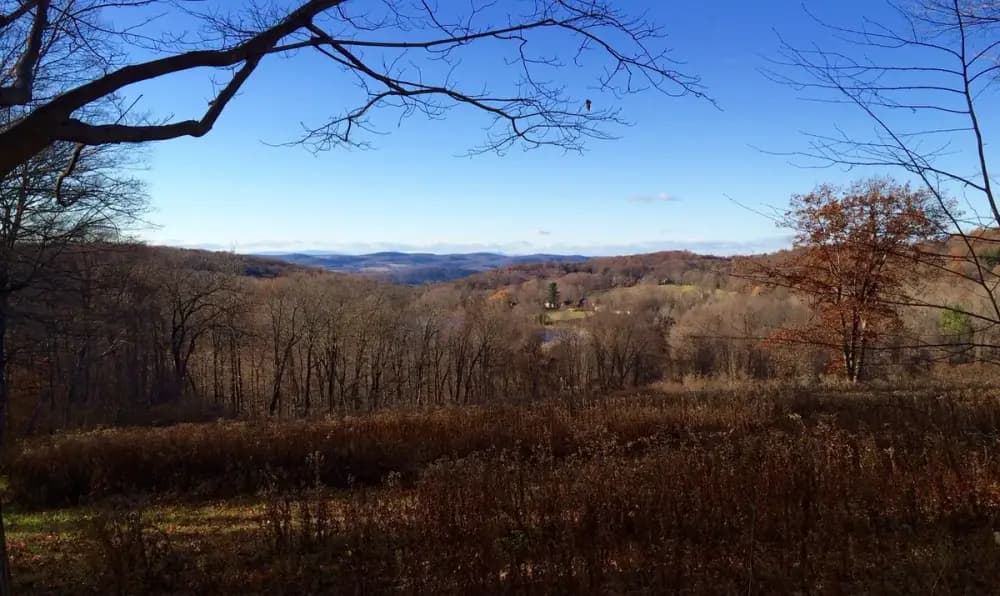
The main center property covers 1,147 acres, most of it forested, and includes two ponds. Wikipedia and other listings put the trail network at 11 miles. The center is not accredited by the Association of Zoos and Aquariums.
History
The center dates to 1961, when Clement and Keyo Ford donated their Sharon estate, known as Bog Meadow Farm, to the National Audubon Society. A Connecticut museum listing describes the Fords as envisioning a place where people of all walks of life could learn about and enjoy the wonders of nature. The Bog Meadow name survives in the center's trail names and in a road that one of its trails meets.
A second, related property came to Audubon the following year. Emily Winthrop Miles, a poet, writer and artist, had acquired an initial 740 acres, and the land was donated to the National Audubon Society in 1962 through her will. Wikipedia describes the Emily Winthrop Miles Wildlife Sanctuary as now holding about 1,500 acres within a larger area of protected open space. It contains forested land and about two miles of Carse Brook wetlands, and Wikipedia says it is home to endangered plants and animals. Its on-site residence is used for interns and scientists and is not open to the public.
The center also carries the name of the nature writer Hal Borland. Wikipedia reports that Borland's essays first appeared in The New York Times in 1941 and were collected in Sundial of the Seasons in 1964. A memorial room named for him holds photographs, books and his typewriter, and one of the center's trails carries his name.
Exhibits and habitats
The center's public buildings and grounds are organized around a main visitor center and a handful of outdoor features. According to a Connecticut museum listing, the visitor center includes a small natural history museum, a nature store and a Children's Adventure Center. The main exhibit room is described there as having seasonal displays and live-animal exhibits that include snakes, turtles, insects and birds, along with a seasonal indoor honeybee hive and a bird-feeding observation window. The Children's Adventure Center focuses on watershed education and features an interactive beaver lodge tunnel and aquarium exhibits for young children.
The grounds hold several gardens and working structures. Wikipedia and the museum listing name a herb garden, a bird and butterfly garden (the Eleanor Loft Bird and Butterfly Garden), and a working sugarhouse that the museum listing says was formerly an ice house. Audubon's own pages also mention a MOTUS bird tracking station at the center.
Raptor aviaries have been a feature of the grounds. The museum listing says they house nearly 20 bird species, and a separate listing describes hawks, owls, falcons and an eagle that were determined to be non-releasable. That same listing noted that the resident birds were temporarily off exhibit because of new federal regulations requiring additional licensing to possess educational birds. Because this may have changed, visitors can confirm current aviary status with the center.
Audubon's current pages list bird species seen locally, including American goldfinch, red-tailed hawk, indigo bunting, black-and-white warbler and red-bellied woodpecker.
Trails
Audubon's trails page describes four blazed trails. The Hendrickson Bog Meadow Trail, marked with white blazes, is a 1.6 mile loop through woods and along the pond edge, with boardwalk overlooks of the pond; one section is described as wet, rocky and narrow. The Oak Trail, marked blue, follows an old overgrown pasture surrounded by rock walls. The Fern Trail, marked orange, is about a mile long, runs along a rocky pond edge and has a viewing blind overlooking the pond; it is described as sometimes wet and muddy. The Ford-Borland Trail, marked yellow, is about 2.5 miles, begins in a hemlock gorge with three bridge crossings, climbs steeply uphill and then descends to meet Bog Meadow Road.
Wikipedia's list of trails includes additional names, including the Lucy Harvey Multiple Use Interpretative area, which it describes as wheelchair accessible, and some lengths that differ from the Audubon page. The trails page is the more recent source for trail names and blazes.
Conservation and programs
The center runs a wildlife rehabilitation clinic, according to Audubon. The museum listing says non-releasable raptors serve as education ambassadors that accompany staff to schools and community events to teach about conservation. Audubon's pages also list school programs, summer camps and events, including one called Raptors and Riesling. Wikipedia adds environmental education programs for school groups and summer and weekend programs for adults and children.
Planning your visit
Audubon lists the center's hours by area. Trails are open from sunrise to sunset. As of September 2026, Audubon's website lists the Visitor Center and Nature Store as currently closed, so the indoor exhibits may not be open on a given day. Check the center's website before traveling.
Trail rules on Audubon's trails page include no bicycles; dogs allowed only on the Bog Meadow and Ford-Borland trails and leashed at all times, with no dogs at the aviaries; no hunting or fishing; no entering ponds or streams; staying on marked trails; and no alcohol or smoking. The center's phone number as listed on Audubon's page is 860-364-0520.
What we haven't confirmed
Everything above came from public sources. These specifics we haven't stood behind yet:
- Current status of the raptor aviaries and whether the birds are on exhibit
- Visitor center, museum and nature store opening days and hours
- Current suggested donation or admission details
- Parking
Sharon Audubon Center compared with nearby zoos
How Sharon Audubon Center lines up against the closest zoos we have details for — useful if you're deciding between them for the same day out.
| Zoo | Distance | Admission | Hours | Size | AZA |
|---|---|---|---|---|---|
| Sharon Audubon CenterThis zooSharon, CT | — | — | Visitor Center & Nature Store: Thu–Sat 1:00–4:30 PM (closed Sun–Wed). Trails open daily sunrise–sunset. | 1147 acres | No |
| Trevor ZooMillbrook, NY | 9 mi | $7 | 9 AM – 5 PM | — | Yes |
| Connecticut's Beardsley ZooBridgeport, CT | 47 mi | $20–$26 | 9 AM – 4 PM | — | Yes |
| Bear Mountain State ParkStony Point, NY | 47 mi | Free | Daily 10:00 AM – 4:30 PM (Apr 1 – Oct 31); 10:00 AM – 4:00 PM (Nov 1 – Mar 31). Closed Thanksgiving, Christmas. | 5205 acres | No |
Distances are straight-line. A dash means we haven't confirmed that detail yet, not that the zoo lacks it.
AZAThe Association of Zoos and Aquariums. Accredited members have passed an independent inspection of animal care and welfare, safety, conservation and education, repeated every five years. Many smaller facilities never apply, so “not accredited” isn't a verdict on its own. What accreditation means · How we check this
Sharon Audubon Center: common questions
Is Sharon Audubon Center a zoo?
It is a nature center and wildlife sanctuary. Listings describe live native animals, including non-releasable birds of prey, used for education.
Is Sharon Audubon Center AZA accredited?
It is not accredited by the Association of Zoos and Aquariums.
How many acres is it?
The main center property is 1,147 acres. The associated Emily Winthrop Miles Wildlife Sanctuary holds about 1,500 acres, according to Wikipedia.
Can dogs visit?
Audubon's trails page allows leashed dogs on the Bog Meadow and Ford-Borland trails only, and not at the aviaries.
Who owns it?
It is operated by the National Audubon Society, which received the land as a donation in 1961.
Something wrong here? Tell us — we correct in place, with a dated note.