
- Admission
- $20
- Opened
- 2003
- Accreditation
- None listed
not accredited by the Association of Zoos and Aquariums
Everything below is directory information drawn from public sources and the zoo's own site.
Animals at Fortress of the Bear
We haven't confirmed this zoo's animal list yet.
Feathers & Fangs from visitors
What people who've been to Fortress of the Bear say
A Feather is something this zoo does well; a Fang is something it gets wrong. Left by people who've been, and read by us before they appear.
Loading…
About Fortress of the Bear
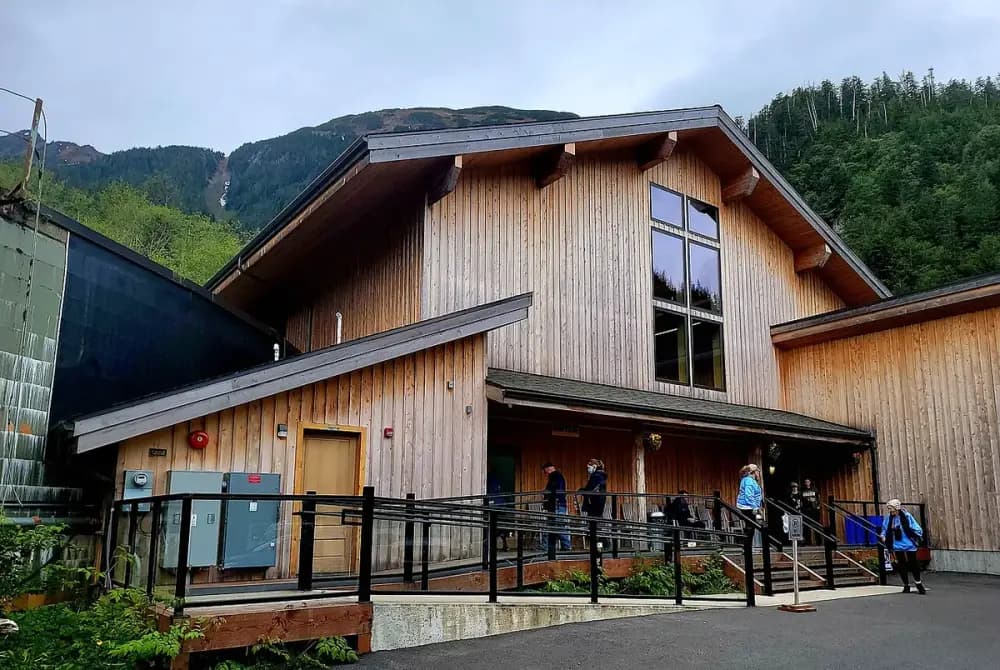
Fortress of the Bear is an educational bear rescue center at 4639 Sawmill Creek Road in Sitka, Alaska. Its website describes the facility as a sanctuary that aims to reduce human-bear conflict through education, action and community engagement while providing lifelong protection and care to bears orphaned as cubs. It is a bear-only facility rather than a general zoo, and the site says it is the only bear-exclusive sanctuary in Alaska.
The center's website says it brings orphaned bears from across Alaska and finds homes for them in zoos and sanctuaries internationally, and that it currently houses 8 resident orphaned bears in 3 separate enclosures. According to the website, the enclosures are designed to mimic the natural settings where the bears would normally be found, and visitors watch from a covered area above them.
Wikipedia records that the facility sits on the grounds of the Gary Paxton Industrial Park, the former site of the Sitka Pulp Mill, which closed in 1993. According to Wikipedia, the founders established an organization named Kootznahoo in 2003.
History
The center's website says the project began with a founder who had been a hunter and wilderness guide and who learned that orphaned bear cubs in Alaska were routinely killed because the state had no rehabilitation program for them. Wikipedia names the founders as Les and Evy Kinnear, a married couple, and says Les Kinnear had worked as a hunting guide in Alaska since 1978.
According to the website, work began in 2003 to convert the abandoned pulp mill clarifier tanks into naturalistic habitats. Wikipedia adds that the Sitka Assembly provided startup money from federal funds allocated to Sitka in the 1990s to spur economic growth, and approved a ten-year lease for the industrial park site. Wikipedia also says the Kinnears raised pigs and other farm animals during a required demonstration period before the state approved a permit, and that conservation groups and a former Alaska Department of Fish and Game biologist raised concerns about confining wild bears at the outset.
The website says the sanctuary received its first permit in 2007 and that its first orphaned cub arrived only days later. Wikipedia identifies that first resident as a brown bear cub named Killisnoo, who arrived on July 27, 2007, after being orphaned near Angoon. Wikipedia says black bears joined the facility in the fall of 2013, beginning with a cub named Smokey, and that a black bear habitat with a creek and planted vegetation was built in 2018. The center's FAQ page says the three black bears now living there are Smokey, Bandit and Tuliaan.
Exhibits and habitats
According to Wikipedia, the habitats were built from two barrel-shaped concrete tanks the pulp mill had used for industrial wastewater treatment, with water and greenery added to resemble native habitat. The center's website says visitors view the bears from a covered area above the enclosures and can photograph them. Wikipedia reports that naturalists stationed on the platform share information about the bears.
The animals are Alaskan coastal brown bears and black bears. The FAQ states that the brown bears are coastal brown bears rather than grizzly bears, and explains that a grizzly is always a brown bear but a brown bear is not always a grizzly. The FAQ also says the brown bears and black bears are not housed together, because the difference in size makes injury likely during play.
The FAQ describes the bears' diet as seasonal, including meat, fish, fruit, vegetables, dog food and nuts, with treats such as peanut butter and honey. During salmon runs, the center provides live salmon so the bears can catch their own food. The FAQ says staff work with the bears only through the bars of a training room and that there is no unprotected contact.
Conservation and programs
The center's stated aim is to reduce human-bear conflict and prevent future orphaning of cubs. Its website says it pursues this through guided tours, outreach, and partnerships with wildlife organizations. Wikipedia says demonstrations have included showing how bears open tents and a bear awareness day in June featuring bear-resistant garbage containers.
The FAQ addresses why the resident bears are not released. It says all of the bears were orphaned at a young age, that the current bears are permanent residents, and that Alaska has no rehabilitation program for bear cubs, which makes release illegal. The FAQ also says the male bears are castrated to prevent breeding and related genetic complications.
Planning your visit
As listed on the center's website for 2026, Fortress of the Bear is open from May through September, from 10 a.m. to 4 p.m., with gates opening at 9:45 a.m. and last admission at 3:30 p.m. The website lists the center as closed on July 4. Hours and season dates can change, so the current schedule on the official site is the one to rely on.
Tickets are sold online through the center's booking system. The website describes two kinds of days tied to cruise ship traffic: managed admission days, when more than 1,000 cruise passengers are expected and independent travelers must buy tickets online in advance, and all-day admission days, when fewer than 1,000 cruise passengers are expected and tickets are valid from 10 a.m. to 3:30 p.m. Ticket time blocks on managed days are 40 minutes long, and the website notes they are not an arrival time window. Season passes are offered to Alaska residents only. Ticket details are on the center's website.
The website notes that a maximum capacity is enforced on the viewing deck and asks visitors to dress for the weather. It also lists several partnered van tours and independent taxi and shuttle services as ways to reach the site. The address is 4639 Sawmill Creek Road, Sitka, Alaska 99835, and the phone number on the website is 907-747-3550.
What we haven't confirmed
Everything above came from public sources. These specifics we haven't stood behind yet:
- Parking availability and accessibility details for the viewing area
- Current names and enclosure assignments of all eight resident bears
- The current legal name of the nonprofit that operates the center
Fortress of the Bear: common questions
Why are the bears at Fortress of the Bear?
According to the center's FAQ, all of the resident bears were orphaned at a young age, and Alaska has no rehabilitation program for orphaned cubs.
Are the bears grizzlies?
The FAQ says the brown bears are Alaskan coastal brown bears rather than grizzly bears, and that there are also three black bears.
Is Fortress of the Bear open year-round?
No. The website lists the 2026 season as May through September, and Wikipedia says the center is closed during the bears' hibernation period.
Is Fortress of the Bear accredited by the AZA?
No. It is not accredited by the Association of Zoos and Aquariums.
Can visitors touch the bears?
No. The FAQ states that there is no unprotected contact and that staff work with the bears only through the bars of a training room.
Who runs Fortress of the Bear?
Wikipedia says it was founded by Les and Evy Kinnear, who established the organization Kootznahoo in 2003. The center's website lists Jay Stilwell as executive director.
Something wrong here? Tell us — we correct in place, with a dated note.